Old vs New Tax Regime: Capital Gains Tax Rates for FY 2025–26 and 2026–27

c
https://images.openai.com/static-rsc-4/5vg0RxKPhIt2LjALuPN-goEdkI7D1fm1Z34ALlM7Ckucm8D_lKytc6LFWTqhm8GWiHg6AZQuYhupMTEFeIZRC1BNk0NEQzPH2YJqLy7_cbCMl49Df-tcEZhrCozGyYn9SH5S3Ft3W88-WjecUpXN98drWc2fJx1czXwWX6yIHgdD18QgSWK0WhcIaIk2L5D2?purpose=fullsize
https://images.openai.com/static-rsc-4/SEZEU7f5Ytr8qDOKgSll-yVR19Kc5yNvL_2nBLSTnrs9E0-SlpFoduOh6DNg9d7NB0rvYzxk8JscZyzydDyiHciNB0e0Z1KLvpWitRRb7p7kf2ONOX4-cAa-FeCgJjaQ-WBEzQwORHfEdH__EK2S67mW4xdW2T53F3y6N7cuX8cCQUunHwdbJphpEeRrcU3e?purpose=fullsize
6

💡 Suggested Design Brief (for exact creation)

If you’re getting it designed or generating via AI, use this prompt:

Prompt:

“A clean financial infographic showing comparison of old vs new capital gains tax system in India. Split layout with ‘Old Act’ on one side and ‘New Act’ on the other. Include icons for stock market (equity shares), mutual funds, and real estate (property). Show tax percentages like 20% and 12.5% in bold. Use professional colors like blue, white, and grey. Minimal, modern design, suitable for a finance blog. Square format.”

📝 Optional Text Overlay (short & catchy)

  • “Capital Gains Tax: Old vs New Act (FY 2025–27)”
  • or
  • “Simplified Capital Gains Tax Explained”
GST Update: Filing Error in GST Appeals Successfully Resolved

GST Update: Relief in Pre-Deposit Requirement While Filing Appeals

A key and practical update has been introduced on the GST portal concerning the pre-deposit requirement for filing appeals. This change directly benefits taxpayers filing appeals in Form APL-01 and resolves several long-standing practical issues.


🔍 Background – Pre-deposit under GST

As per CGST Act, 2017, Section 107(6), any taxpayer filing an appeal before the Appellate Authority must make a mandatory pre-deposit comprising:

✅ Full payment of admitted tax liability
✅ 10% of the disputed tax amount (subject to prescribed limits)

This payment is a prerequisite for the admission of an appeal.


⚠️ Earlier Issue on GST Portal

Previously, while filing Form APL-01, the GST portal:

  • Automatically calculated the 10% pre-deposit
  • ❌ Did not allow editing of this field

This led to several practical difficulties for taxpayers.

Common Challenges Faced

  • Pre-deposit already paid through DRC-03 or other modes
  • Incorrect classification of demand under wrong tax heads
  • Partial payments not considered by the system
  • Cases involving only interest or penalty disputes
  • Differences in interpretation of disputed tax amount

👉 As a result, taxpayers often faced duplication of payments or incorrect calculations.


Latest Update (Effective 6 April 2026)

The GSTN has now provided significant relief:

🔹 Key Change

👉 The pre-deposit percentage field is now editable in Form APL-01


🎯 Impact on Taxpayers

With this update, taxpayers can now:

✔️ Adjust pre-deposit based on actual liability
✔️ Consider payments already made
✔️ Avoid excess or duplicate payments
✔️ Accurately compute disputed tax amounts
✔️ File appeals aligned with actual case facts


🧾 Practical Situations Where This Helps

1. Pre-deposit Already Paid
Taxpayers can reduce the payable amount in APL-01 if already paid via DRC-03

2. Incorrect Demand Reflection
System-generated demand can now be corrected

3. Appeals for Interest/Penalty Only
No need to apply 10% on the entire demand

4. Partial Appeals / Multiple Orders
Pre-deposit can be calculated proportionately


⚖️ Important Safeguard

👉 This flexibility is subject to verification by the Appellate Authority, including:

  • Accuracy of the pre-deposit amount
  • Mode of payment
  • Compliance with Section 107(6)

⚠️ Incorrect adjustments may result in:

  • Rejection of appeal
  • Issuance of deficiency memo
  • Additional tax demand

📌 Key Takeaways for Professionals

🔹 Ensure correct computation of disputed tax
🔹 Maintain proper documentation of prior payments
🔹 Reconcile:

  • Order amount
  • Amount already paid
  • Required pre-deposit

💡 Professional Tip

Before editing the pre-deposit field, prepare a detailed working sheet including:

  • Total demand
  • Admitted liability
  • Disputed portion
  • Pre-deposit calculation
  • Payments already made

This helps minimize litigation risks at the appellate stage.


🚀 Conclusion

This update is a practical and taxpayer-friendly move by GSTN. It removes earlier system restrictions and aligns the portal with real-world scenarios.

👉 However, greater flexibility also means greater responsibility—accurate calculations and proper justification are now essential.

Tax Deduction on Property Transactions – (Sec 194-IA / Sec 393(1)): Comparing Form 26QB and Form 141

TDS on Property Transactions – Updated Compliance Guide (Section 194-IA to Section 393(1))

The provisions relating to Tax Deducted at Source (TDS) on the purchase of immovable property have undergone an important transition with the introduction of the Income Tax Act, 2025. Earlier governed under Section 194-IA of the Income Tax Act, 1961, these provisions will now fall under Section 393(1) effective from 1 April 2026.

While the fundamental principle of TDS deduction on property transactions remains unchanged, the compliance structure, documentation, and procedural requirements have been streamlined and reorganized. This makes it crucial for buyers, sellers, and tax professionals to stay updated and ensure proper compliance.


🔍 Overview of TDS on Property

https://images.openai.com/static-rsc-4/TpG_3zQ1syuuA_AdG0s7HUuopzaZd5sD54Mc2a5fiHMlsC5CqGwwE3-drWB5KcCJEK--UCdIzJP6hrpiRMsQDUn1rihS90-ybShp0bxdP-QjnMvolqg-nxE5xu3Lmf8x52DPAOYlBZvP5GL-NgDForRM18ANwnZAXUL3tgVd4kQ3XBuymTU2IBUhLo16ybYj?purpose=fullsize
https://images.openai.com/static-rsc-4/yEGOFCHuxG0DrKs-rEWBdZ29ABDk8cHYa5Ljf_pM-wDIVtrky3cAa0aeQI_BJvZgBHfdleLGmpgNlBjM0JJGVlo9ct483gonrAtJ-tAhkOVwgXJMoWkDniiNmKMcp7iA6CKlnAnGWwp7rkjQtkpeF7Joi2vl1-E-voKzvopHPmUBcsZT-i-8K0ATvbr6Amif?purpose=fullsize
https://images.openai.com/static-rsc-4/h9eDIOJI5o5ObwfHp6YbW3wB13MSjCrVPReeDvCRXHf-KrQwkWFuOppjjY_gZktXNM-iFqDCBZNJ6ysNugSuEknkxPdntU1fOvwU4VAg_ZQlTGAGtbmYgjwK4kp2edEH8Yp71psy8eT1QFmqovYsRldfhHDx2xdTRFA15jfV3OsMDEYDBO5zehWVrNOfuhXL?purpose=fullsize
4
  • Applicable on purchase of immovable property (excluding agricultural land)
  • TDS is required to be deducted by the buyer
  • Triggered when property value exceeds ₹50 lakh
  • Deduction is made at the time of payment or credit, whichever is earlier

📊 Key Changes: Section 194-IA vs Section 393(1)

Particulars Section 194-IA (Old Law) Section 393(1) (New Law – from 01.04.2026)
Applicable Law Income Tax Act, 1961 Income Tax Act, 2025
Effective Date Till 31 March 2026 From 1 April 2026
Threshold Limit ₹50 lakh Likely retained (no major change expected)
TDS Rate 1% Expected to remain similar
Compliance Forms Form 26QB New forms such as Form 141
System TRACES-based Updated compliance system

📝 Forms for Compliance: Form 26QB vs Form 141

✔️ Form 26QB (Existing System)

  • Challan-cum-statement for reporting TDS on property
  • Filed within 30 days from end of month of deduction
  • Required for generating Form 16B (TDS certificate)

✔️ Form 141 (New Framework)

  • Introduced under the new Act for TDS reporting
  • Designed to simplify filing and improve tracking
  • Expected to integrate better with the new tax compliance ecosystem

⚙️ Step-by-Step TDS Compliance Process

https://images.openai.com/static-rsc-4/nUzAyhHDxYI48EA4bYIODDgmb9ilwOhBk9qfJeDERP4zueYRhMGGB4J6pUmKpr4INjca1QJrRriMuR4k31bV7UZAgKD-5c6lJ2h8qmuAHbGmLmrMOiNa5daHSsmEtXaWTPw8IWFC9zkjn7AnGZ1kjO4Z7eUmJhue9_evn5UlQsaaSK0xsDyfgXnWJkYEYAGU?purpose=fullsize
https://images.openai.com/static-rsc-4/vXQxe4OPbvKcj3vYCiEQkSsUhA0VbmRE3-7LmYcX9mazQ9pIUVhE31GLhskhVeQTLBkIwzEXJofjIeEwJqe5FUbtPdN5a2lkynhRdAsPhp5CpBQcaE-dvKaIhUuU6NNgxGkXe8QAKYthqqIeM42QJMs2DZiGXwGnb9NA80o4dx9XFuqiit0bidbzM2QEBaTF?purpose=fullsize
https://images.openai.com/static-rsc-4/iHOKzGQxb8K7Ogybjf3drmesAD3unHDYHJ6nFNcwo-HbUvLASVyUkxmqoHzKOHwzsB5bM4sE-RyO6xEzw5dFZlve1FxdYnt_tOzXS7IptwQ5CNGHVJ_3-EpfZ7UyMbkQwAgmWiHtx9TJNPaTTbiSd1bf_9Q6bYluyco1OC_oYug2OV30ckTHQBk4sGyvrkAw?purpose=fullsize
6
  1. Verify Applicability
    Ensure property value exceeds ₹50 lakh and is not agricultural land
  2. Deduct TDS
    Deduct applicable TDS (generally 1%) at time of payment
  3. Deposit TDS
    Pay TDS to the government within prescribed timeline
  4. File Relevant Form
    • Up to FY 2025-26 → File Form 26QB
    • From FY 2026-27 → File Form 141
  5. Issue TDS Certificate
    Provide Form 16B (or equivalent under new law) to seller

⚠️ Important Points to Remember

  • PAN of both buyer and seller is mandatory
  • Higher TDS may apply if PAN is not available
  • Each buyer–seller combination requires separate compliance
  • Delay may lead to interest and penalties

📌 Conclusion

The shift from Section 194-IA to Section 393(1) represents more of a structural and procedural update rather than a conceptual change. However, the introduction of new forms like Form 141 and changes in compliance systems make it essential for taxpayers to adapt quickly.

Staying compliant will ensure smooth property transactions, avoid penalties, and maintain proper tax records under the new regime.

🏠 TDS on Property Transactions – Detailed Compliance & Latest Tax Law Updates

https://images.openai.com/static-rsc-4/KkrsUV1hd2Xff1g3tVXBBPablhDuM-Xbbf-iqW7hbCeGk6vG0uT7SwplDTnG-6LU_j6wkxKUA5uVuG6Dqtaci2FnBZLSoqqAfw_9vrqW9BtBCh5ffy42wjSyOz_ClXjcCXxlmigHn7lsIdTrOU0sZ4YuykR_BmzBH1NSOnvxE2R1jFHcWqDalq-2Lp_od6f_?purpose=fullsize
https://images.openai.com/static-rsc-4/PTq1K2yP1cVgGTKdJ5hB1OASdqHkMsztCA4ILRf76kMEWmVWy68JWOkRHKLBUaCkfWMODsD-Uvlpsuqc4yR85XrYMeV6y4ENhcoauB7JYvx1YU0-EaernBdt8qgOzr-ZrOrlFdCceOQXrhNWWP_0qxL8xfOZfcIUJ6n0HVZJUm56kBzX6ZAGgsZC9bX0G02_?purpose=fullsize
https://images.openai.com/static-rsc-4/2m2de6gnMhiCcS5kW9ntFgfMy4GmVIm8UdxSiGNx2-0HhVo7IZSqLTe7RBRi93bttFh5lmZl855zOP34tVMvIDaDEZ26MxbjQ9HsiVshhddiq5ncOM9x1IQrhSBiaiP3oJNa5veVNT2u4m0Zd1ZRFaHbie-FoCEM6HZdML2baxZzVVAh-hOnCq5I7Sx39pHj?purpose=fullsize
6

📌 Applicability of TDS on Property

TDS on property becomes applicable when any person purchases immovable property (land, building, or part thereof) for a consideration of ₹50 lakh or more. This provision applies to both residential and commercial properties, while agricultural land is specifically excluded.

It is important to note that the ₹50 lakh threshold is based on the total property value, not on individual instalments. Even if payments are made in parts, once the aggregate value crosses ₹50 lakh, TDS provisions will apply.


💰 TDS Rate and PAN Requirement

  • Standard TDS rate: 1% of sale consideration
  • If seller does not provide PAN: TDS may increase significantly (generally up to 20%)

Ensuring the seller’s PAN is correctly obtained and verified is essential to avoid higher tax deduction.


⏱️ Timing of TDS Deduction

TDS must be deducted at the time of payment or credit, whichever is earlier.

This means:

  • Advance payments and instalments are also subject to TDS
  • Particularly important during financial year transitions, such as the shift to the new law from April 2026

🔄 Tax Law Update – Change in Compliance Forms

https://images.openai.com/static-rsc-4/CyajsGQmD83d2v416OYDDzKCvZoG5q0QWSaik1ALoP7NqLJJ7n-N_dAHZWtAfWBhf8m79yDKcBanpopC4TKHfeWH0Kx_UCQ7uybBQgayhSmsN0qQvNLUWTbiC7c4m30QXbTAL1xn_a2El2MZjo2p7fmqNUZmuyn6g_Fs9EnAmr2f5nTfWi8SdkvkqoDwUD0U?purpose=fullsize
https://images.openai.com/static-rsc-4/Vbr2Il0x8_H0OZpBRgUraD_88OZQsYYQ3R-t6IJQd9KMTaszgZl7R8haowDqzEAkW86gqct3v7lkFiMjFesIBQCSbvSRLsbj1pSpokaZnqjVD-bqCVL6PJiLyx5Ebuf5qAU2diE20jHvtz23ADjFbIIJ4kJKB9hXJSiXgLY56gLVboSi-KHxlIxc9SXOJE3h?purpose=fullsize
https://images.openai.com/static-rsc-4/5MFdt-WYwIylsckljxm8nz3J09rv9z04ZPHTbaSWrr59bFWWlLQJMeEpSzwg8vGhszy9oCCMX_pOl2PCUiLNDOWlcvqeBGKdauCdCaRzKmIhOs3CAjzYJYLqiD1LJ_u-xVxTotTHAzLoWlZXTlfLdGQYXTyg6zmn6v9X8bnnV_8JThjQ1MC_c9z89NrvDyhS?purpose=fullsize
6

With the introduction of the Income Tax Act, 2025, the compliance mechanism has been updated:

  • Up to 31 March 2026 → TDS filing through Form 26QB
  • From 1 April 2026 onwards → TDS filing through Form 141

Both forms must be filed within 30 days from the end of the month in which TDS is deducted.

👉 The date of payment determines which form is applicable—not the agreement date.


🔍 Transitional Scenario (Important)

  • Agreement signed before March 2026 but payment made after April 2026Form 141 applies
  • Payment made before April 2026Form 26QB applies

In case of multiple instalments across both periods, compliance may be required under both forms.


👥 Multiple Buyers or Sellers

  • TDS applicability depends on total property value, not individual share
  • Even if individual shares are below ₹50 lakh, TDS still applies if total exceeds threshold
  • Separate compliance may be required for each buyer–seller combination

🧾 Responsibility of Buyer

The buyer is responsible for:

  • Deducting TDS
  • Depositing it with the government
  • Filing the applicable form (26QB / 141)
  • Issuing TDS certificate to the seller (earlier Form 16B, similar system expected)

⚠️ Consequences of Non-Compliance

  • 1% per month interest for failure to deduct TDS
  • 1.5% per month interest for failure to deposit TDS
  • Late filing fee: ₹200 per day (subject to TDS amount)

Timely compliance is critical to avoid penalties and interest.


📘 Conclusion

Although the core concept of TDS on property remains unchanged, the shift to the new law introduces updated sections and revised compliance forms. The most crucial factor is the timing of payment, which determines whether Form 26QB or Form 141 should be used.

A clear understanding of these provisions ensures accurate compliance, smooth property transactions, and avoidance of penalties.

TRACES 2.0 Portal Introduced – Includes TDS/TCS Rates Chart for FY 2026-27

The new TRACES 2.0 portal has been introduced by the Income Tax Department, bringing enhanced functionality, a modern interface, and a better user experience. A key feature of the new portal is the availability of the revised TDS/TCS rates chart for FY 2026–27, consistent with the Income Tax Act, 2025.This article offers a comprehensive overview of the new TRACES portal, its key features, and the benefits of the updated TDS/TCS rate charts for taxpayers and professionals.

What is the TRACES Portal?

TRACES (TDS Reconciliation Analysis and Correction Enabling System) is an online platform developed by the Income Tax Department to facilitate TDS and TCS-related compliance. It enables users to:

  • View and download TDS/TCS statements
  • File correction statements
  • Download Form 16 / 16A
  • Manage lower or nil deduction certificates
  • Access compliance and default reports

The portal plays a vital role for deductors, collectors, taxpayers, and tax professionals in ensuring accurate compliance.


✨ What’s New in the Updated TRACES 2.0 Portal?

The newly launched TRACES 2.0 portal introduces several enhancements designed to improve usability and efficiency:

✅ 1. Modern User Interface

  • Cleaner and more intuitive design
  • Easy navigation across services

✅ 2. Improved Dashboard & Analytics

  • Widget-based dashboard
  • Quick access to statements, certificates, and pending actions

✅ 3. Faster Access to Certificates

  • Simplified download process for:
    • Form 16 / 16A
    • Lower/Nil deduction certificates

✅ 4. Enhanced Compliance Tracking

  • Better monitoring of:
    • Defaults
    • Late filings
    • Pending actions

✅ 5. Integrated TDS/TCS Rates Chart

  • Direct access to the latest TDS/TCS rates for FY 2026–27
  • Updated in line with the Income Tax Act, 2025

📊 TDS & TCS Rates Chart for FY 2026–27 (Key Highlight)

One of the most important additions to the new TRACES portal is the availability of updated TDS and TCS rate charts.

👉 These charts help:

  • Deductors apply correct TDS rates
  • Avoid defaults and notices
  • Ensure compliance with the latest provisions

🔗 Access TDS/TCS Rates Chart (FY 2026–27)

You can access the official charts through the TRACES portal:

  • 👉 TDS Rates Chart
  • 👉 TCS Rates Chart

📌 Conclusion

The launch of the new TRACES 2.0 portal marks a significant step toward the digitization and simplification of TDS/TCS compliance.

With integrated and updated TDS/TCS rates for FY 2026–27, the portal provides a single, efficient platform for compliance management and reference.

Taxpayers and professionals are encouraged to start using the updated portal to stay aligned with the provisions of the Income Tax Act, 2025.


🔍 Discover More

  • Tax update newsletters
  • Accounting software integrations
  • Tax compliance services
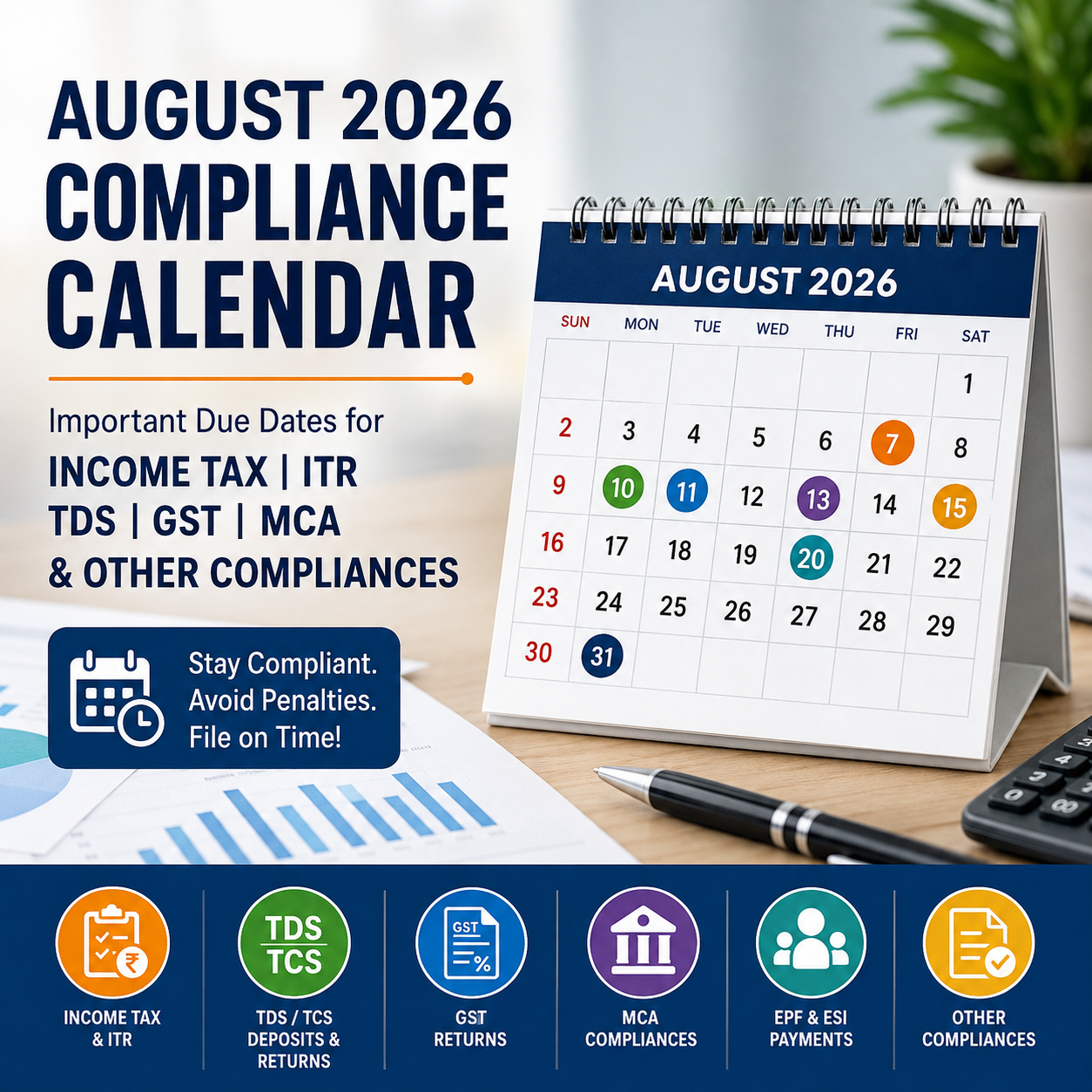
Compliance Due Dates & Key Filings for April 2026

With the start of the new financial year FY 2026–27, April emerges as a critical month for compliance from both Income Tax and GST perspectives. Businesses, professionals, and tax practitioners must stay on top of key deadlines to avoid interest, penalties, and potential notices.

🗓️ Compliance Timeline & Important Dates for April 2026

April sets the tone for the entire financial year, making it essential to ensure:

  • Timely GST return filings (GSTR-1, GSTR-3B, etc.)
  • Deposit of TDS/TCS within due dates
  • Proper documentation and reconciliation of transactions
  • Early planning for advance tax and regulatory compliances

    Compliance Calendar – April 2026 (Complete Guide)

    https://images.openai.com/static-rsc-4/zXx9R0Y3W9RUTZri8CNntnZVqNTyeeWaYbeqWgVw8F3TLlO_GHcXgBncfAoWH43AbADbv78IYLSabfRTGA9fEgD-xO0n-SJ3D6ULQMaUmt4QAKQlI0x8r-T4EFtzBNkVQV9FQ990xijfmRpgavEmqr80sNwaY-tQpvQMyDo1IvpjIfJY1aPprLDmTkDx0iKO?purpose=fullsize
    https://images.openai.com/static-rsc-4/5Sl9naNGQCWstT78h1FiYaDiANVfxgH0JlReCDdri6QF_oznPgLttDBFsDWUKCdZ53Rw6iAQF_k0eyedImpjMj0rjF15RFuL9EfaBfihQWI8g96gBjTn-bpgu96QURONSAX5wr3geZ6kK6ZgsqZsYyG7xIw1nFSZrQ232_O57aODHG0DQDQKnhyfhCnVUVdf?purpose=fullsize
    https://images.openai.com/static-rsc-4/KxcvggfFVwOL7SNUbELL82f31HbUhT3sQMB5m-hL8Z0rezQvAeLhdUBz6tyoJMGYoATEIlnMM8yXx-5qDe5tvUjV4_e3B4HVdqNjEu--W1S8D32OwNPXc_dR3A5tvh_NOAUeZBL4x-nHqvQ90ged6okgq9RU9YU2wVFUBaUiKfwojG8kYJNQkLP2JOaABOeO?purpose=fullsize
    5

    This article provides a comprehensive compliance calendar for April 2026, covering GST, Income Tax (TDS/TCS), PF, ESI, MCA, and other key regulatory requirements.


    🔰 Important Update from 1 April 2026

    With the beginning of FY 2026–27, several critical changes come into effect:

    • Reset of aggregate turnover under GST
    • Adoption of a new invoice series
    • Applicability of provisions under the Income Tax Act, 2025
    • Revised TDS/TCS rates (where applicable)
    • Start of a fresh compliance cycle for all taxpayers

    💰 Income Tax Compliance (TDS/TCS)

    📌 7 April 2026

    • Deposit of TCS for March 2026
    • Submission of declarations (Form 27C)

    📌 14 April 2026

    • Issue of TDS certificates:
      • Form 16B (property)
      • Form 16C (rent)
      • Other applicable certificates

    📌 30 April 2026

    • Deposit of TDS for March (non-government deductors)
    • Filing of:
      • Form 26QB (property transactions)
      • Form 26QC (rent payments)
      • Form 26QD (specified payments)

    📊 GST Compliance

    April is a high-volume GST compliance month due to both monthly and quarterly filings:

    📌 10 April 2026

    • GSTR-7 (TDS under GST)
    • GSTR-8 (E-commerce operators)

    📌 11 April 2026

    • GSTR-1 (Monthly – March 2026)

    📌 13 April 2026

    • GSTR-1 (QRMP – Jan–Mar quarter)
    • GSTR-5 (Non-resident taxable persons)
    • GSTR-6 (Input Service Distributor)

    📌 18 April 2026

    • CMP-08 (Composition scheme)

    📌 20 April 2026

    • GSTR-3B (Monthly filers)

    📌 22 & 24 April 2026

    • GSTR-3B (QRMP scheme)

    📌 25 April 2026

    • ITC-04 (Job work return)

    📌 28 April 2026

    • GSTR-11 (UIN holders)

    📌 30 April 2026

    • GSTR-4 (Annual return for composition dealers – FY 2025–26)

    👨‍💼 PF & ESI Compliance

    📌 15 April 2026

    • Deposit of Provident Fund (PF)
    • Filing of ECR (Electronic Challan-cum-Return)
    • Deposit of ESI contributions

    🏢 MCA / Companies Act Compliance

    While April has no major fixed ROC due dates, it remains important for:

    • Planning annual compliance strategy
    • Conducting the first Board Meeting (if applicable)
    • Reviewing statutory registers and disclosures

    🌍 Other Key Compliance

    📌 7 April 2026

    • Filing of ECB-2 Return (foreign borrowings under FEMA)

    📌 15 April 2026

    • Submission of Form 15CC (foreign remittance compliance)

    ✅ Final Takeaway

    April is not just the start of a new financial year—it’s a foundation month for compliance discipline. Staying updated with deadlines across GST, Income Tax, and other laws helps:

    • Avoid penalties and interest
    • Ensure smooth operations
    • Build a strong compliance track record for the year ahead
Key Updates in ITR Forms (ITR-1, ITR-2, ITR-3, ITR-4) for AY 2026–27

For the Financial Year 2025–26, Income Tax Returns will be filed in 2026 as per the prescribed due dates. The government has already notified the updated ITR forms for Assessment Year 2026–27, incorporating several key changes to enhance transparency, ensure better compliance, and improve the accuracy of financial reporting.

ITR Form Formats / Templates


GST अपील प्रक्रिया में समस्या? GSTN ने जारी की गाइडलाइन

📢 GST अपील फाइलिंग में समस्या? जानें पूरा मामला और समाधान

GSTN ने हाल ही में एक महत्वपूर्ण समस्या पर ध्यान दिलाया है, जिसका सामना कई टैक्सपेयर्स GST पोर्टल पर अपील फाइल करते समय कर रहे हैं।


⚠️ समस्या क्या है?

कुछ मामलों में टैक्सपेयर्स adjudication order के खिलाफ appeal (APL-01) फाइल नहीं कर पा रहे हैं क्योंकि:

👉 ऑर्डर में Demand = NIL दिख रहा है
👉 जबकि वास्तव में टैक्स liability पर विवाद अभी भी मौजूद है


🔍 यह स्थिति कब उत्पन्न होती है?

यह समस्या आमतौर पर तब होती है जब:

  • टैक्सपेयर SCN (Show Cause Notice) स्टेज पर पेमेंट कर देता है
  • लेकिन यह पेमेंट liability स्वीकार किए बिना किया गया होता है
  • फिर भी अधिकारी इसे final discharge मान लेते हैं
  • और ऑर्डर में NIL demand दिखा देते हैं

⚙️ GST पोर्टल पर सिस्टम व्यवहार (DCR Mechanism)

जब भी demand order पास होता है:

  • एक Demand ID जनरेट होती है
  • यह Demand and Collection Register (DCR) में रिकॉर्ड होती है

👉 अगर demand NIL है:

  • सिस्टम इसे zero liability मान लेता है

🚫 असली समस्या (Appeal Filing Error)

जब आप Form APL-01 से अपील फाइल करते हैं:

👉 पोर्टल एरर देता है:
“Disputed amount cannot be more than demand amount itself”

📌 कारण:

  • Demand = NIL
  • इसलिए सिस्टम अपील ब्लॉक कर देता है

👉 सरल शब्दों में:
No demand = No appeal (technical issue)


⚖️ कानूनी स्थिति (बहुत महत्वपूर्ण)

GST Network (GSTN) ने स्पष्ट किया है:

✔ SCN स्टेज पर पेमेंट = liability स्वीकार करना नहीं है
✔ टैक्सपेयर को अपील का पूरा अधिकार है

👉 लागू कानून:
Section 107 of CGST Act, 2017

📌 महत्वपूर्ण बात:

  • पेमेंट कई बार pressure / compliance / litigation avoid करने के लिए किया जाता है
  • यह अपील का अधिकार खत्म नहीं करता

🛠️ GSTN द्वारा सुझाया गया समाधान

इस समस्या को हल करने के लिए GSTN ने एक स्पष्ट प्रक्रिया बताई है:

✅ Step-by-Step Solution

1. Rectification Application फाइल करें

  • GST पोर्टल पर rectification का विकल्प इस्तेमाल करें

2. Adjudicating Authority से संपर्क करें

  • स्पष्ट करें कि:
    • liability स्वीकार नहीं की गई थी
    • demand सही तरीके से निर्धारित की जाए

3. Rectification Order प्राप्त करें

  • संशोधित ऑर्डर में सही demand दिखनी चाहिए

4. फिर Appeal (APL-01) फाइल करें

  • demand अपडेट होने के बाद
  • निर्धारित समय सीमा के अंदर
1 अप्रैल 2026 से टैक्स सिस्टम में परिवर्तन | जानें प्रमुख बदलाव

1 अप्रैल 2026 से लागू बड़े बदलाव | GST और इनकम टैक्स अपडेट

यह आर्टिकल 1 अप्रैल 2026 से लागू होने वाले सभी महत्वपूर्ण बदलावों को कवर करता है — प्रोफेशनल्स, बिज़नेस और टैक्सपेयर्स के लिए एक कम्प्लीट गाइड।


🟡 PART 1: GST में 1 अप्रैल 2026 से बदलाव

🔸 1. कंपोज़िशन स्कीम की डेडलाइन खत्म

31 मार्च 2026 अंतिम तिथि थी।
👉 1 अप्रैल के बाद:

  • नया ऑप्शन अब उपलब्ध नहीं
  • अगला मौका अगले वित्त वर्ष में ही मिलेगा

🔸 2. LUT (Letter of Undertaking) जरूरी

FY 2026-27 के लिए नया LUT फाइल करना अनिवार्य
👉 अगर फाइल नहीं किया:

  • एक्सपोर्ट टैक्सेबल माना जाएगा
  • GST देना पड़ेगा

⚠️ सलाह: वर्किंग कैपिटल ब्लॉक होने से बचने के लिए तुरंत LUT फाइल करें


🔸 3. GTA फॉरवर्ड चार्ज ऑप्शन बंद

31 मार्च 2026 तक ही विकल्प उपलब्ध था
👉 1 अप्रैल से:

  • डिफॉल्ट = Reverse Charge लागू

🔸 4. Rule 14A में राहत

👉 1 अप्रैल 2026 के बाद DRC-32 फाइल करने पर:

  • सिर्फ 1 महीने का GST रिटर्न देना होगा
  • पहले की तुलना में बड़ी राहत

🔸 5. नया इनवॉइस सीरीज़ अनिवार्य

नए वित्त वर्ष के साथ:

  • नई इनवॉइस नंबरिंग शुरू करें
  • GST और ऑडिट के लिए जरूरी

🔸 6. E-Invoicing लागू

👉 अगर टर्नओवर ₹5 करोड़ से अधिक है:

  • 1 अप्रैल 2026 से E-invoicing अनिवार्य

🔸 7. बुक्स ऑफ अकाउंट्स क्लोजर

31 मार्च 2026 तक:

  • बुक्स क्लोज करें
  • बैकडेट एंट्री से बचें
  • ऑडिट ट्रेल बनाए रखें

🔸 8. टर्नओवर की सही गणना

महत्वपूर्ण उपयोग:

  • E-invoicing
  • ऑडिट
  • कंपोज़िशन स्कीम

👉 ध्यान रखें:

  • सभी GSTIN का PAN आधारित टर्नओवर शामिल करें

🔸 9. GST रेट वेरिफिकेशन

  • हाल के बदलाव वाले प्रोडक्ट्स पर खास ध्यान दें
  • सही रेट लागू करें

🔸 10. MRP आधारित वैल्यूएशन (तंबाकू)

1 फरवरी 2026 से लागू
👉 जांचें:

  • क्या MRP बेस्ड वैल्यूएशन लागू है
  • सभी कंप्लायंस पूरे हैं या नहीं

🔸 11. ITC रीकंसिलिएशन जरूरी

मिलान करें:

  • बुक्स vs GSTR-2B
  • वेंडर फाइलिंग

👉 इससे नोटिस से बचा जा सकता है


🔸 12. ITC रिवर्सल और रिक्लेम ट्रैकिंग

  • पोर्टल पर नए स्टेटमेंट उपलब्ध
    👉 सुनिश्चित करें:
  • सही रिवर्सल
  • योग्य रिक्लेम लिया गया

🔸 13. अन्य महत्वपूर्ण GST पॉइंट्स

✅ HSN कोड अपडेट करें
✅ RCM लायबिलिटी चेक करें
✅ GSTR-9 / 9C की तैयारी शुरू करें
✅ E-Way Bill नियमों की जांच करें


🔵 PART 2: INCOME TAX में 1 अप्रैल 2026 से बदलाव

🔸 1. नया Income Tax Act, 2025 लागू

👉 1 अप्रैल 2026 से:

  • पुराना कानून रिप्लेस
  • नया टैक्स फ्रेमवर्क लागू

🔸 2. नए ITR फॉर्म और नियम

👉 नए बदलाव:

  • अपडेटेड रिपोर्टिंग फॉर्मेट
  • अतिरिक्त डिस्क्लोज़र आवश्यक
  • पोर्टल पर नए फॉर्म उपलब्ध

    🔸 3. नया चालान सिस्टम लागू

    टैक्स भुगतान के लिए नई संरचना लागू की गई है

    🔸 3. सही चालान का उपयोग अनिवार्य

    टैक्स पेमेंट करते समय अब सही चालान चुनना बेहद जरूरी है

    👉 उपयोग करें:

    • Advance Tax के लिए अलग चालान
    • Self-Assessment Tax के लिए अलग चालान

    ⚠️ गलत चालान चयन करने पर:

    • पेमेंट mismatch हो सकता है
    • नोटिस या एडजस्टमेंट की समस्या आ सकती है

    🔸 4. Income Tax Portal अपडेट

    इनकम टैक्स पोर्टल में बड़े बदलाव किए गए हैं

    👉 नए फीचर्स:

    • नया User Interface (UI)
    • आसान Navigation System

    👉 इसमें शामिल:

    • नया फॉर्म चयन सिस्टम
    • अपडेटेड फाइलिंग वर्कफ्लो

    📌 असर:
    रिटर्न फाइलिंग अब अधिक streamlined और user-friendly हो गई है


    🔸 5. Updated Return (ITR-U) पर रोक

    👉 FY 2020-21 के लिए:
    ❌ अब Updated Return फाइल नहीं कर सकते

    📌 1 अप्रैल 2026 से:

    • यह वर्ष पूरी तरह time-barred हो गया है

    🔸 6. TDS/TCS Correction Statements पर प्रतिबंध

    Section 397(3)(f) के अनुसार:

    👉 निम्न वर्षों के लिए correction अब संभव नहीं:

    • FY 2018-19 (Q4)
    • FY 2019-20 से 2022-23 (Q1–Q4)
    • FY 2023-24 (Q1–Q3)

    👉 1 अप्रैल 2026 से:
    ❌ कोई correction allowed नहीं


    🔸 7. अन्य महत्वपूर्ण Income Tax पॉइंट्स

    AIS / TIS Reconciliation

    • AIS/TIS को books से मैच करना जरूरी

    Advance Tax Planning

    • नए एक्ट के अनुसार calculation में बदलाव संभव

    Carry Forward Loss Check

    • losses सही तरीके से report किए गए हों

    Capital Gains Adjustments

    • नए नियमों के अनुसार verify करें

    🏦 PART 3: RBI & BANKING CHANGES (2026 से महत्वपूर्ण)

    🔸 1. Digital Fraud Compensation (बड़ी राहत)

    Reserve Bank of India ने नया customer protection framework लागू किया है

    👉 यदि आप डिजिटल फ्रॉड का शिकार होते हैं:

    • मुआवजा = 85% नुकसान या ₹25,000 (जो कम हो)
    • लागू: ₹50,000 तक के छोटे फ्रॉड पर
    • जीवन में केवल 1 बार

    ⚠️ शर्तें:

    • 5 दिनों के भीतर रिपोर्ट करना जरूरी
    • रिपोर्ट करें:
      • बैंक
      • Cyber Crime Portal

    👉 बैंक की जिम्मेदारी:

    • 5 दिनों के भीतर राशि क्रेडिट करना

    📌 प्रभाव:

    • पहली बार मजबूत कस्टमर सुरक्षा
    • डिजिटल पेमेंट्स पर भरोसा बढ़ेगा

    🔸 2. UPI और ATM लिमिट – स्पष्टता

    👉 महत्वपूर्ण बात:

    • UPI ट्रांजैक्शन ATM लिमिट में शामिल नहीं होते
    • ATM लिमिट केवल ATM withdrawals पर लागू होती है

    🔸 3. Zero Balance Accounts (BSBDA) में सुधार

    BSBDA खातों के लिए RBI ने सुविधाएं बढ़ाई हैं

    कोई Minimum Balance नहीं

    • पहले की तरह जारी

    ATM / Debit Card सुविधा

    • अब ज्यादा व्यापक रूप से उपलब्ध

    फ्री ट्रांजैक्शन लिमिट

    • कम से कम 4 फ्री withdrawal प्रति माह

    UPI और डिजिटल एक्सेस

    • UPI, Mobile Banking, AEPS पूरी तरह उपलब्ध

    बेसिक सर्विसेज पर कोई चार्ज नहीं

    • डिपॉजिट
    • बेसिक withdrawal
    • अकाउंट मेंटेनेंस

    फ्री पासबुक / स्टेटमेंट

    ओवरड्राफ्ट सुविधा

    • बैंक की शर्तों के अनुसार उपलब्ध

      📌 निष्कर्ष

      1 अप्रैल 2026 से GST, Income Tax और Banking तीनों क्षेत्रों में बड़े बदलाव लागू हो चुके हैं।
      समय पर इन अपडेट्स को समझकर और लागू करके आप compliance risk, penalties और financial losses से बच सकते हैं।

PAN Reporting Changes in 2026 Affecting Real Estate, Jewellery and Cash Payments

New PAN Reporting Rules 2026 for Property, Jewellery & Cash Transactions

The Central Board of Direct Taxes (CBDT) has issued the Draft Income-Tax Rules, 2026 to facilitate implementation of the Income-Tax Act, 2025, which will come into force from 1 April 2026.

Among the key proposed changes is a significant revision in the rules governing the mandatory quoting and use of Permanent Account Number (PAN) in various financial transactions.

The objective is twofold — simplify compliance for regular financial dealings while tightening reporting requirements for high-value and trackable transactions.


🧠 Why Are PAN Requirements Being Modified?

Under the existing Income-Tax Rules, 1962, PAN quoting was required for numerous transactions, often even at relatively modest monetary limits. This created additional compliance requirements for ordinary taxpayers.

The draft rules aim to rationalise this framework by:

✔ Increasing the threshold limits for PAN quoting
✔ Removing PAN requirements for small, routine transactions
✔ Concentrating on high-value and reportable dealings
✔ Integrating with the data-driven compliance system under the new Act

These reforms form part of the broader simplification exercise under the Income-Tax Act, 2025. Once finalised and notified (expected before 1 April 2026), the revised rules will take effect from that date.


📊 Major Changes in PAN Quoting Requirements

✅ 1️⃣ Cash Deposits and Withdrawals

Existing Rule:
PAN is required if cash deposits exceed ₹50,000 in a single day with a bank or cooperative bank.

Proposed Rule:
PAN will be required only where total cash deposits or withdrawals during a financial year aggregate to ₹10 lakh or more across one or more bank accounts.

👉 This substantially reduces compliance for small and routine banking transactions.


✅ 2️⃣ Purchase of Motor Vehicles

Existing Rule:
PAN is mandatory for purchase of four-wheelers irrespective of value (generally not required for two-wheelers).

Proposed Rule:
PAN will be required only if the vehicle value exceeds ₹5 lakh, covering both cars and two-wheelers.

👉 This relaxes compliance for lower-value vehicle purchases.


✅ 3️⃣ Immovable Property Transactions

Existing Rule:
PAN is required for purchase, sale, gift, or joint development of property valued above ₹10 lakh.

Proposed Rule:
The threshold is proposed to be increased to ₹20 lakh.

👉 Smaller property transactions will no longer trigger PAN quoting obligations.


✅ 4️⃣ Hotel, Event and Lifestyle Expenditure

Existing Rule:
PAN is required where hotel or restaurant payments exceed ₹50,000, including banquet halls and event management services.

Proposed Rule:
The threshold is increased to ₹1 lakh for payments made to hotels, restaurants, banquet halls, convention centres, and event organisers.

👉 Many routine lifestyle and event payments will no longer require PAN quoting.


✅ 5️⃣ Insurance Relationships

Existing Rule:
PAN is required where annual insurance premium exceeds ₹50,000.

Proposed Rule:
PAN will be mandatory for any account-based relationship with an insurance company, irrespective of premium amount.

👉 This widens the reporting scope for insurance-related transactions.


⭐ Transactions Where PAN Remains Compulsory

The draft rules do not relax PAN requirements for tax-sensitive or high-value activities, including:

  • Filing income tax returns

  • Significant investments

  • Corporate and business compliance

  • Statutory reporting obligations

PAN continues to remain a central identifier in the Indian tax framework.


📌 Timeline for Implementation

The Draft Income-Tax Rules, 2026 were placed in the public domain for stakeholder feedback until 22 February 2026.

The Government is expected to finalise and notify the rules before 1 April 2026, coinciding with the enforcement of the Income-Tax Act, 2025.

This interim period allows taxpayers, professionals, and businesses to examine the proposed changes and prepare accordingly.


🧾 Why These Changes Are Significant

🌟 Reduced Compliance Burden

Higher thresholds mean fewer transactions will require PAN quoting, easing paperwork for common citizens.

📊 Targeted Data Collection

By focusing on larger financial transactions, the tax system can collect more meaningful and relevant information.

💼 Improved Ease of Doing Business

Streamlined PAN requirements reduce procedural friction in everyday financial dealings.


📌 Important Note

The above revisions are currently in draft form and have not yet been officially notified. They are subject to stakeholder feedback and final approval before becoming legally enforceable.

GST and Income Tax Checklist: 20 Key Compliances Before 31 March 2026

GST & Income Tax Year-End Compliance Guide

With the financial year 2025–26 drawing to a close, 31st March 2026 becomes a critical deadline for businesses, professionals, exporters, and salaried taxpayers.

Several tax planning measures, compliance requirements, and strategic decisions must be finalised before the year ends. Failure to act within the prescribed timelines may result in additional tax burden, penalties, interest costs, or loss of eligible benefits.

Below is a comprehensive checklist to help you stay compliant and tax-efficient before the financial year

PART A – INCOME TAX ACTION POINTS BEFORE 31 MARCH 2026

1️⃣ Advance Tax Payment (Where Applicable)

If your total tax liability for FY 2025–26 exceeds ₹10,000:

  • Ensure the final instalment of advance tax (due on 15 March) has been paid

  • Reassess whether any shortfall exists

  • Clear remaining dues before 31 March to minimise interest under Sections 234B and 234C

Timely review can help avoid unnecessary interest costs.


2️⃣ Year-End Tax Planning & Investments

This is the final opportunity in the current financial year to:

  • Invest under Section 80C (LIC, PPF, ELSS, etc.)

  • Pay medical insurance premium under Section 80D

  • Contribute to NPS under Section 80CCD(1B)

  • Optimise HRA and other salary exemptions

  • Make eligible donations under Section 80G

Strategic planning before 31 March can substantially reduce overall tax liability.


3️⃣ TDS Deduction & Deposit Check

Before closing the books:

  • Confirm TDS has been deducted on all applicable payments

  • Review contractor, professional, rent, and commission payments

  • Ensure timely deposit of deducted TDS

Non-compliance may lead to:

  • 40% disallowance of expenditure

  • Interest and penalty exposure

Important – Time Limit for Old TDS Corrections:
As per Section 397(3)(f) of the Income-tax Act, 2025, correction statements relating to certain past financial years (FY 2018–19 onwards as specified) will be accepted only up to 31 March 2026. From 1 April 2026, these will become time-barred. Deductors and collectors should take necessary action immediately.


4️⃣ TCS Compliance Review

For persons required to collect TCS:

  • Verify correct collection

  • Deposit any outstanding amount

  • Reconcile TCS figures with books

This is especially important considering revised TCS rates effective from 1 April 2026.


5️⃣ Capital Gains Planning

Before the year ends:

  • Strategically plan sale of shares or property

  • Undertake tax-loss harvesting where beneficial

  • Invest in eligible exemptions under Sections 54, 54F, or 54EC

  • Deposit funds in the Capital Gain Account Scheme, if applicable

Advance planning helps lawfully optimise capital gains tax.


6️⃣ MSME Payment Compliance – Section 43B(h)

Businesses must:

  • Ensure payments to MSME vendors are made within 45 days

Failure to comply may result in disallowance of the expense in FY 2025–26. This is particularly relevant for traders and manufacturers.


7️⃣ Finalisation of Books & Reconciliation

Before 31 March, complete:

  • Bank reconciliations

  • Debtor and creditor confirmations

  • Physical stock verification

  • Cash verification

  • Loan account reconciliation

Proper year-end closure reduces audit observations and scrutiny risks.


8️⃣ Prepare for Income-tax Act, 2025 (Effective 1 April 2026)

From the next financial year:

  • The Income-tax Act, 2025 will replace the existing Act

  • New Income-tax Rules, 2026 will be notified

  • Forms will be renumbered and simplified

Professionals should:

  • Map old provisions with new ones

  • Update compliance trackers

  • Inform and educate clients

  • Upgrade systems and software

Advance preparation in March will prevent confusion in April.


PART B – GST ACTION POINTS BEFORE 31 MARCH 2026

9️⃣ Composition Scheme – Opt In / Opt Out

Eligible taxpayers must:

  • File intimation before 31 March

  • Review turnover limits

  • Ensure readiness for FY 2026–27

The option must be exercised before the new financial year begins.


🔟 Letter of Undertaking (LUT) for Exporters

Exporters should:

  • File fresh LUT for FY 2026–27 before 1 April 2026

  • Verify IEC and GST details

  • Update DSC credentials

Failure to file LUT may require payment of IGST on exports.


1️⃣1️⃣ QRMP Scheme Decision

Taxpayers with turnover up to ₹5 crore:

  • May opt in or opt out of QRMP

  • Decision deadline is 30 April, but review should be done before year-end

Turnover analysis is essential before opting.


1️⃣2️⃣ GTA – Forward Charge or Reverse Charge

Goods Transport Agencies must:

  • File required annexures

  • Choose between Forward Charge Mechanism (FCM) or Reverse Charge Mechanism (RCM)

  • Exercise option within prescribed timelines

This decision impacts tax collection structure for the upcoming year.


1️⃣3️⃣ Hotels – Declaration of Specified Premises

Hotels are required to:

  • Submit Annexure VII

  • Declare specified premises for GST rate determination

This directly affects GST rates applicable in the next financial year.


1️⃣4️⃣ ITC Reconciliation

Before year-end:

  • Match books with GSTR-2B

  • Reconcile GSTR-1 with GSTR-3B

  • Reverse ineligible ITC

  • Follow up with vendors for mismatches

March is ideal for cleaning ITC discrepancies.


1️⃣5️⃣ Review Reverse Charge Liability

Verify whether RCM has been correctly paid and reported for:

  • GTA services

  • Legal services

  • Director remuneration

  • Other notified categories

Ensure correct reporting in GSTR-3B.


1️⃣6️⃣ E-Invoicing Compliance Check

If turnover exceeds prescribed limits:

  • Ensure e-invoicing compliance from 1 April

  • Update ERP systems

  • Generate IRN correctly

Non-compliance attracts substantial penalties.


1️⃣7️⃣ Turnover Assessment for FY 2026–27

Review aggregate turnover to determine:

  • Eligibility for Composition Scheme

  • QRMP eligibility

  • Audit applicability

Proactive review supports smooth compliance next year.


1️⃣8️⃣ Update GST Registration Details

Before year-end, verify:

  • Bank account details

  • Business address

  • Additional place of business

  • Authorised signatory information

Accurate records help avoid future notices.


1️⃣9️⃣ Refund Review (For Exporters)

Exporters should:

  • File pending refund claims

  • Review inverted duty structure claims

  • Ensure documentation is complete

Avoid delaying claims unnecessarily.


2️⃣0️⃣ Clean Compliance Record

Before closing the year:

  • File all pending GST returns

  • Clear late fees

  • Respond to outstanding notices

  • Maintain proper documentation

A clean compliance history reduces risk under the evolving tax regime.


Final Thoughts

31 March 2026 is more than just the end of a financial year. It is:

✔ The final window for tax planning
✔ The deadline for key GST decisions
✔ An opportunity to rectify compliance gaps
✔ The preparation phase for the Income-tax Act, 2025

Ignoring these action points may result in:

  • Higher tax outgo

  • Interest and penalties

  • Loss of eligible benefits

  • Increased compliance burden in the next financial year