Tax Deduction on Property Transactions – (Sec 194-IA / Sec 393(1)): Comparing Form 26QB and Form 141

TDS on Property Transactions – Updated Compliance Guide (Section 194-IA to Section 393(1))

The provisions relating to Tax Deducted at Source (TDS) on the purchase of immovable property have undergone an important transition with the introduction of the Income Tax Act, 2025. Earlier governed under Section 194-IA of the Income Tax Act, 1961, these provisions will now fall under Section 393(1) effective from 1 April 2026.

While the fundamental principle of TDS deduction on property transactions remains unchanged, the compliance structure, documentation, and procedural requirements have been streamlined and reorganized. This makes it crucial for buyers, sellers, and tax professionals to stay updated and ensure proper compliance.


🔍 Overview of TDS on Property

https://images.openai.com/static-rsc-4/TpG_3zQ1syuuA_AdG0s7HUuopzaZd5sD54Mc2a5fiHMlsC5CqGwwE3-drWB5KcCJEK--UCdIzJP6hrpiRMsQDUn1rihS90-ybShp0bxdP-QjnMvolqg-nxE5xu3Lmf8x52DPAOYlBZvP5GL-NgDForRM18ANwnZAXUL3tgVd4kQ3XBuymTU2IBUhLo16ybYj?purpose=fullsize
https://images.openai.com/static-rsc-4/yEGOFCHuxG0DrKs-rEWBdZ29ABDk8cHYa5Ljf_pM-wDIVtrky3cAa0aeQI_BJvZgBHfdleLGmpgNlBjM0JJGVlo9ct483gonrAtJ-tAhkOVwgXJMoWkDniiNmKMcp7iA6CKlnAnGWwp7rkjQtkpeF7Joi2vl1-E-voKzvopHPmUBcsZT-i-8K0ATvbr6Amif?purpose=fullsize
https://images.openai.com/static-rsc-4/h9eDIOJI5o5ObwfHp6YbW3wB13MSjCrVPReeDvCRXHf-KrQwkWFuOppjjY_gZktXNM-iFqDCBZNJ6ysNugSuEknkxPdntU1fOvwU4VAg_ZQlTGAGtbmYgjwK4kp2edEH8Yp71psy8eT1QFmqovYsRldfhHDx2xdTRFA15jfV3OsMDEYDBO5zehWVrNOfuhXL?purpose=fullsize
4
  • Applicable on purchase of immovable property (excluding agricultural land)
  • TDS is required to be deducted by the buyer
  • Triggered when property value exceeds ₹50 lakh
  • Deduction is made at the time of payment or credit, whichever is earlier

📊 Key Changes: Section 194-IA vs Section 393(1)

Particulars Section 194-IA (Old Law) Section 393(1) (New Law – from 01.04.2026)
Applicable Law Income Tax Act, 1961 Income Tax Act, 2025
Effective Date Till 31 March 2026 From 1 April 2026
Threshold Limit ₹50 lakh Likely retained (no major change expected)
TDS Rate 1% Expected to remain similar
Compliance Forms Form 26QB New forms such as Form 141
System TRACES-based Updated compliance system

📝 Forms for Compliance: Form 26QB vs Form 141

✔️ Form 26QB (Existing System)

  • Challan-cum-statement for reporting TDS on property
  • Filed within 30 days from end of month of deduction
  • Required for generating Form 16B (TDS certificate)

✔️ Form 141 (New Framework)

  • Introduced under the new Act for TDS reporting
  • Designed to simplify filing and improve tracking
  • Expected to integrate better with the new tax compliance ecosystem

⚙️ Step-by-Step TDS Compliance Process

https://images.openai.com/static-rsc-4/nUzAyhHDxYI48EA4bYIODDgmb9ilwOhBk9qfJeDERP4zueYRhMGGB4J6pUmKpr4INjca1QJrRriMuR4k31bV7UZAgKD-5c6lJ2h8qmuAHbGmLmrMOiNa5daHSsmEtXaWTPw8IWFC9zkjn7AnGZ1kjO4Z7eUmJhue9_evn5UlQsaaSK0xsDyfgXnWJkYEYAGU?purpose=fullsize
https://images.openai.com/static-rsc-4/vXQxe4OPbvKcj3vYCiEQkSsUhA0VbmRE3-7LmYcX9mazQ9pIUVhE31GLhskhVeQTLBkIwzEXJofjIeEwJqe5FUbtPdN5a2lkynhRdAsPhp5CpBQcaE-dvKaIhUuU6NNgxGkXe8QAKYthqqIeM42QJMs2DZiGXwGnb9NA80o4dx9XFuqiit0bidbzM2QEBaTF?purpose=fullsize
https://images.openai.com/static-rsc-4/iHOKzGQxb8K7Ogybjf3drmesAD3unHDYHJ6nFNcwo-HbUvLASVyUkxmqoHzKOHwzsB5bM4sE-RyO6xEzw5dFZlve1FxdYnt_tOzXS7IptwQ5CNGHVJ_3-EpfZ7UyMbkQwAgmWiHtx9TJNPaTTbiSd1bf_9Q6bYluyco1OC_oYug2OV30ckTHQBk4sGyvrkAw?purpose=fullsize
6
  1. Verify Applicability
    Ensure property value exceeds ₹50 lakh and is not agricultural land
  2. Deduct TDS
    Deduct applicable TDS (generally 1%) at time of payment
  3. Deposit TDS
    Pay TDS to the government within prescribed timeline
  4. File Relevant Form
    • Up to FY 2025-26 → File Form 26QB
    • From FY 2026-27 → File Form 141
  5. Issue TDS Certificate
    Provide Form 16B (or equivalent under new law) to seller

⚠️ Important Points to Remember

  • PAN of both buyer and seller is mandatory
  • Higher TDS may apply if PAN is not available
  • Each buyer–seller combination requires separate compliance
  • Delay may lead to interest and penalties

📌 Conclusion

The shift from Section 194-IA to Section 393(1) represents more of a structural and procedural update rather than a conceptual change. However, the introduction of new forms like Form 141 and changes in compliance systems make it essential for taxpayers to adapt quickly.

Staying compliant will ensure smooth property transactions, avoid penalties, and maintain proper tax records under the new regime.

🏠 TDS on Property Transactions – Detailed Compliance & Latest Tax Law Updates

https://images.openai.com/static-rsc-4/KkrsUV1hd2Xff1g3tVXBBPablhDuM-Xbbf-iqW7hbCeGk6vG0uT7SwplDTnG-6LU_j6wkxKUA5uVuG6Dqtaci2FnBZLSoqqAfw_9vrqW9BtBCh5ffy42wjSyOz_ClXjcCXxlmigHn7lsIdTrOU0sZ4YuykR_BmzBH1NSOnvxE2R1jFHcWqDalq-2Lp_od6f_?purpose=fullsize
https://images.openai.com/static-rsc-4/PTq1K2yP1cVgGTKdJ5hB1OASdqHkMsztCA4ILRf76kMEWmVWy68JWOkRHKLBUaCkfWMODsD-Uvlpsuqc4yR85XrYMeV6y4ENhcoauB7JYvx1YU0-EaernBdt8qgOzr-ZrOrlFdCceOQXrhNWWP_0qxL8xfOZfcIUJ6n0HVZJUm56kBzX6ZAGgsZC9bX0G02_?purpose=fullsize
https://images.openai.com/static-rsc-4/2m2de6gnMhiCcS5kW9ntFgfMy4GmVIm8UdxSiGNx2-0HhVo7IZSqLTe7RBRi93bttFh5lmZl855zOP34tVMvIDaDEZ26MxbjQ9HsiVshhddiq5ncOM9x1IQrhSBiaiP3oJNa5veVNT2u4m0Zd1ZRFaHbie-FoCEM6HZdML2baxZzVVAh-hOnCq5I7Sx39pHj?purpose=fullsize
6

📌 Applicability of TDS on Property

TDS on property becomes applicable when any person purchases immovable property (land, building, or part thereof) for a consideration of ₹50 lakh or more. This provision applies to both residential and commercial properties, while agricultural land is specifically excluded.

It is important to note that the ₹50 lakh threshold is based on the total property value, not on individual instalments. Even if payments are made in parts, once the aggregate value crosses ₹50 lakh, TDS provisions will apply.


💰 TDS Rate and PAN Requirement

  • Standard TDS rate: 1% of sale consideration
  • If seller does not provide PAN: TDS may increase significantly (generally up to 20%)

Ensuring the seller’s PAN is correctly obtained and verified is essential to avoid higher tax deduction.


⏱️ Timing of TDS Deduction

TDS must be deducted at the time of payment or credit, whichever is earlier.

This means:

  • Advance payments and instalments are also subject to TDS
  • Particularly important during financial year transitions, such as the shift to the new law from April 2026

🔄 Tax Law Update – Change in Compliance Forms

https://images.openai.com/static-rsc-4/CyajsGQmD83d2v416OYDDzKCvZoG5q0QWSaik1ALoP7NqLJJ7n-N_dAHZWtAfWBhf8m79yDKcBanpopC4TKHfeWH0Kx_UCQ7uybBQgayhSmsN0qQvNLUWTbiC7c4m30QXbTAL1xn_a2El2MZjo2p7fmqNUZmuyn6g_Fs9EnAmr2f5nTfWi8SdkvkqoDwUD0U?purpose=fullsize
https://images.openai.com/static-rsc-4/Vbr2Il0x8_H0OZpBRgUraD_88OZQsYYQ3R-t6IJQd9KMTaszgZl7R8haowDqzEAkW86gqct3v7lkFiMjFesIBQCSbvSRLsbj1pSpokaZnqjVD-bqCVL6PJiLyx5Ebuf5qAU2diE20jHvtz23ADjFbIIJ4kJKB9hXJSiXgLY56gLVboSi-KHxlIxc9SXOJE3h?purpose=fullsize
https://images.openai.com/static-rsc-4/5MFdt-WYwIylsckljxm8nz3J09rv9z04ZPHTbaSWrr59bFWWlLQJMeEpSzwg8vGhszy9oCCMX_pOl2PCUiLNDOWlcvqeBGKdauCdCaRzKmIhOs3CAjzYJYLqiD1LJ_u-xVxTotTHAzLoWlZXTlfLdGQYXTyg6zmn6v9X8bnnV_8JThjQ1MC_c9z89NrvDyhS?purpose=fullsize
6

With the introduction of the Income Tax Act, 2025, the compliance mechanism has been updated:

  • Up to 31 March 2026 → TDS filing through Form 26QB
  • From 1 April 2026 onwards → TDS filing through Form 141

Both forms must be filed within 30 days from the end of the month in which TDS is deducted.

👉 The date of payment determines which form is applicable—not the agreement date.


🔍 Transitional Scenario (Important)

  • Agreement signed before March 2026 but payment made after April 2026Form 141 applies
  • Payment made before April 2026Form 26QB applies

In case of multiple instalments across both periods, compliance may be required under both forms.


👥 Multiple Buyers or Sellers

  • TDS applicability depends on total property value, not individual share
  • Even if individual shares are below ₹50 lakh, TDS still applies if total exceeds threshold
  • Separate compliance may be required for each buyer–seller combination

🧾 Responsibility of Buyer

The buyer is responsible for:

  • Deducting TDS
  • Depositing it with the government
  • Filing the applicable form (26QB / 141)
  • Issuing TDS certificate to the seller (earlier Form 16B, similar system expected)

⚠️ Consequences of Non-Compliance

  • 1% per month interest for failure to deduct TDS
  • 1.5% per month interest for failure to deposit TDS
  • Late filing fee: ₹200 per day (subject to TDS amount)

Timely compliance is critical to avoid penalties and interest.


📘 Conclusion

Although the core concept of TDS on property remains unchanged, the shift to the new law introduces updated sections and revised compliance forms. The most crucial factor is the timing of payment, which determines whether Form 26QB or Form 141 should be used.

A clear understanding of these provisions ensures accurate compliance, smooth property transactions, and avoidance of penalties.

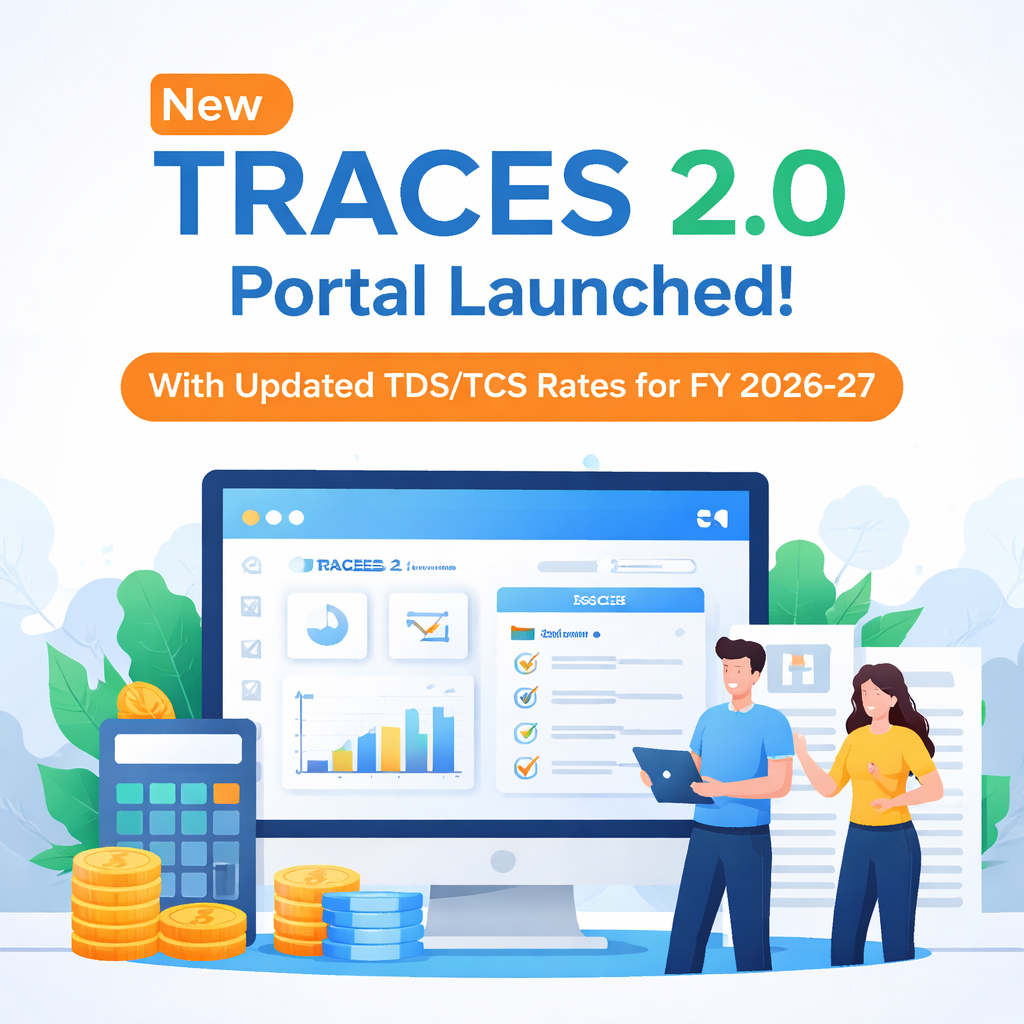
TRACES 2.0 Portal Introduced – Includes TDS/TCS Rates Chart for FY 2026-27

The new TRACES 2.0 portal has been introduced by the Income Tax Department, bringing enhanced functionality, a modern interface, and a better user experience. A key feature of the new portal is the availability of the revised TDS/TCS rates chart for FY 2026–27, consistent with the Income Tax Act, 2025.This article offers a comprehensive overview of the new TRACES portal, its key features, and the benefits of the updated TDS/TCS rate charts for taxpayers and professionals.

What is the TRACES Portal?

TRACES (TDS Reconciliation Analysis and Correction Enabling System) is an online platform developed by the Income Tax Department to facilitate TDS and TCS-related compliance. It enables users to:

  • View and download TDS/TCS statements
  • File correction statements
  • Download Form 16 / 16A
  • Manage lower or nil deduction certificates
  • Access compliance and default reports

The portal plays a vital role for deductors, collectors, taxpayers, and tax professionals in ensuring accurate compliance.


✨ What’s New in the Updated TRACES 2.0 Portal?

The newly launched TRACES 2.0 portal introduces several enhancements designed to improve usability and efficiency:

✅ 1. Modern User Interface

  • Cleaner and more intuitive design
  • Easy navigation across services

✅ 2. Improved Dashboard & Analytics

  • Widget-based dashboard
  • Quick access to statements, certificates, and pending actions

✅ 3. Faster Access to Certificates

  • Simplified download process for:
    • Form 16 / 16A
    • Lower/Nil deduction certificates

✅ 4. Enhanced Compliance Tracking

  • Better monitoring of:
    • Defaults
    • Late filings
    • Pending actions

✅ 5. Integrated TDS/TCS Rates Chart

  • Direct access to the latest TDS/TCS rates for FY 2026–27
  • Updated in line with the Income Tax Act, 2025

📊 TDS & TCS Rates Chart for FY 2026–27 (Key Highlight)

One of the most important additions to the new TRACES portal is the availability of updated TDS and TCS rate charts.

👉 These charts help:

  • Deductors apply correct TDS rates
  • Avoid defaults and notices
  • Ensure compliance with the latest provisions

🔗 Access TDS/TCS Rates Chart (FY 2026–27)

You can access the official charts through the TRACES portal:

  • 👉 TDS Rates Chart
  • 👉 TCS Rates Chart

📌 Conclusion

The launch of the new TRACES 2.0 portal marks a significant step toward the digitization and simplification of TDS/TCS compliance.

With integrated and updated TDS/TCS rates for FY 2026–27, the portal provides a single, efficient platform for compliance management and reference.

Taxpayers and professionals are encouraged to start using the updated portal to stay aligned with the provisions of the Income Tax Act, 2025.


🔍 Discover More

  • Tax update newsletters
  • Accounting software integrations
  • Tax compliance services
Inventory & Invoice Management

📦🧾 How Smart Inventory & Invoice Management Can Transform Your Retail Business

In today’s competitive retail world, managing your business efficiently is more important than ever. Two of the most critical parts of any retail business are inventory management and invoice (billing) management.

If these are not handled properly, your business may face hidden losses, unhappy customers, and slow growth.

Let’s understand how improving these two areas can completely transform your business 👇


📦 Why Inventory Management Matters

Inventory is your investment. Poor management can lead to:

❌ Out-of-stock situations
❌ Overstocking and blocked money
❌ Expired or unsold products

👉 Smart inventory management helps you:

  • Track stock in real-time
  • Maintain optimal stock levels
  • Avoid unnecessary losses

🧾 Why Invoice Management is Important

Your invoice is the final step of every sale. Mistakes here can:

❌ Reduce customer trust
❌ Create confusion in accounts
❌ Cause GST and compliance issues

👉 A proper billing system ensures:

  • Fast and accurate invoices
  • Professional customer experience
  • Easy record keeping

⚡ The Power of Combining Inventory + Billing

When inventory and billing work together, your business becomes stronger:

  • Stock updates automatically after every sale
  • No manual calculations needed
  • Better control over products and profits

👉 This combination saves time and increases efficiency.


📊 Real Business Benefits

With smart inventory & invoice management, you get:

✔ Faster billing process
✔ Accurate stock tracking
✔ Reduced losses
✔ Better decision making
✔ Improved customer satisfaction


🚀 How EasySmartShop (ESS) Helps

EasySmartShop is designed to handle both inventory and billing in one place.

Key Features:

✔ Real-time inventory tracking
✔ Fast and error-free invoicing
✔ GST-ready billing
✔ Detailed reports
✔ Easy to use interface

🎯 Final Thoughts

Your business growth depends on how well you manage your stock and sales.

Don’t let poor systems slow you down.
Upgrade to a smarter solution and take full control of your business.


📞 Contact Us

📱 Call: 8180009888
📧 Email: sales@swanirmit.com
🌐 Website: www.easysmartshop.com


🔚 Conclusion

Strong inventory + smart invoicing = Successful business

Switch to EasySmartShop (ESS) and experience smooth, fast, and profitable business management.

Compliance Due Dates & Key Filings for April 2026

With the start of the new financial year FY 2026–27, April emerges as a critical month for compliance from both Income Tax and GST perspectives. Businesses, professionals, and tax practitioners must stay on top of key deadlines to avoid interest, penalties, and potential notices.

🗓️ Compliance Timeline & Important Dates for April 2026

April sets the tone for the entire financial year, making it essential to ensure:

  • Timely GST return filings (GSTR-1, GSTR-3B, etc.)
  • Deposit of TDS/TCS within due dates
  • Proper documentation and reconciliation of transactions
  • Early planning for advance tax and regulatory compliances

    Compliance Calendar – April 2026 (Complete Guide)

    https://images.openai.com/static-rsc-4/zXx9R0Y3W9RUTZri8CNntnZVqNTyeeWaYbeqWgVw8F3TLlO_GHcXgBncfAoWH43AbADbv78IYLSabfRTGA9fEgD-xO0n-SJ3D6ULQMaUmt4QAKQlI0x8r-T4EFtzBNkVQV9FQ990xijfmRpgavEmqr80sNwaY-tQpvQMyDo1IvpjIfJY1aPprLDmTkDx0iKO?purpose=fullsize
    https://images.openai.com/static-rsc-4/5Sl9naNGQCWstT78h1FiYaDiANVfxgH0JlReCDdri6QF_oznPgLttDBFsDWUKCdZ53Rw6iAQF_k0eyedImpjMj0rjF15RFuL9EfaBfihQWI8g96gBjTn-bpgu96QURONSAX5wr3geZ6kK6ZgsqZsYyG7xIw1nFSZrQ232_O57aODHG0DQDQKnhyfhCnVUVdf?purpose=fullsize
    https://images.openai.com/static-rsc-4/KxcvggfFVwOL7SNUbELL82f31HbUhT3sQMB5m-hL8Z0rezQvAeLhdUBz6tyoJMGYoATEIlnMM8yXx-5qDe5tvUjV4_e3B4HVdqNjEu--W1S8D32OwNPXc_dR3A5tvh_NOAUeZBL4x-nHqvQ90ged6okgq9RU9YU2wVFUBaUiKfwojG8kYJNQkLP2JOaABOeO?purpose=fullsize
    5

    This article provides a comprehensive compliance calendar for April 2026, covering GST, Income Tax (TDS/TCS), PF, ESI, MCA, and other key regulatory requirements.


    🔰 Important Update from 1 April 2026

    With the beginning of FY 2026–27, several critical changes come into effect:

    • Reset of aggregate turnover under GST
    • Adoption of a new invoice series
    • Applicability of provisions under the Income Tax Act, 2025
    • Revised TDS/TCS rates (where applicable)
    • Start of a fresh compliance cycle for all taxpayers

    💰 Income Tax Compliance (TDS/TCS)

    📌 7 April 2026

    • Deposit of TCS for March 2026
    • Submission of declarations (Form 27C)

    📌 14 April 2026

    • Issue of TDS certificates:
      • Form 16B (property)
      • Form 16C (rent)
      • Other applicable certificates

    📌 30 April 2026

    • Deposit of TDS for March (non-government deductors)
    • Filing of:
      • Form 26QB (property transactions)
      • Form 26QC (rent payments)
      • Form 26QD (specified payments)

    📊 GST Compliance

    April is a high-volume GST compliance month due to both monthly and quarterly filings:

    📌 10 April 2026

    • GSTR-7 (TDS under GST)
    • GSTR-8 (E-commerce operators)

    📌 11 April 2026

    • GSTR-1 (Monthly – March 2026)

    📌 13 April 2026

    • GSTR-1 (QRMP – Jan–Mar quarter)
    • GSTR-5 (Non-resident taxable persons)
    • GSTR-6 (Input Service Distributor)

    📌 18 April 2026

    • CMP-08 (Composition scheme)

    📌 20 April 2026

    • GSTR-3B (Monthly filers)

    📌 22 & 24 April 2026

    • GSTR-3B (QRMP scheme)

    📌 25 April 2026

    • ITC-04 (Job work return)

    📌 28 April 2026

    • GSTR-11 (UIN holders)

    📌 30 April 2026

    • GSTR-4 (Annual return for composition dealers – FY 2025–26)

    👨‍💼 PF & ESI Compliance

    📌 15 April 2026

    • Deposit of Provident Fund (PF)
    • Filing of ECR (Electronic Challan-cum-Return)
    • Deposit of ESI contributions

    🏢 MCA / Companies Act Compliance

    While April has no major fixed ROC due dates, it remains important for:

    • Planning annual compliance strategy
    • Conducting the first Board Meeting (if applicable)
    • Reviewing statutory registers and disclosures

    🌍 Other Key Compliance

    📌 7 April 2026

    • Filing of ECB-2 Return (foreign borrowings under FEMA)

    📌 15 April 2026

    • Submission of Form 15CC (foreign remittance compliance)

    ✅ Final Takeaway

    April is not just the start of a new financial year—it’s a foundation month for compliance discipline. Staying updated with deadlines across GST, Income Tax, and other laws helps:

    • Avoid penalties and interest
    • Ensure smooth operations
    • Build a strong compliance track record for the year ahead
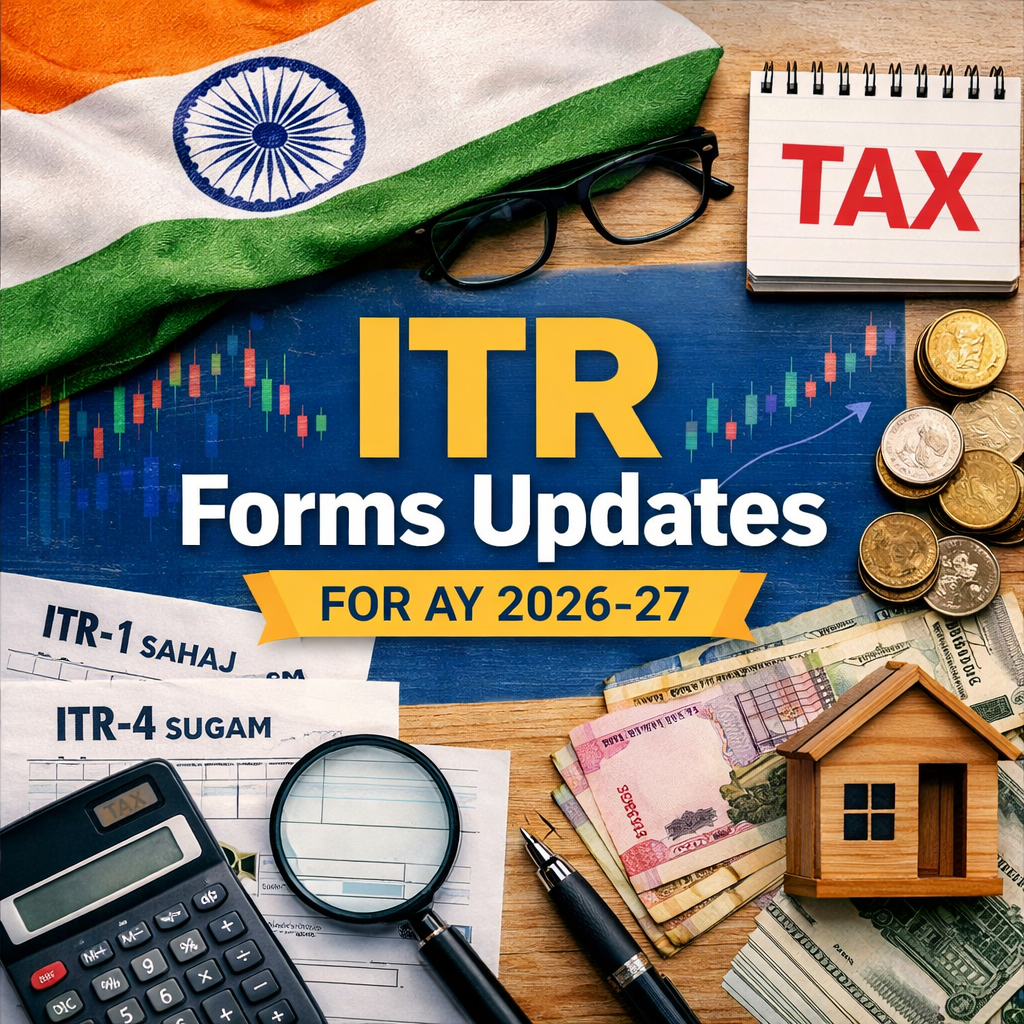
Key Updates in ITR Forms (ITR-1, ITR-2, ITR-3, ITR-4) for AY 2026–27

For the Financial Year 2025–26, Income Tax Returns will be filed in 2026 as per the prescribed due dates. The government has already notified the updated ITR forms for Assessment Year 2026–27, incorporating several key changes to enhance transparency, ensure better compliance, and improve the accuracy of financial reporting.

ITR Form Formats / Templates


Start Fresh This Financial Year – No More Billing Errors!

नवीन आर्थिक वर्ष म्हणजे व्यवसायासाठी एक fresh start. नवीन goals, नवीन planning आणि growth साठी नवीन दिशा. पण जर तुमच्या billing system मध्ये अजूनही चुका होत असतील, तर हे तुमच्या business growth साठी मोठं अडथळा ठरू शकतं.

👉 म्हणूनच, या financial year मध्ये एक smart decision घ्या – No More Billing Errors!


⚠️ Billing Errors तुमच्या Business ला कसा नुकसान करतात?

Manual billing किंवा outdated system वापरत असाल तर खालील समस्या येऊ शकतात:

  • ❌ Wrong calculations
  • ❌ GST filing errors
  • ❌ Duplicate / missing entries
  • ❌ Stock mismatch
  • ❌ Customer trust कमी होणे

या छोट्या चुका भविष्यात मोठ्या financial loss मध्ये बदलू शकतात.


🚀 Solution – Smart Billing Software

आजच्या digital युगात billing software हा luxury नाही, तर necessity आहे.

✔️ Error-Free Billing

Software automatically calculations करतो, त्यामुळे mistakes होण्याची शक्यता जवळजवळ शून्य होते.

✔️ Fast & Professional Invoices

काही सेकंदात professional bills तयार करा.

✔️ GST Ready System

Automatic GST reports आणि filing साठी complete support.

✔️ Real-Time Reports

Sales, profit, stock – सगळं एका click मध्ये track करा.

✔️ Easy Stock Management

Low stock alerts, inventory tracking सगळं सोपं होतं.


💡 Why This Financial Year is the Right Time to Upgrade?

  • 📅 New beginning = Better system
  • 📊 Clean accounting start
  • 💼 Professional business image
  • 📈 Faster growth & better control

🏪 कोणासाठी उपयुक्त?

  • Retail Shops
  • Wholesale Businesses
  • Supermarkets
  • Medical Stores
  • Service Providers

📢 Make the Smart Move Today!

या नवीन financial year मध्ये तुमचा business upgrade करा आणि billing mistakes ला कायमचा goodbye द्या 👋

👉 Smart बना, Digital बना!


📞 Contact Us

📱 8180009888
🌐 www.easysmartshop.com
📧 sales@swanirmit.com

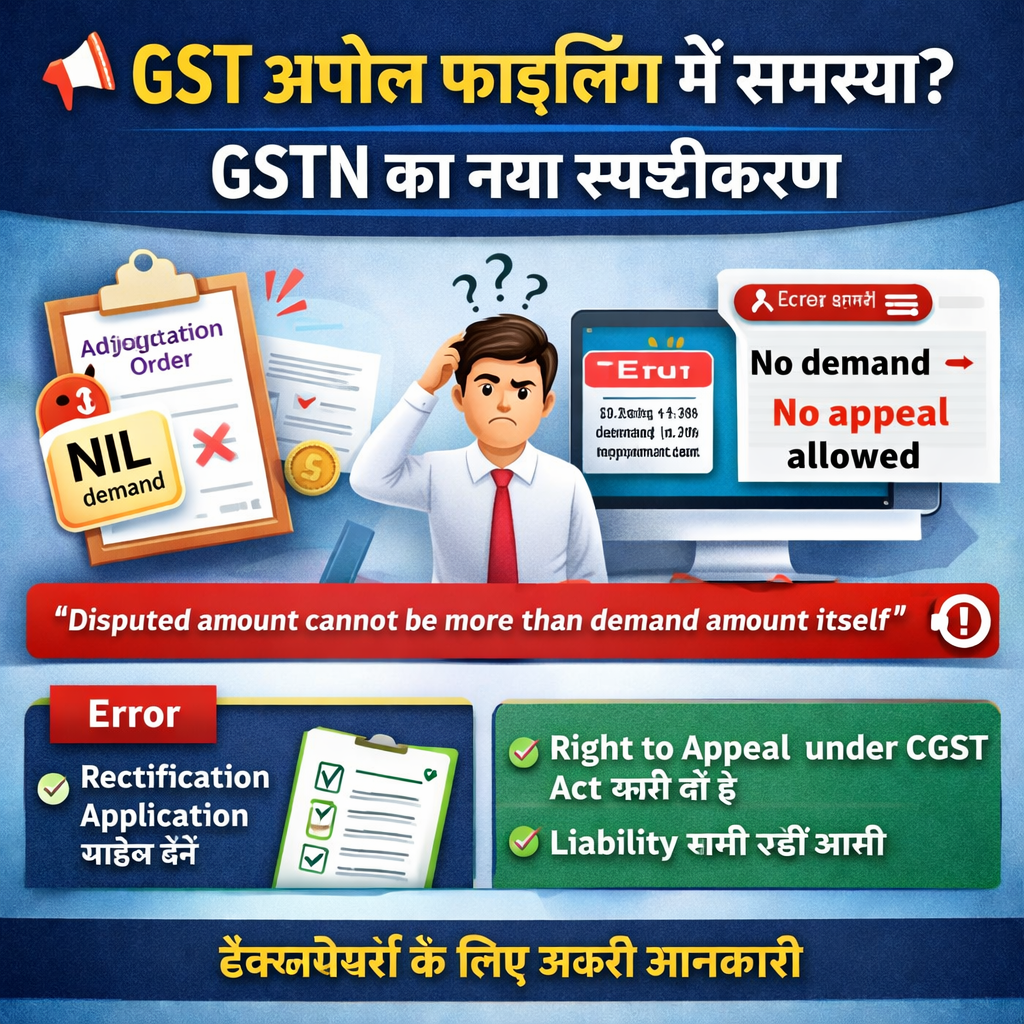
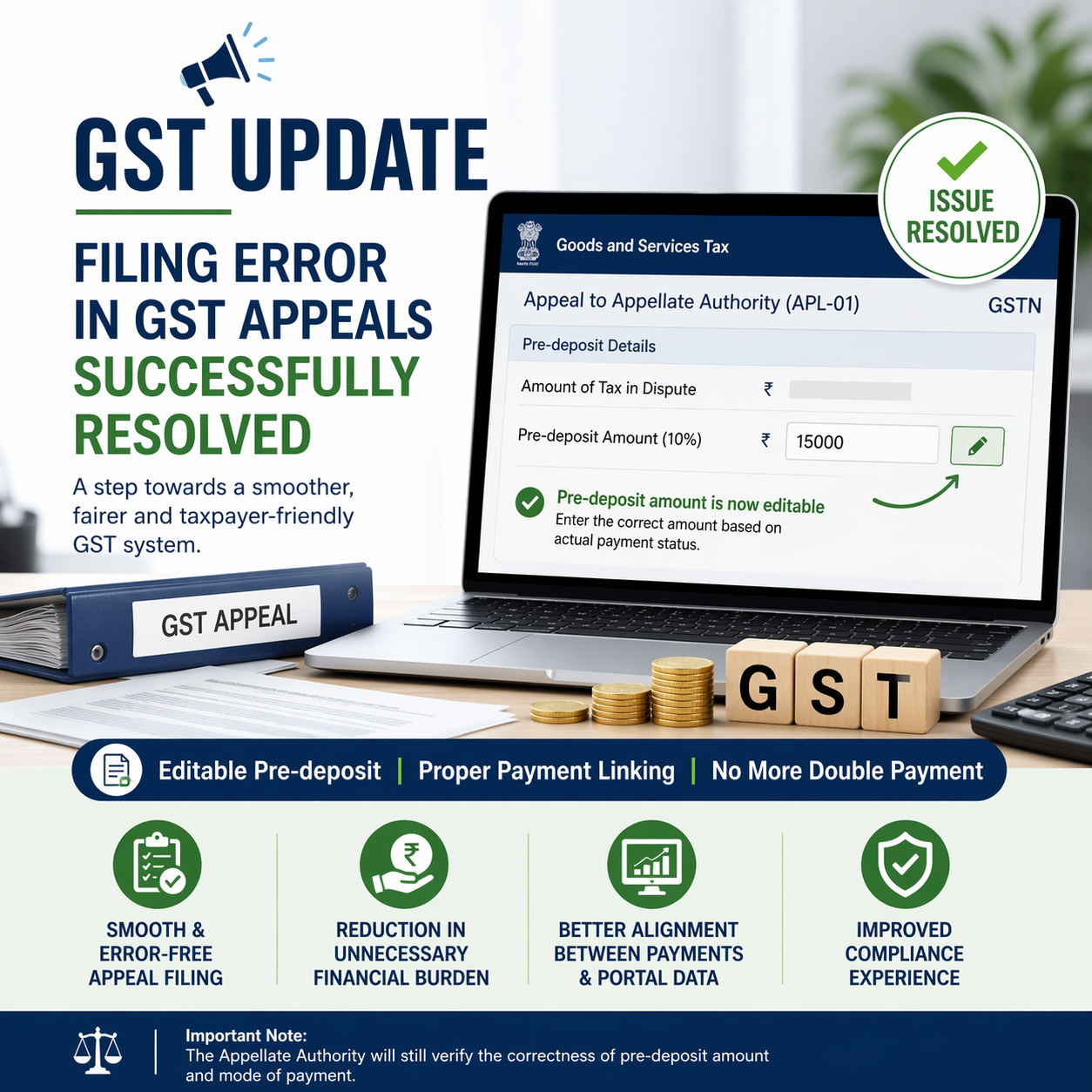
GST अपील प्रक्रिया में समस्या? GSTN ने जारी की गाइडलाइन

📢 GST अपील फाइलिंग में समस्या? जानें पूरा मामला और समाधान

GSTN ने हाल ही में एक महत्वपूर्ण समस्या पर ध्यान दिलाया है, जिसका सामना कई टैक्सपेयर्स GST पोर्टल पर अपील फाइल करते समय कर रहे हैं।


⚠️ समस्या क्या है?

कुछ मामलों में टैक्सपेयर्स adjudication order के खिलाफ appeal (APL-01) फाइल नहीं कर पा रहे हैं क्योंकि:

👉 ऑर्डर में Demand = NIL दिख रहा है
👉 जबकि वास्तव में टैक्स liability पर विवाद अभी भी मौजूद है


🔍 यह स्थिति कब उत्पन्न होती है?

यह समस्या आमतौर पर तब होती है जब:

  • टैक्सपेयर SCN (Show Cause Notice) स्टेज पर पेमेंट कर देता है
  • लेकिन यह पेमेंट liability स्वीकार किए बिना किया गया होता है
  • फिर भी अधिकारी इसे final discharge मान लेते हैं
  • और ऑर्डर में NIL demand दिखा देते हैं

⚙️ GST पोर्टल पर सिस्टम व्यवहार (DCR Mechanism)

जब भी demand order पास होता है:

  • एक Demand ID जनरेट होती है
  • यह Demand and Collection Register (DCR) में रिकॉर्ड होती है

👉 अगर demand NIL है:

  • सिस्टम इसे zero liability मान लेता है

🚫 असली समस्या (Appeal Filing Error)

जब आप Form APL-01 से अपील फाइल करते हैं:

👉 पोर्टल एरर देता है:
“Disputed amount cannot be more than demand amount itself”

📌 कारण:

  • Demand = NIL
  • इसलिए सिस्टम अपील ब्लॉक कर देता है

👉 सरल शब्दों में:
No demand = No appeal (technical issue)


⚖️ कानूनी स्थिति (बहुत महत्वपूर्ण)

GST Network (GSTN) ने स्पष्ट किया है:

✔ SCN स्टेज पर पेमेंट = liability स्वीकार करना नहीं है
✔ टैक्सपेयर को अपील का पूरा अधिकार है

👉 लागू कानून:
Section 107 of CGST Act, 2017

📌 महत्वपूर्ण बात:

  • पेमेंट कई बार pressure / compliance / litigation avoid करने के लिए किया जाता है
  • यह अपील का अधिकार खत्म नहीं करता

🛠️ GSTN द्वारा सुझाया गया समाधान

इस समस्या को हल करने के लिए GSTN ने एक स्पष्ट प्रक्रिया बताई है:

✅ Step-by-Step Solution

1. Rectification Application फाइल करें

  • GST पोर्टल पर rectification का विकल्प इस्तेमाल करें

2. Adjudicating Authority से संपर्क करें

  • स्पष्ट करें कि:
    • liability स्वीकार नहीं की गई थी
    • demand सही तरीके से निर्धारित की जाए

3. Rectification Order प्राप्त करें

  • संशोधित ऑर्डर में सही demand दिखनी चाहिए

4. फिर Appeal (APL-01) फाइल करें

  • demand अपडेट होने के बाद
  • निर्धारित समय सीमा के अंदर