
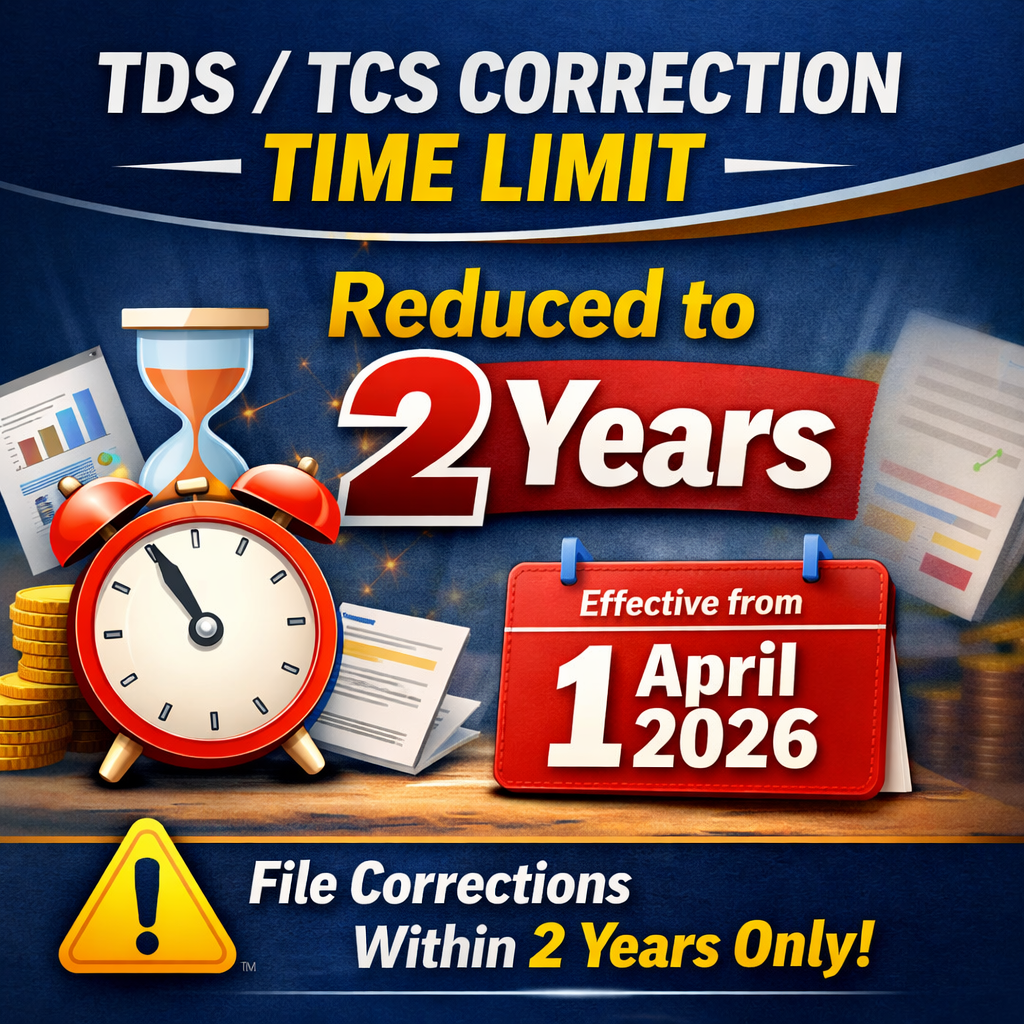

New Regulations for TDS Return Rectification Applicable from 01-04-2026
TDS / TCS Correction Statements: Time Limit Cut Down to 2 Years (Effective 01 April 2026)
🔔 What’s the Latest Change?
The Income Tax Department has introduced a major compliance reform by reducing the time limit for filing TDS and TCS correction statements to just 2 years, applicable from 1 April 2026.
Until now, deductors had the flexibility to revise old TDS/TCS returns even after many years. This long-standing practice will no longer be permitted.
⏳ Key Change Explained: Old Rule vs New Rule
🔙 Earlier Position (Before 01.04.2026)
-
No strict statutory deadline for filing correction statements
-
Corrections were practically allowed up to 7 years or more
-
Deductors commonly rectified:
-
Incorrect PAN details
-
Challan mapping errors
-
Short or excess deduction
-
Late reporting issues
-
-
Corrections were accepted even after several years
🔜 New Rule (From 01.04.2026)
-
⛔ Correction statements allowed only within 2 years
-
The 2-year period will be calculated from:
-
End of the relevant financial year
-
-
❌ No correction will be permitted beyond this period
-
This is a strict and absolute deadline, not extendable in any case
📅 Last Opportunity for Old TDS/TCS Periods
Correction statements for the following quarters will be allowed only up to 31 March 2026:
-
Q4 of FY 2018–19
-
Q1 to Q4 of FY 2019–20 to FY 2022–23
-
Q1 to Q3 of FY 2023–24
⚠️ From 1 April 2026 onwards, the TRACES portal will permanently block corrections for these periods.
❌ Impact of Missing the 2-Year Deadline
Failure to file corrections within the prescribed time may result in:
-
❌ Permanent denial of correction facility
-
❌ Loss of TDS/TCS credit for deductees in Form 26AS / AIS
-
❌ Disputes with employees, vendors, or contractors
-
❌ Penalties ranging from ₹10,000 to ₹1,00,000
-
❌ Higher compliance and audit risks
-
❌ Interest liability and possible disallowance of expenses
✅ Reason Behind This Amendment
The department aims to promote:
-
Timely reconciliation of data
-
Faster and accurate credit to deductees
-
Reduced backlog of old corrections
-
Lower litigation and disputes
-
A shift towards real-time, technology-driven compliance
This change reflects a move towards strict timelines and disciplined reporting.
🧾 Best Practices Suggested by the Department
-
Regularly use TRACES utilities and validation tools
-
Track defaults and mismatches frequently
-
File correction statements immediately upon detecting errors
-
Train staff on the revised timelines
-
Adopt a preventive compliance approach
📌 Action Checklist for Deductors & Tax Professionals
✔ Review all pending TDS/TCS correction requirements
✔ Resolve old mismatches before 31 March 2026
✔ Strengthen internal review and control systems
✔ Inform clients and staff about the 2-year non-negotiable limit