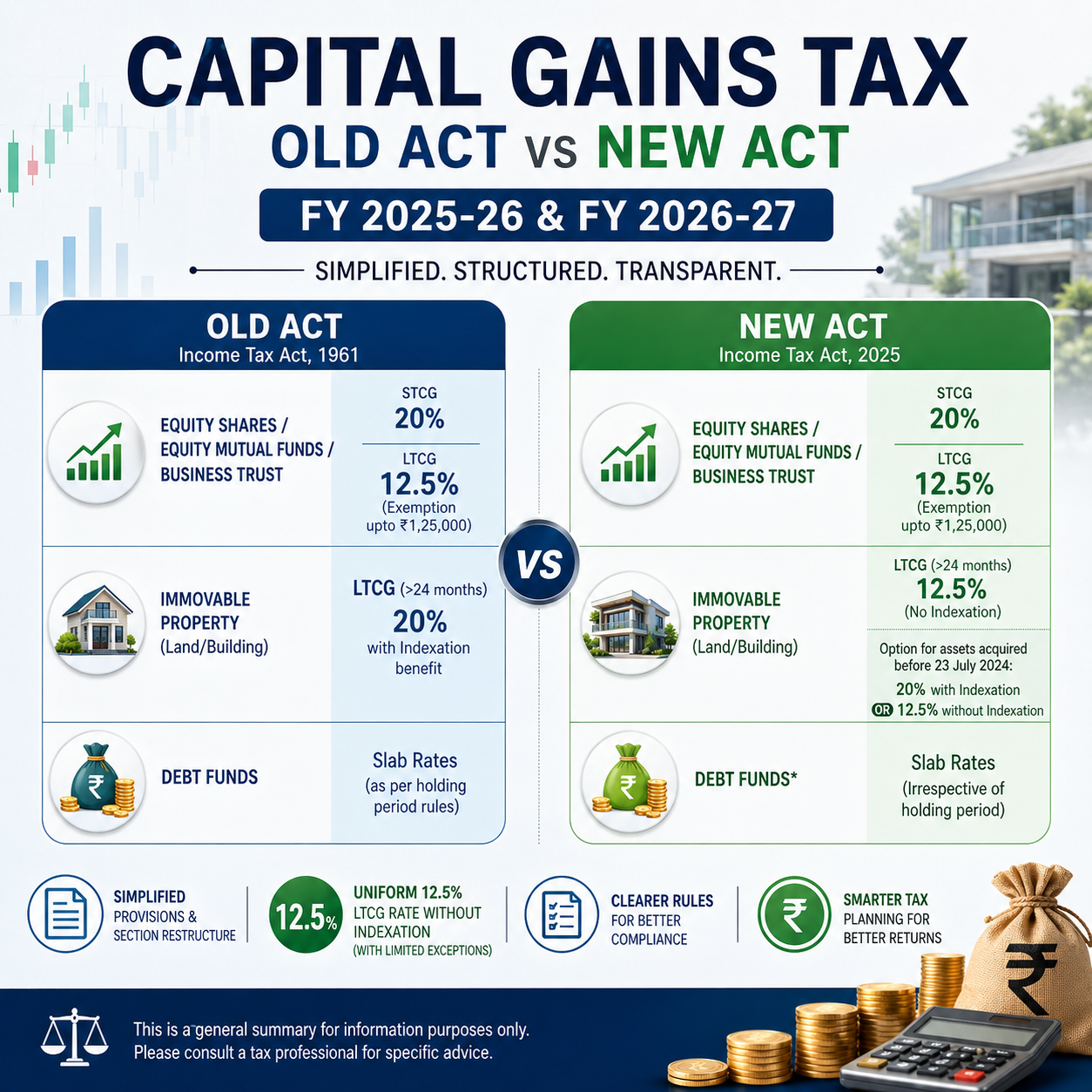
Key Changes in Income Tax Rules for 2026
Income Tax Bill 2026: Key Updates, Continuity, and What It Means for Taxpayers
The Income Tax Bill 2026 introduces several important changes while retaining many existing provisions. One of the most significant updates is the higher basic exemption limit under the new tax regime. At the same time, the old regime continues to allow deductions under Sections 80C, 80D, and 10(10D).
Changes in ULIP taxation, insurance maturity benefits, and foreign investment norms have also reshaped the role of insurance in tax planning. This article explores the major changes, the provisions that remain unchanged, and what taxpayers should keep in mind going forward.
Overview of the Income Tax Bill 2026
The Income Tax Bill 2026 reinforces the government’s shift toward a simplified tax system with fewer exemptions, while still giving taxpayers the flexibility to choose between the old and new regimes.
A key highlight is the increased tax-free income threshold of up to ₹12 lakh under the new regime, offering relief to middle-income earners. Meanwhile, the traditional deduction-based regime remains available for those who prefer structured tax-saving investments.
Insurance continues to serve both protection and tax-saving purposes, though high-value products like ULIPs are now subject to stricter tax treatment. Additionally, allowing 100% FDI in insurance companies (subject to reinvestment within India) reflects a push toward greater transparency and increased capital inflows.
Major Changes Introduced
- Tax-free income limit under the new regime increased to ₹12 lakh
- No revision in deduction limits under Sections 80C and 80D (old regime)
- ULIPs with annual premiums above ₹2.5 lakh now taxed as capital gains
- 100% FDI permitted for insurers reinvesting in India
- Old and new tax regimes continue simultaneously
Introduction of the ‘Tax Year’ Concept
A major structural reform in the 2026 bill is the introduction of the ‘Tax Year.’ This replaces the current distinction between the financial year and assessment year with a single unified period.
This change simplifies tax compliance, reduces confusion, and aligns India’s tax system with global practices. Taxpayers will now calculate income and file returns based on a single reporting cycle, improving clarity and efficiency.
Rationalisation of Deductions and Exemptions
While deductions under Sections 80C, 80D, and 10(10D) continue for now, the government has indicated a long-term plan to reduce the number of exemptions.
The idea is to move toward a cleaner system with fewer but more impactful deductions, encouraging taxpayers to adopt the simplified regime and reducing compliance burden.
Taxation of Virtual Digital Assets (VDAs)
The bill formally recognises Virtual Digital Assets such as cryptocurrencies, NFTs, and tokens under a defined tax framework.
- Gains continue to be taxed at a flat 30%
- No deductions allowed except cost of acquisition
- Reporting requirements have been strengthened
This move strengthens regulatory clarity and improves transparency in the digital economy.
Revised Presumptive Taxation Limits
To support small businesses and professionals, the presumptive taxation thresholds have been increased:
- Businesses (Section 44AD): from ₹2 crore to ₹3 crore
- Professionals (Section 44ADA): from ₹50 lakh to ₹75 lakh
These benefits apply only when at least 95% of transactions are conducted digitally, promoting digital payments while simplifying compliance.
Expanded Role of the CBDT
The Central Board of Direct Taxes (CBDT) has been granted broader powers to improve tax administration.
These include:
- Issuing binding circulars
- Designing compliance schemes
- Enabling faceless assessments
- Strengthening cross-border information exchange
The objective is to reduce disputes, improve efficiency, and enhance taxpayer services.
Old vs New Tax Regime: A Comparison
The dual tax system continues, but with notable updates:
- The new regime offers a higher exemption limit (₹12 lakh)
- The old regime retains popular deductions like 80C and 80D
- ULIP taxation rules have become stricter
- The ‘Tax Year’ replaces the earlier system
- Digital asset taxation is now formally structured
The choice between the two depends on individual income patterns and investment habits.
Impact on Different Taxpayers
Salaried Individuals:
Those with fewer deductions may benefit from the new regime’s higher exemption limit. However, individuals claiming HRA and 80C deductions may still prefer the old regime.
Small Businesses & Professionals:
Higher presumptive taxation limits reduce compliance burden, especially for those adopting digital transactions.
Senior Citizens:
No major changes, but they can continue to benefit from higher deductions under Section 80D in the old regime.
Investors & Digital Asset Holders:
Stricter tax rules for ULIPs and cryptocurrencies may increase tax liability, requiring a reassessment of investment strategies.
NRIs & Global Taxpayers:
The introduction of the ‘Tax Year’ aligns India with global standards, making compliance easier.
High-Income Earners:
Those not dependent on deductions may find the new regime more efficient due to simplified tax calculations.
Final Thoughts
The Income Tax Bill 2026 moves toward a simpler and more transparent tax system while preserving flexibility through the dual-regime approach.
The new regime, with its higher exemption limit, is designed for ease and convenience. At the same time, the old regime continues to support taxpayers who rely on structured deductions.
Ultimately, choosing the right regime depends on your income structure, investment behaviour, and financial goals. Going forward, tax planning will need to be more strategic, personalised, and aligned with long-term financial planning.
FAQs on the Income Tax Bill 2026
Q1. When will the new Income Tax Bill be introduced in Parliament?
The bill is likely to be presented during the Monsoon Session of Parliament in 2026.
Q2. What is the objective of the new Income Tax Bill?
Its primary goal is to update and simplify the tax framework, enhance transparency, reduce compliance burden, and bring India’s tax system in line with global standards.
Q3. From when will the new tax provisions be applicable?
The changes are expected to come into effect from April 1, 2026, subject to approval by Parliament.
Q4. Will there be any changes to existing deductions and exemptions?
There are no immediate changes to deductions under the old tax regime. However, the new tax regime continues to operate without most exemptions.
Q5. What additional powers does the CBDT receive under the new bill?
The bill provides the CBDT with enhanced authority to issue binding directions, introduce technology-driven compliance systems, and ensure quicker resolution of tax-related matters.