✅ CBDT Introduces New Measures to Speed Up Tax Refunds and Simplify ITR Rectifications

The Central Board of Direct Taxes (CBDT) issued a notification on 27 October 2025, granting the Commissioner of Income Tax at the Centralised Processing Centre (CPC), Bengaluru, concurrent jurisdiction under Section 154 of the Income-tax Act, 1961.

This empowers the CPC to correct apparent errors in orders issued through the AO–CPC digital interface, significantly speeding up the resolution of mistakes related to tax credits, refunds, and interest calculations.

According to the notification, CPC can now rectify issues such as:

  • Non-consideration of prepaid tax credits (TDS/TCS/advance tax)

  • Errors in granting reliefs

  • Wrong computation of interest under Section 244A

  • Any tax/refund computation mistakes linked to AO-CPC processed cases

Where required, CPC may also issue demand notices under Section 156.


How This Change Benefits Taxpayers

Chartered Accountant (Dr.) Suresh Surana outlines the major advantages:

1. Much Faster Rectification of Errors

Previously, taxpayers had to wait for jurisdictional Assessing Officers to manually correct mismatches in TDS/TCS, advance tax, or refund computations—often causing long delays.

Now, CPC can directly fix such issues, resulting in quicker resolutions.


2. Reduced Administrative Delays

This move centralises Section 154 rectifications for AO-CPC cases, making the system more automated and less dependent on manual inter-departmental coordination.
This improves processing speed and reduces duplicated effort between AOs and CPC.


3. Timely and Accurate Refunds

Refund delays often stem from small computational errors or incorrect interest calculations.
With the CPC now authorised to correct these instantly, taxpayers can expect:

  • Faster release of refunds

  • Correct Section 244A interest

  • Fewer follow-ups and representations


4. Greater Transparency & Improved Compliance

Since rectifications will now run through CPC’s system-driven interface, taxpayers benefit from:

  • Better audit trails

  • Accurate reflection of all prepaid tax credits

  • Reduced scope for human error

  • Clearer communication and automated updates


Expert Insight

“This notification bridges the functional gap between assessment and processing, ensuring that genuine computational errors are corrected swiftly without requiring taxpayers to approach multiple authorities. It strengthens the government’s push for faceless, technology-driven, and taxpayer-friendly tax administration.”
CA (Dr.) Suresh Surana


What CBDT Stated in the Notification

CBDT has directed that the Commissioner of Income Tax, CPC Bengaluru, shall exercise concurrent powers to:

1. Rectify Mistakes (Section 154)

Including issues related to:

  • Previously issued refunds

  • Omitted prepaid tax credits

  • Missed reliefs

  • Wrong 244A interest

  • Any computational errors affecting tax, refund, or demand

2. Issue Demand Notices (Section 156)

For cases where rectification results in tax payable.

3. Delegate Powers

The Commissioner may authorise:

  • Additional / Joint Commissioners to execute rectification functions

  • These officers may further authorise Assessing Officers for specific classes of cases or taxpayers

This ensures a structured, tiered flow of responsibility, enhancing accountability and efficiency.


Notification Reference

Notification No. 155/2025
F. No. CB/362/2025-O/o Addl. DIT 6 CPC Bengaluru-187/10/2024-ITA-I
(Effective immediately on publication in the Official Gazette)

Taxpayers to Benefit as CBDT Enables CPC Bengaluru to Accelerate Rectification & Refund Processing

Bengaluru — In a significant move aimed at improving the efficiency and accuracy of income-tax processing, the Central Board of Direct Taxes (CBDT) has empowered the Commissioner of Income Tax at the Centralised Processing Centre (CPC), Bengaluru, with enhanced authority to handle rectifications and issue demand notices under the Income-Tax Act.

Under this new directive, the CPC Bengaluru has been granted concurrent jurisdiction under Sections 120(1) and 120(2) of the Income-Tax Act, 1961. This will enable faster resolution of taxpayer issues such as incorrect tax computations, refund mismatches, or other technical errors.

According to a notification released by the Ministry of Finance, the Commissioner of Income-Tax at CPC Bengaluru can now:

  • Issue demand notices under Section 156

  • Rectify errors apparent on record under Section 154

These powers include correcting issues such as:

  • Wrongly computed refunds

  • Omission of prepaid taxes like TDS, TCS, or advance tax

  • Errors in considering relief under tax treaties

  • Mistakes in calculating interest under Section 244A

Delegation for Faster Processing

The notification also allows the Commissioner to authorise Additional or Joint Commissioners in writing, who may then assign specific rectification or follow-up functions to Assessing Officers.
This layered delegation is designed to:

  • Improve accountability

  • Speed up the workflow

  • Ensure timely resolution of taxpayer requests

By empowering CPC-Bengaluru to take up rectification tasks directly—earlier handled jointly by CPC and field officers—the government aims to strengthen its digital tax-administration framework and enhance taxpayer convenience.

The notification takes effect immediately upon publication in the Official Gazette.

Recent Extensions in Tax Deadlines

Earlier, CBDT had extended several key deadlines:

  • Return filing under Section 139(1) for applicable taxpayers moved from 31 October to 10 December 2025.

  • For assessees requiring an audit under clause (a) of Explanation 2 to Section 139(1):

    • Audit report due date was first extended from 30 September 2025 to 31 October 2025.

    • This “specified date” has now been further extended to 10 November 2025.

A formal notification for the latest extension will be issued separately.

Important EPF Changes Effective November 2025: What Employees Should Know

On October 15, 2025, the Ministry of Labour and Employment released an official statement via the Employees’ Provident Fund Organisation (EPFO), outlining the latest reforms to the Employees’ Provident Fund (EPF) and Employees’ Pension Scheme (EPS).
These updates, approved by the Central Board of Trustees (CBT), are designed to streamline withdrawal procedures, expand digital accessibility, and speed up claim processing, while continuing to protect employees’ retirement funds.
The announcement also aimed to clarify misconceptions spreading on social media and to inform both employers and employees about the real implications of these policy changes.


🔹 Major Highlights from the EPFO Press Release

a) Streamlined EPF Withdrawal System
Previously, EPF members had to follow separate rules for different partial withdrawal purposes such as marriage, medical needs, education, or home purchase.
The new unified withdrawal framework brings all these under one simplified set of rules. It now:

  • Permits withdrawals from both employee and employer contributions (including interest).

  • Reduces the minimum service period to just 12 months, compared to 5–7 years earlier.

  • Introduces uniform eligibility criteria across all withdrawal categories.

This integrated model eliminates the confusion caused by multiple provisions and makes the withdrawal process easier to understand and apply.


b) Access to Employer’s Contribution Made Easier
A major policy update now allows members to withdraw from the employer’s share as well, under certain approved conditions.
Eligible individuals can withdraw up to 75% of their total accumulated balance for needs such as housing, medical treatment, or during periods of unemployment.

This change provides greater financial flexibility for employees, especially in emergency situations, while still keeping a portion of funds reserved for post-retirement security.


c) Safeguards to Protect Retirement Corpus
Even with relaxed withdrawal norms, EPFO has introduced safeguards to preserve long-term savings.
Under the Employees’ Pension Scheme (EPS), the waiting period for final settlement has been increased from 2 months to 36 months after an employee leaves service.

This aims to discourage premature full withdrawals and promote a more sustainable retirement corpus.


d) Faster Claims & Digital-First Processing
EPFO’s new reforms also prioritize efficiency and technology adoption. Key enhancements include:

  • Increasing the auto-settlement limit for advance claims from ₹1 lakh to ₹5 lakh.

  • Streamlining claim verification with fewer documents.

  • Enabling UAN and Aadhaar-based digital processing for most claims and transfers.

  • Reducing reliance on employer verification, allowing direct claim handling via the EPFO portal.

Together, these initiatives aim to make EPF services faster, more transparent, and user-friendly.


e) Clarification on Social Media Rumors
The October 2025 EPFO press release also addressed misinformation circulating online about complete EPF withdrawals.
It clarified that:

  • There is no general permission for full withdrawal of EPF while still employed.

  • 100% withdrawal is only allowed upon retirement or under specific eligible cases.

  • Members should only rely on official EPFO and Ministry notifications for authentic updates.

This clarification was issued to prevent confusion and ensure members understand the genuine scope of the new rules.


🔹  Practical Guidance & Implementation Checklist

For Employees / EPF Members

  • Ensure that you have completed a minimum of 12 months of continuous employment before submitting a withdrawal request.

  • Under the revised framework, both the employee and employer shares of the fund can be withdrawn, provided the conditions are met.

  • Retain a sufficient balance in your EPF account to continue earning interest and to strengthen your long-term savings.

  • Members covered under EPS-95 should note that final pension withdrawal can only be initiated after 36 months from the date of leaving service.

  • Use your UAN-linked Aadhaar credentials for faster and smoother online claim submission and tracking.


For Employers / Establishments

  • Make sure that ECR filings and monthly contributions are submitted promptly to avoid delays in employee claim processing.

  • Communicate with employees about the revised withdrawal norms and associated limitations.

  • Keep all employee details updated and verified on the EPFO portal, including KYC, Aadhaar, PAN, and bank information.

  • Since employer contributions are now partially withdrawable, reconcile monthly contributions carefully to ensure accuracy in employee balances.


Due Dates Extended! For MCA, GST & Income Tax

As we move into October 2025, the compliance season is in full swing — with multiple due dates for MCA filings, GST returns, TDS statements, and Tax Audits, all overlapping with the Diwali festive season. At the same time, several representations and court orders have led to extensions or expected relaxations for various filings. Let’s go through all updates and due dates one by one

 1️⃣ MCA — Extension for Annual Filings & DIR-3 KYC

  • The Ministry of Corporate Affairs (MCA) has extended the due date for filing e-Form DIR-3 KYC and web form DIR-3 KYC-WEB without additional fees up to 31st October 2025

✳️ Practical Tip:

✅ File your Director KYC before 31st October to avoid the ₹5,000 late fee.
✅ Companies should also begin preparing their Form AOC-4 (Financial Statements) and MGT-7/MGT-7A (Annual Return), as these are due soon after AGM closure (generally within 30 or 60 days of AGM).


 2️⃣ Income Tax — Extension Expected for Audit & ITR Filing

  • Several High Courts have directed the CBDT to extend the due dates for ITR filing for audit cases.

Though official CBDT notification is awaited, these extensions are expected considering the heavy compliance load and technical portal issues.

✳️ Practical Tip:

✅ Don’t wait for the official circular — start finalizing audits and ITRs now.
✅ If notified, file by the new dates to avoid penalty under Section 271B.


 3️⃣ GST — Possible Extension for GSTR-3B (September 2025 Period)

  • Professional bodies such as BCAS and ICAI have requested an extension of GSTR-3B filing for the September 2025 period, due to Diwali holidays and the rollout of new GST changes (IMS & refund automation).
  • The government is reportedly considering extending the due date from 20th October 2025 to 25th October 2025.
  • Though not yet officially notified, such extensions around the festive period are quite possible.

✳️ Practical Tip:

✅ File GSTR-1 (Monthly) by 11th October 2025 and Quarterly by 13th October 2025.
✅ Plan GSTR-3B filings early to avoid Diwali-week portal rush.


 4️⃣ TDS, TCS & Other Key Compliance Due Dates (October 2025)

📅 Due Date 📘 Compliance
7th October 2025 Deposit of TDS/TCS deducted for September 2025
31st October 2025 DIR-3 KYC & Web KYC (MCA) — Extended date
15th October 2025 TCS Return filing
31st October 2025 Filing of TDS Return for Q2 (Form 24Q/26Q/27Q)
31st October 2025 Filing of Tax Audit Report
20th October 2025 GSTR-3B for September 2025 period
Income Tax, TDS, TCS Changes From 1st April 2025

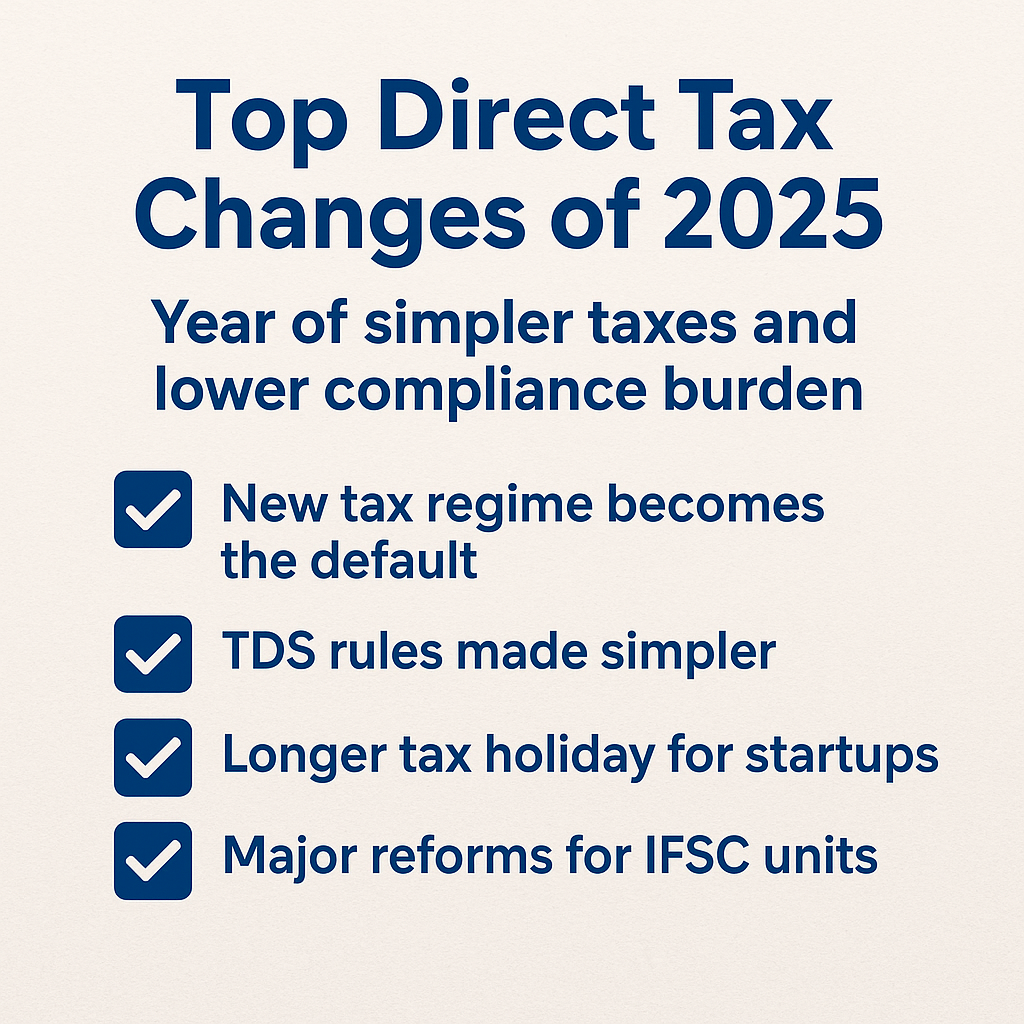
The Budget 2025 introduced major amendments to the Income Tax Act, 1961, aimed at simplifying India’s tax structure. These changes take effect from 1st April 2025 and will be applicable for FY 2025-26 (AY 2026-27).


1. Income Tax Slabs for FY 2025-26 (AY 2026-27)

The Budget 2025 introduced revised tax slabs under Section 115BAC (New Tax Regime) to enhance savings and boost spending capacity. These new slab rates apply to income earned in FY 2025-26 onwards.

Income Tax Slabs Income Tax Rates
Up to ₹4 lakh NIL
₹4 lakh – ₹8 lakh 5%
₹8 lakh – ₹12 lakh 10%
₹12 lakh – ₹16 lakh 15%
₹16 lakh – ₹20 lakh 20%
₹20 lakh – ₹24 lakh 25%
Above ₹24 lakh 30%

Note: Old Tax Regime (Optional) slab rates remain unchanged.


2. Increased Rebate Under Section 87A

The rebate under Section 87A has been increased to ₹60,000 from the previous limit of ₹25,000. This means taxpayers with income up to ₹12 lakh will have zero tax liability under the New Tax Regime.


3. Tax Deduction at Source (TDS) Changes

Effective April 2025, the TDS threshold limits for various sections have been increased as follows:

Section Before 1st April 2025 From 1st April 2025
193 – Interest on securities NIL ₹10,000
194A – Interest other than Interest on securities (i) ₹50,000 for senior citizens (ii) ₹40,000 for others (banks, co-op societies, post offices) (iii) ₹5,000 in other cases (i) ₹1,00,000 for senior citizens (ii) ₹50,000 for others (banks, co-op societies, post offices) (iii) ₹10,000 in other cases
194 – Dividend for individual shareholder ₹5,000 ₹10,000
194K – Income from mutual fund units ₹5,000 ₹10,000
194B & 194BB – Winnings from lottery, crossword, horse race Aggregate exceeding ₹10,000 annually ₹10,000 per transaction
194D – Insurance commission ₹15,000 ₹20,000
194G – Commission/prizes on lottery tickets ₹15,000 ₹20,000
194H – Commission or brokerage ₹15,000 ₹20,000
194I – Rent ₹2,40,000 annually ₹50,000 per month
194J – Professional/technical services fees ₹30,000 ₹50,000
194LA – Compensation on land acquisition ₹2,50,000 ₹5,00,000
194T – Remuneration/interest/commission to partners NIL ₹20,000

The following changes in TDS Rates will apply from 1st April 2025:

S. No. Section of the Act Existing TDS/TCS Rate Proposed TDS/TCS Rate
1. Section 194LBC – Income in respect of investment in securitization trust 25% (if payee is an Individual or HUF) and 20% (otherwise) 10%

Note: Other TDS provisions remain unchanged.

4. Omission of TCS on Sale:

Existing Provision (Section 206C(1H))

✅ TCS at 0.1% is collected on the sale of goods (except exports and certain specified goods).
✅ Applicable if the sale value exceeds ₹50 lakh in a financial year.

Issue with Existing Provision

⚠️ TDS under Section 194Q also applies at 0.1% on the same transaction.
⚠️ Uncertainty for sellers, as they are often unaware if the buyer has deducted TDS, leading to double compliance(both TDS & TCS).

Key Change:

✅ TCS on the sale of goods (Section 206C(1H)) is removed from 01.04.2025.
✅ TDS under Section 194Q will continue.

4. Benefits to Taxpayers

✔️ No double compliance (TCS & TDS confusion removed).
✔️ Reduced compliance burden for sellers.
✔️ Avoids unnecessary liquidity blockage.

5. Effective Date

📅 From 01.04.2025, sellers are NOT required to collect TCS on the sale of goods.


5. Tax Collected At Source (TCS) Changes

The following TCS changes will be effective from April 2025:

Section Before 1st April 2025 From 1st April 2025
206C(1G) – Remittance under LRS & Overseas Tour Packages ₹7 lakh ₹10 lakh
206C(1G) – Remittance for education through loans ₹7 lakh NIL (No TCS)

Definition of “Forest Produce” Rationalized

Q1. What are the major provisions of Section 206C(1) (TCS on Sale of Specified Goods)?
➡️ Section 206C(1) mandates TCS collection on the sale of specific goods like alcohol, timber, tendu leaves, and other forest produce.

Q2. What changes were made in Finance Bill 2025?
Three major amendments:

  1. “Forest produce” has been formally defined.
  2. Scope clarification: Now, only “forest produce under a forest lease” is liable for TCS.
  3. TCS Rate Reduction:
    • TCS on timber and other forest produce (excluding tendu leaves) under a forest lease is reduced from 2.5% to 2%.

Q3. How has “forest produce” been defined?
➡️ It follows the meaning provided under State Forest Acts or the Indian Forest Act, 1927.

Q4. What are the key changes in TCS applicability on forest produce?
➡️ Earlier: TCS was applicable to all forest produce sales.
➡️ Now: Only forest produce obtained under a forest lease is liable for TCS.

Q5. What is the new TCS rate for forest produce (excluding timber and tendu leaves) under a forest lease?
➡️ The TCS rate is reduced from 2.5% to 2%.


Exemption from Prosecution for Delayed Payment of TCS (Section 276BB)

Q1. What is Section 276BB of the Income-tax Act, 1961?
➡️ Section 276BB provides for prosecution in case of failure to pay the tax collected at source (TCS) to the credit of the Central Government.

Q2. What amendment has been made in Section 276BB in Finance Bill 2025?
➡️ The amendment states that prosecution shall not be instituted if the person has paid TCS to the credit of the Central Government on or before the prescribed time for filing the TCS statement under proviso to Section 206C(3).

Q3. What happens if the person does not pay TCS even after the due date?
➡️ The present provisions of Section 276BB shall continue to apply, meaning prosecution can be initiated.

Q4. How does this amendment benefit taxpayers?
➡️ Taxpayers who miss the TCS payment deadline but pay before filing the TCS statement will now be exempt from prosecution, reducing litigation risks.


6. Removal of Higher TDS/TCS for Non-Filers of Income Tax Return


Q1. What are Sections 206AB and 206CCA of the Act?
➡️ Section 206AB mandates higher TDS rates for non-filers of income tax returns.
➡️ Section 206CCA mandates higher TCS rates for non-filers of income tax returns.

Q2. What changes were made in Finance Bill 2025?
➡️ Both sections are proposed to be omitted from 01.04.2025 onwards.

Q3. How does this benefit taxpayers?
➡️ Deductors and collectors no longer need to verify whether the deductee/collectee has filed an income tax return, reducing compliance burdens.
➡️ However, higher TDS/TCS rates for invalid PAN or no-PAN cases will continue to apply.

Q4. From when will these sections be omitted?
➡️ From 1st April 2025, these provisions will no longer be applicable.


7. Updated Tax Return (ITR-U) Deadline Extended

The deadline for filing an Updated Tax Return (ITR-U) has been extended from 12 months to 48 months (4 years). Additional tax liability depends on when the ITR-U is filed:

If ITR-U filed within Additional Tax
12 months from relevant AY 25% of additional tax (tax + interest)
24 months from relevant AY 50% of additional tax (tax + interest)
36 months from relevant AY 60% of additional tax (tax + interest)
48 months from relevant AY 70% of additional tax (tax + interest)

8. Benefits for IFSC Units

  • Sunset date extended: IFSC units can now commence operations until 31st March 2030 to claim tax benefits.
  • Life insurance policies issued by IFSC offices to non-residents are fully exempt under Section 10(10D), with no limit on premium amount.

9. Tax Exemptions for Start-ups

Start-ups incorporated before 1st April 2030 can avail 100% tax exemption on profits for three consecutive years out of ten years under Section 80-IAC, subject to conditions.


10. Tax Deduction for NPS Vatsalya

1. What is NPS Vatsalya?

  • A pension scheme launched on 18.09.2024, allowing parents/guardians to maintain an NPS account for minor children.

2. Existing 80CCD Provisions

  • Deduction available for contributions to NPS by employees, employers, or any assessee.
  • Withdrawals are taxable, subject to certain conditions.

3. Key Amendments in Finance Bill 2025

✅ Tax Deduction Extended: Parents/guardians can now claim deduction for contributions to NPS Vatsalya (for up to 2 minor children) under the old tax regime.
✅ Allowed under Section 80CCD(1B) with an overall cap of ₹50,000 (including self & children’s contributions).
✅ Partial withdrawal (up to 25%) is tax-exempt under Section 10(12BA).
✅ Final withdrawal is taxable if a deduction was claimed earlier.

4. Effective Date

📅 Applicable from AY 2026-27 (PY 2025-26).


11. Tax Exemption for Withdrawals from National Savings Scheme (NSS):

1. Previous NSS Provisions

  • Section 80CCA allowed deduction for deposits in National Savings Scheme (NSS).
  • Withdrawals (with interest) were taxable if a deduction was claimed earlier.
  • No deduction was allowed under Section 80CCA since AY 1992-93.
  • No tax on withdrawals after the depositor’s demise.

2. Key Change in NSS (DEA Notification – 29.08.2024)

✅ No interest will be credited to NSS accounts from 01.10.2024.

3. Benefits under Finance Bill 2025

✅ Tax exemption granted on withdrawals made on or after 29.08.2024.
✅ Exemption applies only to deposits for which deduction under Section 80CCA was claimed earlier.
✅ Allows depositors to withdraw funds without tax liability.

4. Effective Date

📅 Applicable for withdrawals made on or after 29.08.2024.


12. Deduction on Remuneration Paid to Partners

The maximum deduction available for partners’ remuneration will be:

Book Profit Deduction Limit
First ₹6,00,000 of book profit or loss ₹3,00,000 or 90% of book profit, whichever is higher
Remaining book profit 60% of book profit

13. Clarity in Taxation of Income on Redemption of Unit Linked Insurance Policy (ULIP)

Q1. What are the provisions relating to amounts received under a life insurance policy?

Ans. Section 10(10D) provides income-tax exemption on the sum received under a life insurance policy, including any bonus, subject to certain conditions.

Q2. What conditions must be fulfilled to claim exemption under Section 10(10D)?

Ans. To claim the exemption, the following conditions must be met:

  • The annual premium for any year during the policy term should not exceed 10% of the actual sum assured (for policies issued on or after 01.04.2012).
  • For policies issued after 01.02.2021, the total premium must not exceed ₹2,50,000 (for ULIPs) or ₹5,00,000 (for other life insurance policies) to qualify for exemption.

Q3. What happens if the conditions under Section 10(10D) are not fulfilled?

Ans. If the above conditions are not met, then:

  • For ULIP policies, the amount received will be taxed as capital gains under Section 45(1B).
  • For other life insurance policies, the income will be taxed under “Income from Other Sources”.

Q4. What changes have been introduced through the Finance Bill 2025?

Ans.

  • Previously, even if the ULIP premium exceeded 10% of the sum assured, the redemption amount was not explicitly taxed under “Capital Gains.” This led to ambiguity regarding its tax treatment.
  • Finance Bill 2025 clarifies that any sum received from a non-exempt ULIP policy will be taxed as capital gains.
  • This ensures uniform tax treatment for all ULIP policies, eliminating any confusion.

Thus, if the exemption under Section 10(10D) does not apply, the income received will be taxed as:

  • Capital Gains (for ULIP policies)
  • Income from Other Sources (for non-ULIP life insurance policies)

14. Changes for Charitable Trusts & Institutions

1. Extended Registration Validity

  • Trusts with income below ₹5 crores now get 10-year registration validity instead of 5 years.

2. Flexibility for Incomplete Applications

  • Incomplete registration applications will no longer lead to automatic cancellation. Trusts can now rectify mistakes before rejection.

3. Changes in ‘Specified Persons’ Definition

  • Higher contribution threshold:
    • A person is considered a “specified person” if they contribute ₹1 lakh in a financial year (earlier ₹50,000) OR ₹10 lakh in total (earlier no such limit).
  • ‘Relatives’ and ‘concerns’ of specified persons are excluded from the definition.
  • Founders, trustees, and managers remain fully covered under existing restrictions.

15.Obligation to Furnish Information on Crypto Assets

1. Definition of Crypto Asset

  • Crypto assets are defined under Section 2(47A) as part of the Virtual Digital Asset (VDA) definition in the Income Tax Act.

2. Key Amendments in Finance Act 2025

✅ Reporting entities must furnish prescribed information on crypto transactions.
✅ Information must be reported within the prescribed time and manner to the Income Tax Authority.

3. Reporting Obligations

  • Who must report? A prescribed reporting entity under Section 285BAA (to be defined in Income Tax Rules).
  • What information? Details of crypto transactions (as specified in Income Tax Rules).
  • To whom? The Income Tax Authority (as prescribed).

4. Why is this Reporting Necessary?

✅ India is among 52 jurisdictions adopting the Crypto-Asset Reporting Framework (CARF).
✅ CARF mandates Automatic Exchange of Tax-Relevant Information (AEOI) on crypto assets.
✅ The G20 Leaders’ New Delhi Declaration called for swift CARF implementation.

5. Implementation Date

📅 Reporting entities must start providing information from the prescribed date (to be notified in rules).


16. Annual Value of Self-Occupied Property : Deemed Let out property

✅ The taxation of self-occupied property has been simplified.
✅ Relaxation in conditions under Section 23(2) for determining annual value as nil.

Previous Conditions

  • The annual value of a self-occupied house was considered nil if:
    1️⃣ The owner resided in it.
    2️⃣ The owner could not reside due to business, profession, or employment reasons.

New Relaxations in Finance Act 2025

✅ Now, the annual value will be nil if the property is self-occupied, regardless of the reason for not residing in it.
✅ No longer necessary to prove that the owner couldn’t reside due to work-related reasons.

4. How Many Properties Can Be Considered as Nil?

🏠 Up to two self-occupied properties, at the owner’s option, can have nil annual value (if no rent or benefit is derived).

5. Example Scenario

  • House 1 (Bangalore) – Mother resides.
  • House 2 (Mumbai) – Owner resides.
  • House 3 (Delhi) – Vacant.

👉 The owner can choose two houses to be treated as self-occupied with nil annual value for tax purposes.

6. Effective Date

📅 Applies from Previous Year 2024-25 (Assessment Year 2025-26 onwards).

Save-Tax-TDS-on-FD-Interest
Save Tax/TDS on FD Interest

Investing money wisely is crucial for financial security, and individuals choose from various options like mutual funds, stocks, real estate, gold, government schemes, and fixed deposits (FDs). While mutual funds and stocks offer higher returns, they come with market risks. Gold and real estate provide stability but require significant capital and have liquidity constraints. On the other hand, fixed deposits (FDs) remain a preferred investment choice for many due to their safety, assured returns, and ease of access. However, interest earned on FDs is subject to Tax Deducted at Source (TDS), which can reduce your returns

Fixed Deposit (FD) interest is subject to Tax Deducted at Source (TDS) if it exceeds a certain threshold. The Finance Act 2025 has introduced key changes in TDS rules, including  increase in the TDS threshold for interest under Section 194A. These changes will be effective from April 1, 2025.


Important Change from 1st April 2025: Increase in TDS Threshold on FD Interest (Section 194A)

  • Current Rule (Before April 1, 2025):
    • TDS is deducted at 10% if interest on FD exceeds:
      • ₹40,000 for regular individuals
      • ₹50,000 for senior citizens
  • New Rule (Effective April 1, 2025):
    • The threshold for TDS deduction is increased to ₹50,000 for regular individuals.
    • For senior citizens, the Increased to ₹1,00,000.
    • This means fewer people will have TDS deducted on their FD interest.

2. How to Save TDS on FD Interest?

If your total income is below the taxable limit, you can submit Form 15G or Form 15H to your bank to avoid TDS deduction on FD interest.


(A) What is Form 15G & Form 15H?

Form Who Can Submit? Conditions to Fulfill
Form 15G Individuals below 60 years & HUFs Total taxable income should be below ₹4,00,000
Form 15H Senior citizens (60+ years) Total taxable income should be below ₹4,00,000

Click here to download form 15G

Click here to download form 15H


(B) How to Submit Form 15G/15H?

  • You can download the form from your bank’s website or submit it online via net banking.
  • Submit the form at the beginning of the financial year to avoid unnecessary TDS deductions.
  • The form needs to be submitted every financial year.

(C) Example on How Form 15G/15H Helps

  • Case 1: Rohan (aged 45) earns ₹45,000 as FD interest but has no other taxable income.
    • Without Form 15G, the bank will deduct 10% TDS on ₹5,000 (₹45,000 – ₹40,000 threshold).
    • If he submits Form 15G, no TDS will be deducted.
  • Case 2: Meera (aged 65) earns ₹1,10,000 as FD interest, but her total taxable income is ₹3,80,000 (below ₹4 lakh).
    • Without Form 15H, the bank will deduct 10% TDS on ₹10,000 (₹1,10,000 – ₹1,00,000 threshold).
    • If she submits Form 15H, no TDS will be deducted.

Fixed deposits remain a reliable investment choice for those seeking safety and steady returns. However, TDS on FD interest can reduce your earnings, especially if your total income is below the taxable limit. With the Finance Act 2025increasing the TDS threshold under Section 194A from ₹40,000 to ₹50,000 for individuals (₹50,000 to ₹1,00,000 for senior citizens), fewer taxpayers will be affected by automatic TDS deductions. Additionally, submitting Form 15G (for individuals below 60) and Form 15H (for senior citizens) can help eligible investors avoid unnecessary tax deductions. By understanding these rules and using tax-saving strategies wisely, you can maximize your FD returns and improve your financial planning.

Understanding GST Updates on Car Purchases and ITC: A Comprehensive Guide in Hindi

Introduction to GST and Its Importance

The Goods and Services Tax (GST) was introduced in India on July 1, 2017, as a transformative indirect tax regime designed to unify the fragmented tax structure that existed before. By replacing a plethora of indirect taxes like Value Added Tax (VAT), Service Tax, and Central Excise Duty, GST has brought a significant overhaul to the country’s taxation framework. This single tax system simplifies the compliance process for businesses, allowing them to file a single return rather than multiple returns across various tax authorities.

The importance of GST can be seen through its ability to eliminate the cascading effect of taxes. Previously, every stage of the supply chain would incur tax on the prior stage, leading to a tax on tax scenario that increased costs for consumers. With GST, tax is levied only on the value addition at each stage, ultimately benefiting consumers by reducing the overall tax burden on goods and services. This transparent tax system fosters fair competition among businesses, as all sellers are required to adhere to the same tax structure.

Moreover, GST has also enhanced the ease of doing business in India by simplifying tax compliance. The implementation of an online tax filing system has reduced bureaucratic hurdles, allowing entrepreneurs to focus more on their operations than on navigating complex tax laws. The input tax credit (ITC) within the GST framework enables businesses to claim credit for taxes paid on inputs, further enhancing operational efficiency.

In essence, the introduction of GST is a significant step towards economic integration and improving the tax ecosystem in India. It plays a pivotal role in modernizing the country’s tax structure and ensuring that the benefits reach both consumers and businesses, fostering economic growth in the nation.

Recent GST Updates Related to Car Purchases

In recent months, the Goods and Services Tax (GST) regime has seen several updates that directly impact car purchases in India. These updates aim to streamline the taxation process, enhance transparency, and promote compliance within the automobile sector. One of the noteworthy changes pertains to the GST rates applicable to various categories of vehicles, which have recently been reviewed and adjusted.

As of the latest update, the GST on electric vehicles has been reduced to encourage the adoption of environmentally friendly options. The tax rate on electric cars has been revised to 5%, down from the previous 12%. This reduction not only makes electric vehicles more financially viable but also aligns with the government’s objective to promote green mobility. Moreover, the purchase of electric vehicles is accompanied by additional benefits, such as income tax deductions under specific sections, further incentivizing consumers.

In addition to changes in tax rates, certain exemptions have also been introduced. These include conditional exemptions for hybrid vehicles and more favorable terms for fleet operators. Such policy shifts are intended to boost sales and provide an attractive proposition for first-time buyers. The introduction of these exemptions is part of a broader strategy to stimulate economic recovery post-pandemic by encouraging consumer spending in the automotive sector.

The implementation timelines for these updates are essential for dealers and customers alike. While some changes took effect immediately, others have been proposed for later in the fiscal year, allowing manufacturers and retailers to adjust their pricing strategies accordingly. Keeping abreast of these updates is crucial for buyers, as it can affect their budget and financing options when considering a new vehicle.

GST Rates on Different Types of Cars

The Goods and Services Tax (GST) rates applied to various types of cars have a significant impact on the automotive industry in India. Cars are categorized into different segments, which determines their applicable GST rates. Broadly, these categories include electric vehicles (EVs), luxury cars, and commercial vehicles, each attracting different rates based on their classifications.

Starting with electric vehicles, the Indian government has implemented a lower GST rate of 5% to promote the adoption of green technology. This incentivization aims to encourage consumers to opt for EVs over conventional fuel-powered vehicles, thereby supporting environmental sustainability. Electric vehicles represent a vital shift in consumer preference and assist in reducing urban pollution levels, aligning with national goals for reducing carbon emissions.

On the other hand, luxury cars, which are often defined as vehicles priced above a certain threshold, attract a higher GST rate. As of the latest updates, luxury vehicles typically incur a GST rate of 28%, in addition to a cess that can range between 1% and 22%, depending on the engine capacity and price. This means that the final tax burden on luxury cars can be substantial, making them a costly choice for consumers.

Commercial vehicles are also classified under a distinct GST structure. These vehicles generally attract a GST rate of 28%, similar to luxury cars. However, additional levies or exemptions may apply based on the specific type of commercial vehicle and its intended use. This classification accommodates different needs, ranging from logistic operations to public transportation, allowing for clearer taxation policies.

In summary, understanding the GST rates applied to various types of cars is crucial for consumers and businesses alike. The differentiation in rates reflects the government’s strategic approach to promoting electric mobility while also imposing higher taxes on luxury and heavy commercial vehicles. This classification system plays a vital role in shaping the automotive market landscape in India.

Understanding Input Tax Credit (ITC)

Input Tax Credit (ITC) is a pivotal feature of the Goods and Services Tax (GST) system that allows businesses to offset the GST they have paid on purchases against the GST they collect on sales. This mechanism minimizes the cascading effect of taxes, making products more affordable, which is particularly beneficial for individuals and businesses engaged in purchasing vehicles. ITC plays an essential role in ensuring tax neutrality and promoting compliance in the tax structure.

Under the GST framework, ITC can be claimed on various inputs, capital goods, and input services directly related to the business activities. For instance, if a business purchases a car for use in its operations, the GST paid on the purchase can be claimed as ITC, thus reducing the overall tax liability. It is imperative for businesses to maintain proper documentation, including invoices and receipts, as these are necessary to validate any claims made for ITC.

Eligibility to claim ITC is contingent upon a few conditions. The registered taxpayer must possess a valid GST registration, and the goods should be used in the course or furtherance of business activities. Furthermore, the supplier of the goods must have filed the requisite GST returns, ensuring that the tax collected has been deposited with the government. If a taxpayer satisfies these conditions, they can utilize ITC to balance out their output tax liability effectively.

In the context of purchasing cars, the significance of ITC extends beyond merely reducing tax bills. It encourages compliance with GST laws and promotes transparency in business operations. By enabling businesses to reclaim tax costs, ITC fosters an environment conducive to growth and investment, benefiting both businesses and the economy at large. Thus, understanding the nuances of ITC is crucial for making informed purchasing decisions, particularly in light of recent GST updates tailored to car purchases.

Eligibility for ITC on Car Purchases

The eligibility for claiming Input Tax Credit (ITC) on car purchases under the Goods and Services Tax (GST) regime is a crucial aspect that businesses must understand. According to section 17 of the CGST Act, the general rule is that ITC can be claimed on goods and services that are used in the course of business. However, when it comes to motor vehicles, the provisions are more specific.

Notably, ITC is generally not eligible for passenger vehicles unless they meet certain criteria. For instance, if the vehicle is exclusively used for the purpose of business, such as for providing services or for employees’ transportation in a business context, ITC can be claimed. This principle means that the primary use of the vehicle must directly link to business activities to qualify for the credit. Moreover, any services availed in relation to the vehicle’s operation, like maintenance costs, can also be included in claims, provided they are substantiated with proper documentation.

Additionally, businesses dealing in the sale of cars, like dealerships, can claim ITC on the purchase of vehicles that they intend to resell. This represents a significant advantage as it allows them to recover the GST paid on their inputs. However, it is essential to document all transactions accurately, as discrepancies can lead to a denial of claims by tax authorities. It’s also recommended to regularly review the conditions outlined in the GST Act, as provisions may be revised or updated, affecting claims for ITC on car purchases.

In conclusion, while claiming ITC on car purchases is feasible under certain conditions, businesses must ensure compliance with the GST regulations to avoid issues during assessments.

Documentation Required for Claiming ITC

When an individual or business aims to claim Input Tax Credit (ITC) on car purchases under the Goods and Services Tax (GST) regime, precise documentation is crucial. This documentation ensures compliance with GST laws and facilitates a hassle-free ITC claim process. The first and foremost document required is a valid tax invoice issued by the car dealer. This invoice must distinctly mention the GST amount charged, as it lays the foundation for the ITC claim. Each invoice should comply with the prescribed format, including details such as the dealer’s GSTIN, a description of the vehicle, and the total cost inclusive of tax.

Furthermore, the buyer must possess a GST registration certificate. This registration verifies the buyer’s eligibility to reclaim the GST paid on the purchase. One should ensure that the GST registration is active and reflects the correct business details to avoid any discrepancies that could hinder the ITC process. In cases where the car is purchased for business purposes, maintaining documentation that demonstrates the business use of the vehicle is essential. Records such as travel logs or usage details should be preserved to support the claim during audits or GST assessments.

The submission of the claim for ITC must be conducted within the stipulated timelines as defined under the GST rules. Businesses are required to file their GST returns periodically, where the claimed ITC can be reported. Therefore, it is imperative to keep accurate records of all invoices, GST registrations, and submissions. An organized documentation process not only simplifies the ITC claiming procedure but also fortifies compliance with GST regulations, safeguarding against potential legal issues down the line.

Common Misconceptions about GST on Cars

As the Goods and Services Tax (GST) continues to reshape the landscape of vehicle purchases in India, numerous misconceptions persist concerning its application on cars. One prevalent myth relates to the assumption that all car purchases are entirely exempt from GST. This is incorrect; while certain vehicles may qualify for lower tax rates under specific conditions, most cars sold in India remain subject to the applicable GST rates. Understanding which categories of vehicles incur higher tax rates is crucial for potential buyers.

Another widespread misconception is centered around the Input Tax Credit (ITC). Many individuals believe that simply buying a car grants them the right to claim ITC on the GST paid. However, this is not the case for personal vehicles, as the ITC is only applicable for business use. To benefit from ITC, the vehicle has to be used predominantly for business purposes, and proper documentation must be maintained to support this claim. Thus, personal car purchases do not provide the opportunity to offset GST against future tax liabilities.

Furthermore, some prospective buyers often hold the belief that the GST rate on cars is uniformly applicable across all models and brands. This is a misunderstanding stemming from the complexities of tax slabs. In reality, GST rates can vary based on factors such as engine capacity and vehicle type. For instance, luxury cars typically incur a higher GST rate compared to economy models. Therefore, buyers should be aware that the applicable GST rate can differ significantly between various vehicle categories, and they should verify these rates before making a purchase decision.

Dispelling these misconceptions is essential for making informed car-buying decisions. Consumers should equip themselves with accurate information regarding GST and ITC, ensuring they understand how these elements influence their vehicle purchase economically.

Future Trends: What to Expect from GST Policies

The ever-evolving landscape of the automobile industry poses unique challenges and opportunities for Goods and Services Tax (GST) policies in India. As the government seeks to adapt to advancements in technology and changes in consumer behavior, several future trends are likely to shape GST regulations pertaining to car purchases and Input Tax Credit (ITC).

Firstly, the shift towards electric vehicles (EVs) is likely to prompt the government to reconsider existing GST rates. Currently, EVs enjoy a reduced GST rate to promote sustainable transportation. However, as the market for electric and hybrid vehicles expands, there may be calls for a streamlined GST framework that provides greater clarity and benefits. This could include enhanced incentives or subsidies, which could encourage both consumers and manufacturers to embrace greener alternatives.

Moreover, as digital transformation takes root in the automobile sector, it could lead to a reevaluation of ITC claims for vehicle purchases. The integration of online platforms for vehicle transactions and purchases would necessitate more robust GST compliance mechanisms. Policymakers may implement new guidelines allowing for better tracking of sales, purchases, and tax credits across both traditional and e-commerce channels.

In addition to these developments, another potential trend involves harmonizing the GST framework across states. With the introduction of the GST regime aimed at reducing taxation discrepancies among states, future policies may emphasize collaboration to create more uniformity in vehicle taxation. Such measures would reduce confusion for consumers and manufacturers alike, ensuring a more straightforward GST experience.

Finally, expert opinions suggest an increased focus on consumer awareness and education regarding GST implications on car purchases. As consumers become more informed about the intricacies of GST, including the nuances of ITC, there will be an enhanced demand for transparency and fairness in taxation policies. Thus, the future of GST policies in relation to car purchases and ITC is poised for innovation and change, driven by the dual forces of market evolution and consumer engagement.

Conclusion and Key Takeaways

In conclusion, understanding the intricacies of the Goods and Services Tax (GST) framework and the Input Tax Credit (ITC) provisions related to car purchases is essential for both consumers and businesses. Throughout this blog post, key updates and legislative changes have been discussed, emphasizing their implications on vehicle acquisition and the potential financial benefits. The GST rates applicable to car purchases have undergone modifications, warranting attention from potential buyers to ensure they engage in informed purchasing decisions.

Moreover, the updated regulations affect the way businesses can claim ITC. The eligibility criteria, documentation requirements, and compliance obligations have evolved, making it imperative for businesses involved in trading vehicles to stay abreast of these changes. Proper understanding of these updates not only ensures compliance but also helps in optimizing tax liabilities.

Equally noteworthy is the emphasis on the documentation necessary to avail of ITC benefits. Detailed records of transactions, including sales invoices and proof of payment, must be meticulously maintained. This is crucial to substantiate claims and to navigate potential audits from tax authorities effectively. Both buyers and sellers should recognize the advantages of understanding their GST obligations, which directly influence their operational costs and pricing structures.

As the dynamic nature of tax regulations continues to evolve, it is vital for stakeholders in the automobile sector to remain vigilant and proactive. Keeping abreast of GST and ITC updates not only enhances compliance but also fosters a more efficient and informed approach to vehicle procurement. Hence, harnessing this knowledge can significantly contribute to both consumers’ and businesses’ financial well-being in the context of car purchases.

Understanding the GST Tax System in India: Essential Do’s and Don’ts

orange heart decor

Introduction to the GST Tax System in India

The Goods and Services Tax (GST) represents a significant reform in the Indian tax landscape, having been implemented on July 1, 2017. This comprehensive indirect tax system was introduced to create a unified tax structure that eliminates the complexity of multiple taxes imposed by both the central and state governments. Prior to GST, the Indian taxation system was fragmented, with various layers of taxes, leading to confusion for businesses and consumers alike. The introduction of GST aimed to harmonize the taxation process across the country, making it easier to comply with tax regulations.

The primary objective of the GST system is to simplify the taxation framework by adhering to a destination-based approach. This system ensures that the tax revenue is collected at the place of consumption rather than the place of origin, which significantly encourages inter-state trade. Moreover, GST aims to eliminate the cascading effect of taxation, commonly referred to as “tax on tax,” which plagued the previous system. This necessary reform not only benefits businesses by reducing tax liability but also translates to lower prices for consumers, fostering more robust economic growth.

GST encompasses a broad range of goods and services, streamlining the taxation process for a variety of sectors. Its implementation also involves an extensive technology-driven infrastructure that supports compliance, such as online registration, filing returns, and payment of taxes. This transformation is significant in enhancing transparency, as it allows for real-time tracking of transactions and easier audits. The efficiency brought about by the GST system is expected to play a crucial role in bolstering the Indian economy and attracting both domestic and foreign investments, thereby paving the way for sustained economic development.

Key Features of the GST System

The Goods and Services Tax (GST) system in India is characterized by its multi-tier structure, encompassing Central Goods and Services Tax (CGST), State Goods and Services Tax (SGST), and Integrated Goods and Services Tax (IGST). This three-pronged approach ensures that both the central and state governments receive fair revenue from the consumption of goods and services. Under this structure, CGST is levied by the central government on intra-state sales, while SGST is charged by the respective state government. Conversely, when transactions occur between states, IGST is applied, streamlining the tax process across regional borders.

Another crucial aspect of the GST framework is the concept of Input Tax Credit (ITC). This feature allows businesses to claim credit for the tax paid on inputs, which can be offset against the tax liability on subsequent sales. By doing so, GST significantly reduces the cascading effect of taxation, promoting transparency and efficiency within the tax system. The ability to avail ITC encourages compliance and ensures that businesses do not bear the burden of double taxation, thus facilitating a smoother flow of credit throughout the supply chain.

To ensure effective implementation of the GST regime, certain thresholds for registration have been established. Businesses whose annual turnover exceeds a specified limit are required to obtain GST registration, enabling them to collect and remit tax on their sales. This threshold varies across different states and sectors, taking into account the unique economic conditions and needs of those regions. Furthermore, smaller enterprises may enjoy the option of a composition scheme, which allows them to pay a fixed percentage of turnover as tax, simplifying compliance for small businesses.

In summary, the key features of the GST system, encompassing its multi-tier structure, the Input Tax Credit mechanism, and the registration thresholds, collectively contribute to creating a more organized and efficient tax system in India.

Advantages of the GST Tax System

The Goods and Services Tax (GST) system in India has transformed the nation’s tax structure by promoting efficiency and transparency. One of the primary benefits of this system is the seamless flow of goods and services across state lines. Prior to GST, the existence of multiple tax layers created complications for businesses, leading to unnecessary delays and increased costs. With the implementation of a unified GST, inter-state transactions have become simpler, allowing businesses to operate more efficiently and reduce logistics costs.

Furthermore, the GST tax structure enhances transparency in taxation. It mandates the use of technology for compliance and encourages businesses to maintain proper documentation. This digital approach helps in tracking transactions effectively, thereby reducing tax evasion and fostering a culture of accountability. Stakeholders benefit from real-time access to tax information, which ultimately supports informed business decisions.

For consumers, the implementation of GST has led to a more rationalized tax structure on goods and services. In many cases, the end consumers have experienced a lowering of effective tax rates. This reduction directly affects their purchasing power, allowing them to enjoy goods and services at more affordable prices. Additionally, the clear tax categorizations assist consumers in understanding how much tax they are paying on various products, thus driving informed choices.

Moreover, the GST system simplifies compliance for businesses, particularly small and medium enterprises (SMEs). The previous tax regime involved complex processes and multiple filings, which were often cumbersome for smaller entities. With GST, tax compliance has become more streamlined, reducing the regulatory burden and allowing SMEs to focus on growth and expansion. This boost in business efficacy is expected to positively impact overall economic development.

Common Mistakes to Avoid in GST Compliance

The Goods and Services Tax (GST) system in India has introduced significant changes to the taxation landscape. However, navigating this complex framework can lead to common mistakes that businesses must be wary of to ensure compliance and avoid financial penalties. One prevalent error is the late filing of GST returns. Timely filing is crucial, as delays can incur hefty penalties and interest charges. For instance, failing to file monthly returns within the stipulated deadline can result in a fine that accumulates over time, significantly impacting a business’s cash flow.

Another frequent mistake involves the incorrect classification of goods and services. The GST framework outlines specific categories which determine the applicable tax rates. Misclassifying a product can lead to underpayment or overpayment of taxes. As an example, a business might classify a product as 5% GST applicable when it actually falls under a 12% slab. This misclassification can create compliance issues during audits and ultimately result in financial loss and reputational damage.

Failing to claim Input Tax Credits (ITC) correctly is yet another critical mistake. Businesses must ensure they correctly identify and claim ITC for purchases aligned with their taxable supplies. Not adhering to the guidelines stipulated, such as claiming credits for ineligible purchases or failing to record sales and purchases accurately, can lead to ITC denials during assessments. An example could include a service industry not claiming ITC for services related to business operations, resulting in an avoidable tax burden.

In summary, avoiding these common mistakes—late filing, incorrect classification, and improper ITC claims—is essential for businesses to enhance their GST compliance and mitigate any adverse implications that might arise from errors within the taxation framework.

Best Practices for GST Compliance

Ensuring compliance with the Goods and Services Tax (GST) system in India is essential for businesses looking to avoid penalties and maintain a good standing with tax authorities. One of the fundamental practices for achieving GST compliance is maintaining accurate records. Businesses should establish a systematic approach to document every transaction, including sales, purchases, and expenses. This is crucial because precise records are essential for filing accurate tax returns and claiming input tax credits, ultimately contributing to seamless financial management.

Timely filing of GST returns is another significant practice that organizations must adhere to. The GST framework requires businesses to file returns on a monthly or quarterly basis, depending on their turnover. Late filing can attract fines and interest, affecting the financial health of the company. Therefore, setting internal deadlines a few days before the due date can help ensure all necessary information is compiled and verified well in advance, preventing any last-minute rush.

Staying updated with the latest GST amendments and notifications is equally vital for compliance. The GST system is continuously evolving, with regular updates introduced by the government. Businesses should subscribe to official GST portals, newsletters, or updates from reputable sources to ensure they are aware of any changes that may impact their operations. Additionally, participating in workshops or seminars focused on GST can further enhance a business’s knowledge and readiness to adapt to new requirements.

Lastly, seeking professional assistance whenever necessary is a prudent practice. Tax consultants or professionals specializing in GST can provide guidance tailored to a business’s specific circumstances, making compliance more manageable. By adopting these best practices, businesses can effectively navigate the complexities of the GST system, ultimately fostering a transparent and compliant financial environment.

Do’s of GST Compliance

To ensure smooth navigation through the Goods and Services Tax (GST) system in India, businesses must adhere to certain essential do’s that facilitate compliance and enhance efficiency. One of the primary recommendations is to maintain proper documentation. Accurate records of all transactions, including sales and purchases, are crucial. This not only simplifies the process of filing returns but also serves as a protective measure during audits. Each invoice must be preserved meticulously, ensuring that it includes all necessary details like GSTIN, amounts, and applicable tax rates.

Another vital do is to file GST returns on time. The GST framework imposes strict deadlines for various forms of returns that businesses need to submit periodically. Late submissions can result in penalties and interest charges, complicating an otherwise straightforward tax process. Using calendar reminders or automated systems can help businesses be punctual in their filing obligations, fostering a culture of compliance.

Furthermore, understanding the GST rates applicable to the goods and services offered is essential. Each product or service is assigned a specific GST rate which can vary from zero to 28%. Businesses should be well-informed about these classifications to appropriately charge customers and claim input tax credits. Regular revisions to tax slabs make it important to keep abreast of any changes to ensure compliance.

Lastly, harnessing technology for tracking and compliance purposes has become increasingly advantageous. Various software solutions can streamline the process of invoice generation, record keeping, and return filings. These tools not only reduce the risk of human error but also enable businesses to stay updated with the latest GST rules and regulations. By integrating these methods into regular business practices, entities can enhance their adherence to the GST system effectively.

Don’ts of GST Compliance

Understanding the Goods and Services Tax (GST) system is critical for businesses to ensure compliance and avoid penalties. Among the essential guidelines, certain actions stand out as crucial don’ts that individuals and organizations should be wary of. First and foremost, opting for a composition scheme without a comprehensive understanding can lead to significant issues. The composition scheme is designed for small businesses that are looking for a simplified tax compliance structure; however, this scheme also limits certain tax benefits. Therefore, businesses must evaluate their eligibility carefully before committing.

Another common pitfall is neglecting the importance of staying updated with the latest GST laws. Tax regulations and compliance requirements are subject to change, and businesses that fail to keep abreast of these changes risk non-compliance. Regularly reviewing notifications and changes released by the GST Council and consulting with tax professionals can help mitigate this risk. Such diligence ensures that businesses do not inadvertently find themselves in violation of GST norms.

Moreover, misreporting income and expenses poses another significant risk. Accurate reporting is essential for maintaining compliance with GST regulations. Inaccurate reporting—whether intentional or accidental—can lead to hefty fines and penalties. Maintaining proper records and ensuring they align with GST filing requirements is paramount. Businesses should invest in robust accounting systems or seek assistance from qualified professionals to ensure precise financial reporting.

In closing, adhering to these don’ts within the GST framework is vital for maintaining compliance. A thorough understanding of compliance requirements, careful selection of tax schemes, continual education on legislative changes, and diligent financial reporting practices are imperative for businesses. By avoiding these critical missteps, organizations can navigate the complexities of the GST system more effectively and cultivate a sustainable operational framework.

Impact of GST on Small and Medium Enterprises (SMEs)

The Goods and Services Tax (GST) has significantly transformed the business landscape in India, particularly for small and medium enterprises (SMEs). One of the primary impacts of GST on SMEs is the simplification of the tax structure. Before GST, SMEs had to navigate a complex array of central and state taxes, leading to greater compliance costs and administrative burdens. GST replaces multiple indirect taxes with a single tax framework, making it easier for SMEs to comply with tax regulations.

Despite these advantages, the implementation of GST has posed challenges for many SMEs. The transition requires businesses to adapt to digital tax filing and maintain detailed records, which can be daunting for smaller companies that may lack the necessary resources or expertise. Additionally, some SMEs have reported cash flow issues post-GST implementation due to delays in obtaining input tax credits. This aspect can adversely affect operations, especially for businesses that rely on timely cash flow to sustain their activities.

On the other hand, GST provides SMEs with greater market access. By reducing the burden of state-specific taxation, SMEs can trade across state borders more freely, opening up new markets and customer bases. This enhanced mobility can enable SMEs to compete more effectively with larger corporations. Furthermore, the unified tax system is designed to promote fair competition, allowing smaller players to enjoy a level playing field against their larger counterparts.

In conclusion, while SMEs face certain challenges in adapting to the GST regime, the overall impact of GST can foster growth and development by enabling greater competitiveness and facilitating broader market access. As SMEs continue to navigate the complexities of GST compliance, the long-term benefits may outweigh the initial hurdles, ultimately contributing to the expansion of this vital sector within the Indian economy.

Future of GST in India: Trends and Changes

The future of the Goods and Services Tax (GST) in India appears to be shaped by significant trends and anticipated changes that aim to enhance the overall efficiency of the tax system. As the government continues to assess the GST framework, various reforms are on the horizon, focusing on addressing the complexities and challenges that taxpayers currently face. One key aspect of these reforms is the simplification of compliance processes, ultimately making it easier for businesses to navigate tax obligations.

Technological advancements are expected to play a crucial role in the evolution of the GST system. The integration of digital tools and platforms will facilitate more streamlined tax filing and payment processes. The use of artificial intelligence and machine learning is likely to become more prevalent, enabling both taxpayers and tax authorities to better manage compliance, detect anomalies, and reduce the potential for tax evasion. This shift towards technology ensures that compliance is not only efficient but also minimizes the administrative burdens placed on businesses.

Moreover, the government is actively working to address the issues arising from the existing GST framework, including the multiplicity of tax rates and compliance burdens on small and medium enterprises (SMEs). Anticipated policy changes may include the introduction of a unified tax structure or amendments to tax slabs that provide relief to specific sectors. Regular stakeholder consultations and feedback loops will also be crucial in informing these changes, with a focus on ensuring that the GST system remains equitable and conducive for growth.

In conclusion, the future of GST in India looks promising, with a combination of technological innovations and policy reforms aimed at fostering a more efficient and taxpayer-friendly environment. Keeping abreast of these developments will be vital for businesses to adapt and thrive within this evolving tax landscape.

TDS Rules for Salaried Individuals as per Budget 2024

The Union Budget 2024 introduced several significant changes in the tax deduction at source (TDS) on salary, specifically under the new tax regime. While the old regime remains unchanged, the new regime has undergone various amendments aimed at providing relief to taxpayers. Below are the key changes and their implications.


New Tax Regime

The new tax regime has revised the slab rates for the financial year 2024-25. The updated slabs are as follows:


Income Range (₹) Tax Rate (%)
Up to 3,00,000 Nil
3,00,001 to 7,00,000 5%
7,00,001 to 10,00,000 10%
10,00,001 to 12,00,000 15%
12,00,001 to 15,00,000 20%
Above 15,00,000 30%

Increase in Standard Deduction

The standard deduction has been increased from ₹50,000 to ₹75,000 under the new regime.

Increase In Exemption of Family Pension:

The deduction u/s 57 increased from 15000 to 25000 under New Tax Regime

Employer’s Contribution to Pension Fund

The limit for the employer’s contribution to the pension fund under Section 80CCD(2), which is allowed as a deduction under both the old and new regimes, has been increased from 10% to 14% of the salary.

TDS Deduction Based on TCS Collection : Change in section 192


A new provision has been introduced where if TCS (Tax Collected at Source) is collected from an employee on any transaction and the employee declares this to the employer, the employer must consider this TCS for TDS deduction on salary. Previously, only TDS deducted was considered by the employer.

Old Tax Regime

For Individuals Below 60 Years

  • Up to ₹2.5 lakh: Nil
  • ₹2,50,001 to ₹5 lakh: 5%
  • ₹5,00,001 to ₹10 lakh: 20%
  • Above ₹10 lakh: 30%

For Senior Citizens (60 to 80 Years)

  • Up to ₹3 lakh: Nil
  • ₹3,00,001 to ₹5 lakh: 5%
  • ₹5,00,001 to ₹10 lakh: 20%
  • Above ₹10 lakh: 30%

For Super Senior Citizens (Above 80 Years)

  • Up to ₹5 lakh: Nil
  • ₹5,00,001 to ₹10 lakh: 20%
  • Above ₹10 lakh: 30%

Rebate u/s 87A:

This is available only to Resident individual, not to non resident individual or any other person.

Rebate is allowed:

Under Old Tax Regime: only if total income is not exceeding Rs.500000, Rebate shall be allowed upto Rs.12500

Under New Tax Regime: only if total income is not exceeding Rs.700000Rebate shall be allowed upto Rs.25000

Note:

  • Rebate shall not be allowed from LTCG u/s 112A
  • Not Allowed to HUF
  • Not allowed to NR
  • Allowed for LTCG/STCG u/s 111A, Casual Income ex. Lottery – under Old Regime Only

Examples to Illustrate the Changes

Example 1: Standard Deduction and New Slab Rates

Scenario:

  • Annual salary: ₹12,00,000
  • Applicable under the new regime

Calculation:

  1. Gross Salary: ₹12,00,000
  2. Standard Deduction: ₹75,000
  3. Taxable Income: ₹12,00,000 – ₹75,000 = ₹11,25,000

Tax Computation:

  • Up to ₹3,00,000: Nil
  • ₹3,00,001 to ₹7,00,000: 5% of ₹4,00,000 = ₹20,000
  • ₹7,00,001 to ₹10,00,000: 10% of ₹3,00,000 = ₹30,000
  • ₹10,00,001 to ₹11,25,000: 15% of ₹1,25,000 = ₹18,750

Total Tax Payable:

  • ₹20,000 + ₹30,000 + ₹18,750 = ₹68,750

So TDS to be deducted in whole year based on this in equal amount.

Example 2: TDS Deduction Considering TCS

Scenario:

  • Annual salary: ₹10,00,000
  • TCS collected: ₹5,000
  • Employee declares TCS to the employer

Calculation:

  1. Gross Salary: ₹10,00,000
  2. Standard Deduction: ₹75,000
  3. Taxable Income: ₹10,00,000 – ₹75,000 = ₹9,25,000

Tax Computation:

  • Up to ₹3,00,000: Nil
  • ₹3,00,001 to ₹7,00,000: 5% of ₹4,00,000 = ₹20,000
  • ₹7,00,001 to ₹9,25,000: 10% of ₹2,25,000 = ₹22,500

Total Tax Payable:

  • ₹20,000 + ₹22,500 = ₹42,500

TDS Deduction Adjustment:

  • TCS Declared: ₹5,000
  • Adjusted TDS Deduction: ₹42,500 – ₹5,000 = ₹37,500

So TDS to be deducted in whole year based on this in equal amount.

The Budget 2024 has introduced several changes aimed at providing relief to taxpayers under the new tax regime. The increase in standard deduction, revised tax slab rates, higher deduction limits for employer contributions to pension funds, and adjustments for TCS collection are significant steps towards simplifying tax compliance and providing financial benefits to salaried individuals. Taxpayers should ensure their employers are informed about TCS collections to benefit from accurate TDS deductions on salary.

BUDGET HIGHLIGHTS 2024

Earlier today, Nirmala Sitharaman, Hon’ble Finance Minister, presented the first budget of the current government. The budget, particularly, focuses on employment, skilling, MSMEs, and the middle class and for all-around prosperity. The budget also details nine priorities for generating ample opportunities for all and suggests specific actions and reforms required to realise the goal of Viksit Bharat.


For the full speech, please refer:
https://www.indiabudget.gov.in/doc/Budget_Speech.pdf

Budget Theme

  • Focus on employment, skilling, MSMEs, and the middle class.
  • Announcement of Prime Minister’s package of 5 schemes and initiatives to facilitate employment, skilling and other opportunities for 4.1 Cr youth over a 5-year period with a central outlay of INR 2 Lakh Cr.
  • Provision of INR 1.48 Lakh Cr for education, employment and skilling.

Budget Priorities

  • In line with the Viksit Bharat strategy set out in the interim budget, the budget envisages sustained efforts on the following 9 priorities for generating ample opportunities for all.
    • Productivity and resilience in Agriculture
    • Employment & Skilling
    • Inclusive Human Resource Development and Social Justice
    • Manufacturing & Services
    • Urban Development
    • Energy Security
    • Infrastructure
    • Innovation, Research & Development and
    • Next Generation Reforms
  • Subsequent budgets will build on these, and add more priorities and actions.

Priority 1: Productivity and Resilience in Agriculture

Transforming agriculture research

  • A comprehensive review of the agriculture research setup will be undertaken to bring the focus on raising productivity and developing climate-resilient varieties. Funding will be provided in challenge mode, including to the private sector. Domain experts both from the government and outside will oversee the conduct of such research.

Release of new varieties

  • New 109 high-yielding and climate-resilient varieties of 32 field and horticulture crops will be released for cultivation by farmers.

Natural Farming

  • In the next two years, 1 Cr farmers will be initiated into natural farming supported by certification and branding. Implementation will be through scientific institutions and willing gram panchayats.
  • 10,000 need-based bio-input resource centres will be established.

Missions for pulses and oilseeds

  • Production, storage, and marketing will be strengthened to achieve self-sufficiency.
  • A strategy is being developed to achieve ‘atmanirbharta’ for oil seeds such as mustard, groundnut, sesame, soybean, and sunflower.

Vegetable production & Supply Chains

  • Large-scale clusters for vegetable production will be developed closer to major consumption centres.
  • Farmer-Producer Organizations, cooperatives and start-ups for vegetable supply chains including for collection, storage, and marketing will be promoted.

Digital Public Infrastructure for Agriculture

  • The government, in partnership with the states, will facilitate the implementation of the Digital Public Infrastructure (DPI) in agriculture for coverage of farmers and their lands in 3 years.
  • During this year, digital crop survey for Kharif using the DPI will be taken up in 400 districts. The details of 6 Cr farmers and their lands will be brought into the farmer and land registries. Further, the issuance of Jan Samarth based Kisan Credit Cards will be enabled in 5 states.

Shrimp Production & Export

  • Financial support for setting up a network of Nucleus Breeding Centres for Shrimp Broodstocks to be provided. Financing for shrimp farming, processing and export will be facilitated through NABARD.

National Cooperation Policy

  • National Cooperation Policy for systematic, orderly and all-round development of the cooperative sector will be drafted to fast-track the growth of the rural economy and employment generation opportunities.
  • INR 1.52 Lakh Cr is provided for agriculture and the allied sector.

Priority 2: Employment & Skilling

Employment Linked Incentive

  • As a part of the Prime Minister’s package, three schemes to be implemented for ‘Employment Linked Incentive’:
    • Scheme A: First Timers
      To provide one-month wage (up to INR 15,000) to all persons newly entering the workforce in all formal sectors. The eligibility limit will be a salary of  INR 1 Lakh per month.
    • Scheme B: Job Creation in Manufacturing
      To incentivise additional employment in the manufacturing sector, linked to the employment of first-time employees.
    • Scheme C: Support to employers 
      To cover additional employment in all sectors. The government will reimburse employers up to INR 3,000 per month for 2 years towards their EPFO contribution for each additional employee.

Participation of women in the workforce

  • Working women hostels are to be established in collaboration with the industry. The partnership will also seek to organize women-specific skilling programmes, and promotion of market access for women SHG enterprises.

Skilling programme

  • Through a new centrally sponsored scheme for skilling in collaboration with state governments and Industry:
    • 20 Lakh youth will be skilled over a 5-year period
    • 1,000 Industrial Training Institutes will be upgraded in hub and spoke arrangements with an outcome orientation
    • Course content and design will be aligned with the industry demand, and new courses will be introduced for emerging needs.

Skilling Loans

  • Model Skill Loan Scheme to be revised to facilitate loans up to INR 7.5 Lakh with a guarantee from a government-promoted fund, thus benefitting 25,000 students every year.

Education Loans

  • For helping youth not covered under any benefit under government schemes and policies, financial support for loans up to INR 10 Lakh for higher education in domestic institutions will be provided.

Priority 3: Inclusive Human Resource Development and Social Justice

Saturation approach

  • For achieving social justice comprehensively, the saturation approach of covering all eligible people through various programmes, including those for education and health, will be adopted.
  • Schemes supporting economic activities by craftsmen, artisans, self-help groups, scheduled caste, scheduled tribe and women entrepreneurs, and street vendors will be strengthened.

Purvodaya

  • A plan for the all-round development of the eastern region, including  Bihar, Jharkhand, West Bengal, Odisha, and Andhra Pradesh, will be formulated. The plan will cover the development of human resources, infrastructure, and the generation of economic opportunities.
  • On the Amritsar Kolkata Industrial Corridor, which will catalyse the industrial development of the eastern region, an industrial node at Gaya will be developed.
  • In Bihar, development of road connectivity and power projects will be supported and new airports, medical colleges and sports infrastructure will be constructed.

Women-led development

  • For promoting women-led development, the budget carries an allocation of more than INR 3 Lakh Cr for schemes benefitting women and girls.

Priority 4: Manufacturing & Services

Support for the promotion of MSMEs

  • Special attention to MSMEs and manufacturing, particularly labour-intensive manufacturing. The government has formulated a package covering financing, regulatory changes and technology support for MSMEs. The following specific measures were announced:
    • Credit Guarantee Scheme for MSMEs in the Manufacturing Sector
      • For facilitating term loans to MSMEs for the purchase of machinery and equipment without collateral or third-party guarantee, a credit guarantee scheme will be introduced. The scheme will operate on the pooling of credit risks of such MSMEs. A separately constituted self-financing guarantee fund will provide, to each applicant, a guarantee covering up to INR 100 Cr, while the loan amount may be larger.
    • New assessment model for MSME credit
      • Public sector banks will build their in-house capability to assess MSMEs for credit, instead of relying on external assessment. They will also take a lead in developing or getting developed a new credit assessment model, based on the scoring of digital footprints of MSMEs in the economy. This is expected to be a significant improvement over the traditional assessment of credit eligibility based only on asset or turnover criteria. That will also cover MSMEs without a formal accounting system.
    • Credit Support to MSMEs during Stress Period
      • A new mechanism for facilitating continuation of bank credit to MSMEs during their stress period was announced. While being in the Special Mention Account (SMA) stage for reasons beyond their control, MSMEs will have access to credit to continue their business and to avoid getting into the NPA stage. Credit availability will be supported through a guarantee from a government-promoted fund.
    • Mudra Loans
      • The limit of Mudra loans will be enhanced to INR 20 Lakh for those entrepreneurs who have availed and successfully repaid previous loans under the Tarun category.
    • Enhanced scope for mandatory onboarding in TReDS
      • The turnover threshold of buyers for mandatory onboarding on the TReDS platform is to be reduced to INR 250 Cr. This will help MSMEs to unlock their working capital by converting their trade receivables into cash. This measure will bring 22 more CPSEs and 7000 more companies onto the platform. Medium enterprises will also be included in the scope of the suppliers.
    • SIDBI branches in MSME clusters
      • SIDBI will open new branches to expand its reach to serve all major MSME clusters within 3 years and provide direct credit to them. With the opening of 24 such branches this year, the service coverage will expand to 168 out of 242 major clusters.
    • MSME Units for Food Irradiation, Quality & Safety Testing
      • Financial support for setting up 50 multi-product food irradiation units in the MSME sector will be provided. The setting up of 100 food quality and safety testing labs with NABL accreditation will be facilitated.
    • E-Commerce Export Hubs
      • To enable MSMEs and traditional artisans to sell their products in international markets, E-Commerce Export Hubs will be set up in PPP mode. These hubs, under a seamless regulatory and logistic framework, will facilitate trade and export-related services under one roof.

Measures for promotion of Manufacturing & Services

Industrial Parks

  • Development of investment-ready plug-and-play industrial parks with complete infrastructure in or near 100 cities, in partnership with the states and private sector, by better-using town planning schemes.
  • Twelve industrial parks under the National Industrial Corridor Development Programme are to be sanctioned.

Rental Housing

  • Rental housing with dormitory-type accommodation for industrial workers will be facilitated in PPP mode with VGF support and commitment from anchor industries.

Shipping Industry

  • Ownership, leasing and flagging reforms will be implemented to improve the share of the Indian shipping industry and generate more employment.

Critical Mineral Mission

  • For domestic production, recycling of critical minerals, and overseas acquisition of critical mineral assets. Its mandate will include technology development, skilled workforce, extended producer responsibility framework, and a suitable financing mechanism.

Offshore mining of minerals

  • Auction of the first tranche of offshore blocks for mining, building on the exploration already carried out.

Digital Public Infrastructure Applications

  • Development of DPI applications at population scale for productivity gains, business opportunities, and innovation by the private sector. These are planned in the areas of credit, e-commerce, education, health, law and justice, logistics, MSME, services delivery, and urban governance.

Integrated Technology Platform for IBC eco-system

  • An Integrated Technology Platform will be set up for improving the outcomes under the Insolvency and Bankruptcy Code (IBC) for achieving consistency, transparency, timely processing and better oversight for all stakeholders.

Voluntary closure of LLPs

  • The services of the Centre for Processing Accelerated Corporate Exit (C-PACE) will be extended for the voluntary closure of LLPs to reduce the closure time.

National Company Law Tribunals

  • Appropriate changes to the IBC, reforms and strengthening of the tribunal and appellate tribunals will be initiated to speed up insolvency resolution. Additional tribunals will be established. Out of those, some will be notified to decide cases exclusively under the Companies Act.

Debt Recovery

  • Steps for reforming and strengthening debt recovery tribunals will be taken. Additional tribunals will be established to speed up recovery.

Priority 5: Urban Development

Cities as Growth Hubs

  • Working with  states, the government will facilitate development of Cities as Growth Hubs. This will be achieved through economic and transit planning, and orderly development of peri-urban areas utilising town planning schemes.

Creative redevelopment of cities

  • For creative brownfield redevelopment of existing cities with a transformative impact, the government will formulate a framework for enabling policies, market-based mechanisms and regulation.

Transit Oriented Development

  • Transit Oriented Development plans for 14 large cities with a population above 30 Lakh will be formulated, along with an implementation and financing strategy.

Urban Housing

  • Under the PM Awas Yojana Urban 2.0, the housing needs of 1 Cr urban poor and middle-class families will be addressed with an investment of INR 10 Lakh Cr. This will include the central assistance of INR 2.2 Lakh Cr in the next 5 years.
  • Enabling policies and regulations for efficient and transparent rental housing markets with enhanced availability will also be put in place.

Water Supply and Sanitation

  • In partnership with the State Governments and Multilateral Development Banks, water supply, sewage treatment and solid waste management projects and services for 100 large cities through bankable projects will be promoted. These projects will also envisage the use of treated water for irrigation and filling up of tanks in nearby areas.

Priority 6: Energy Security

Energy Transition

  • A policy document on appropriate energy transition pathways that balances the imperatives of employment, growth and environmental sustainability will be drafted.

PM Surya Ghar Muft Bijli Yojana

  • PM Surya Ghar Muft Bijli Yojana has generated remarkable response with more than 1.28 Cr registrations and 14 Lakh applications, and the government will further encourage it.

Pumped Storage Policy

  • A policy for promoting pumped storage projects will be drafted for electricity storage and facilitating smooth integration of the growing share of renewable energy with its variable & intermittent nature in the overall energy mix.

Research and development of small and modular nuclear reactors

  • Nuclear energy is expected to form a significant part of the energy mix for Viksit Bharat.
  • The government will partner with the private sector for setting up Bharat Small Reactors, research & development of Bharat Small Modular Reactor, and research & development of newer technologies for nuclear energy.

Advanced Ultra Super Critical Thermal Power Plants

  • The development of indigenous technology for Advanced Ultra Super Critical (AUSC) thermal power plants with much higher efficiency has been completed. A joint venture between NTPC and BHEL will set up a full-scale 800 MW commercial plant using AUSC technology. The government will provide the required fiscal support. Moving forward, development of indigenous capacity for the production of high-grade steel and other advanced metallurgy materials for these plants will result in strong spin-off benefits for the economy.

Roadmap for ‘hard to abate’ industries

  • A roadmap for moving the ‘hard to abate’ industries from ‘energy efficiency’ targets to ‘emission targets’ will be formulated. Appropriate regulations for the transition of these industries from the current ‘Perform, Achieve and Trade’ mode to the ‘Indian Carbon Market’ mode will be put in place.

Support to traditional micro and small industries

  • An investment-grade energy audit of traditional micro and small industries in 60 clusters, including brass and ceramic, will be facilitated. Financial support will be provided for shifting them to cleaner forms of energy and implementation of energy efficiency measures. The scheme will be replicated in another 100 clusters in the next phase.

Priority 7: Infrastructure

Infrastructure investment by Central Government

  • Strong fiscal support for infrastructure to continue over the next 5 years, in conjunction with imperatives of other priorities and fiscal consolidation. This year, INR 11,11,111 Cr has been provisioned for capital expenditure. This would be 3.4% of our GDP.

Infrastructure investment by state governments

  • Encouragement to states to provide support of similar scale for infrastructure, subject to their development priorities. A provision of 1.5 Lakh Cr for long-term interest-free loans has been made to support the states in their resource allocation.

Private investment in infrastructure

  • Investment in infrastructure by  private sector will be promoted through viability gap funding and enabling policies and regulations. A market-based financing framework will be brought out.

Pradhan Mantri Gram Sadak Yojana (PMGSY)

  • Phase IV of PMGSY will be launched to provide all-weather connectivity to 25,000 rural habitations.

Tourism

  • Government’s efforts in positioning India as a global tourist destination will also create jobs, stimulate investments and unlock economic opportunities for other sectors. In addition to the measures outlined in the interim budget, the following measures were proposed:
    • Comprehensive development of Vishnupad Temple Corridor and Mahabodhi Temple Corridor will be supported to transform them into world-class pilgrim and tourist destinations.
    • Comprehensive development of Rajgir.
    • The development  of Nalanda as a tourist centre besides reviving Nalanda University.
    • Development of Odisha’s scenic beauty, temples, monuments, craftsmanship, wildlife sanctuaries, natural landscapes and pristine beaches to make it an ultimate tourism destination.

Priority 8: Innovation, Research & Development

  • Anusandhan National Research Fund for basic research and prototype development to be operationalised. Further, a mechanism to be established for spurring private sector-driven research and innovation at commercial scale with a financing pool of INR 1 Lakh Cr.

Space Economy

  • With government’s continued emphasis on expanding the space economy by 5 times in the next 10 years, a venture capital fund of INR 1,000 Cr will be set up.

Priority 9: Next Generation Reforms

Economic Policy Framework

  • An Economic Policy Framework to be formulated to delineate the overarching approach to economic development and set the scope of the next generation of reforms for facilitating employment opportunities and sustaining high growth.
  • The government will initiate and incentivize reforms for improving productivity of factors of production, and facilitating markets and sectors to become more efficient. These reforms will cover all factors of production, namely land, labour, capital and entrepreneurship, and technology as an enabler of improving total factor productivity and bridging inequality.
  • For promoting competitive federalism and incentivizing states for faster implementation of reforms, a significant part of the 50-year interest-free loan to be earmarked. Working with the states, following reforms will be initiated:
    • Land-related reforms by state governments
      • Land-related reforms and actions, both in rural and urban areas, will cover land administration, planning and management, and urban planning, usage and building bylaws. These will be incentivized for completion within the next 3 years through appropriate fiscal support.
      • Rural land-related actions will include: Assignment of Unique Land Parcel Identification Number (ULPIN) or Bhu-Aadhaar for all lands, Digitization of cadastral maps, Survey of map sub-divisions as per current ownership, Establishment of land registry, and Linking to the  farmers registry. These actions will also facilitate credit flow and other agricultural services.
      • Land records in urban areas will be digitized with GIS mapping. An IT-based system for property record administration, updating, and tax administration will be established. These will also facilitate the improvement of the financial position of local urban bodies.
    • Reforms
      • The government will facilitate the provision of a wide array of services to labour, including those for employment and skilling. A comprehensive integration of e-shram portal with other portals will facilitate such one-stop solution. Open architecture databases for the rapidly changing labour market, skill requirements and available job roles, and a mechanism to connect job-aspirants with potential employers and skill providers will be covered in these services.
      • Shram Suvidha and Samadhan portals will be revamped to enhance  ease of compliance for industry and trade.
      • To meet the financing needs of the economy, the government will bring out a financial sector vision and strategy document to prepare the sector in terms of size, capacity and skills. This will set the agenda for the next 5 years and guide the work of the government, regulators, financial institutions and market participants.
    • Taxonomy for climate finance
      • A taxonomy for climate finance for enhancing the availability of capital for climate adaptation and mitigation to be developed. This will support achievement of the country’s climate commitments and green transition.
    • Variable Capital Company structure
      • Governemnt will seek the required legislative approval for providing an efficient and flexible mode for financing leasing of aircrafts and ships, and pooled funds of private equity through a ‘variable company structure’.
    • Foreign Direct Investment and Overseas Investment
      • The rules and regulations for Foreign Direct Investment and Overseas Investments will be simplified to facilitate foreign direct investments, nudge prioritization, and  promote opportunities for using Indian Rupee as a currency for overseas investments. ​​​​​​
    • Use of Technology 
      • Adoption of technology towards digitalization of the economy to be enhanced.
    • Ease of Doing Business
      • For enhancing ‘Ease of Doing Business’, the government is already working on the Jan Vishwas Bill 2.0. Further, states will be incentivized for implementation of their Business Reforms Action Plans and digitalization.
    • Data and Statistics
      • For improving data governance, collection, processing and management of data and statistics, different sectoral data bases, including those established under the Digital India mission, will be utilized with active use of technology tools.

Taxation

Indirect Taxes

A comprehensive review of the rate structure over the next six months will rationalise and simplify customs duty rates to facilitate trade, remove duty inversion, and reduce disputes.

Sector-specific customs duty proposals:

  • Medicines and Medical Equipment
    • Fully exempt three more cancer medicines from customs duties.
    • Changes in the BCD on x-ray tubes & flat panel detectors for use in medical x-ray machines under the Phased Manufacturing Programme, so as to synchronise them with domestic capacity addition.
  • Mobile Phone and Related Parts
    • Reduction of the BCD on mobile phones, mobile PCBA and mobile chargers to 15%.
  • Critical Minerals
    • The government proposed to fully exempt customs duties on 25 critical minerals and reduce BCD on two of them.  This will provide a major fillip to the processing and refining of such minerals and help secure their availability for strategic and important sectors like nuclear energy, renewable energy, space, defence, telecommunications, and high-tech electronics.
  • Solar Energy 
    • To support the energy transition, the list of exempted capital goods for use in the manufacture of solar cells and panels in the country is to be expanded. Further, in view of sufficient domestic manufacturing capacity of solar glass and tinned copper interconnect, the government proposed not to extend the exemption of customs duties provided to them.
  • Marine Products
    • To enhance competitiveness, BCD on certain broodstock, polychaete worms, shrimp and fish feed to be reduced to 5%.
    • Exemption of customs duty on various inputs for the manufacture of shrimp and fish feed.
  • Leather and Textile 
    • To enhance the competitiveness of exports, the government proposed to reduce BCD on real down filling material from duck or goose.
    • The list of exempted goods for manufacture of leather and textile garments, footwear and other leather articles for export to be expanded.
    • To  rectify inversion in duty, the government proposed to reduce BCD, subject to conditions, on methylene diphenyl diisocyanate (MDI) for manufacture of spandex yarn from 7.5 to 5%.
    • The export duty structure on raw hides, skins and leather is proposed to be simplified and rationalised.
  • Precious Metals
    • To enhance domestic value addition in gold and precious metal jewellery in the country, reduction in customs duties on gold and silver to 6% and that on platinum to 6.4%.
  • Other Metals
    • To reduce the cost of production of Steel and copper, the government proposed to remove the BCD on ferro nickel and blister copper. The nil BCD on ferrous scrap and nickel cathode and concessional BCD of 2.5% on copper scrap continue.
  • Electronics
    • To increase value addition in the domestic electronics industry,
      removal of the BCD, subject to conditions, on oxygen-free copper for the manufacture of resistors. Certain parts for the manufacture of connectors are to be exempted as well.
  • Chemicals and Petrochemicals
    • To support existing and new capacities in the pipeline, an increase in the BCD on ammonium nitrate from 7.5 to 10%.
  • Plastics
    • To curb imports of PVC flex banners, the BCD on them is to be increased from 10 to 25%.
  • Telecommunication Equipment
    • To incentivise domestic manufacturing, BCD is to be increased from 10 to 15% on PCBA of specified telecom equipment.
  • Trade facilitation
    • To promote domestic aviation and boat and ship MRO, the period for exporting goods imported for repairs will be increased to one year.
    • The time limit for re-import of goods for repairs under warranty is to be increased from three to five years.

Direct Taxes

Investment

  • To bolster the Indian start-up eco-system, boost the entrepreneurial spirit and support innovation, the angel tax is to be abolished for all classes of investors.
  • To give a fillip to cruise tourism, an employment-generating industry, a simpler tax regime for foreign shipping companies operating domestic cruises in the country was proposed.
  • To further promote the development of the diamond cutting and polishing sector, safe harbour rates to be applied for foreign mining companies selling raw diamonds in the country.
  • To attract foreign capital for India’s development needs,
    corporate tax rate on foreign companies will be reduced from 40 to 35%.

Sorce : https://www.indiabudget.gov.in/


bh1