Budget 2026 Update: Changes in TDS and TCS from 1 April 2026

Budget 2026: Key Amendments in TDS & TCS Framework (Effective from 1 April 2026)

The Union Budget 2026 has introduced wide-ranging reforms in the TDS and TCS provisions under the Income-tax Act, 2025. These measures are aimed at rate rationalisation, simplification of compliance, removal of ambiguities, taxpayer relief, and selective decriminalisation of offences.

Unless specifically mentioned otherwise, all amendments will come into force from 1 April 2026 and apply from Tax Year 2026–27 onwards.


1. Rationalisation of TCS Rates – Section 394(1)

Earlier, Section 394(1) prescribed multiple and inconsistent TCS rates across different categories of transactions. Budget 2026 proposes to standardise TCS rates wherever feasible, while also granting rate relief in select cases.

Revised TCS Rate Structure

Sl. No. Nature of Receipt Existing Rate Proposed Rate
1 Sale of alcoholic liquor for human consumption 1% 2%
2 Sale of tendu leaves 5% 2%
3 Sale of scrap 1% 2%
4 Sale of minerals (coal, lignite, iron ore) 1% 2%
5(a) LRS remittance – education / medical treatment exceeding ₹10 lakh 5% 2%
5(b) LRS remittance – other purposes 20% 20% (unchanged)
6 Overseas tour programme package Tiered (5% / 20%) 2% flat

2. Overseas Tour Programme Package – Significant Relief

Earlier Regime

  • 5% TCS on amounts up to ₹10 lakh

  • 20% TCS on amounts exceeding ₹10 lakh

Budget 2026 Change

  • Uniform TCS rate of 2%

  • ₹10 lakh threshold removed

  • Applicable irrespective of transaction value

Impact

  • Substantial reduction in tax burden on travellers

  • Prevents diversion of business to foreign tour operators

  • Simplifies compliance for Indian tour operators


3. Liberalised Remittance Scheme (LRS) – Rate Reduction

For remittances under RBI’s LRS:

Purpose Earlier TCS Revised TCS
Education / Medical treatment (above ₹10 lakh) 5% 2%
Other purposes 20% No change

This amendment provides notable relief to students and individuals remitting funds for medical treatment abroad.


4. Electronic Filing for Lower / Nil TDS Certificates – Section 395

Earlier Position

  • Manual application before the Assessing Officer

  • Lengthy and compliance-intensive process

Amendment under Budget 2026

  • Payees can now apply electronically

  • Application to be made before a prescribed income-tax authority

  • Certificate may be:

    • Issued electronically, or

    • Rejected if conditions are not met or details are incomplete

Benefit

  • Faster processing

  • Improved transparency

  • Major compliance relief for small and medium taxpayers


5. TDS on Supply of Manpower – Ambiguity Clarified

Issue Earlier

Confusion existed on whether manpower supply should be classified as:

  • Contract work (1% / 2%), or

  • Technical / professional services (up to 10%)

Budget 2026 Clarification

  • Supply of manpower is explicitly included under “work” in Section 402(47)

Applicable TDS Rates

  • 1% – where payee is Individual or HUF

  • 2% – in all other cases

Outcome

  • Uniform tax treatment

  • Reduced litigation and interpretational disputes


6. Deduction Allowed to Non-Life Insurance Business for Delayed TDS

Earlier Issue

  • Expenses were disallowed if TDS was not deducted or paid on time

  • No explicit provision for allowing deduction in a subsequent year

Budget 2026 Amendment

  • Schedule XIV amended

  • New provision allows deduction in the year in which TDS is deducted and paid

Applicability

  • Non-life insurance businesses

  • Effective from AY 2026–27 onwards


7. Decriminalisation and Rationalisation of TDS/TCS Offences

Fully Decriminalised Defaults

Failure to deposit TDS relating to:

  • Lottery or crossword puzzle winnings

  • Benefits or perquisites arising from business or profession

➡️ No imprisonment prescribed

Revised Punishment Structure (Selected Cases)

Applicable to:

  • Online gaming winnings

  • Virtual Digital Asset (VDA) transactions

Amount of TDS Default Punishment
Above ₹50 lakh Imprisonment up to 2 years / fine / both
₹10 lakh – ₹50 lakh Imprisonment up to 6 months / fine / both
Other cases Fine only

Wholly in-kind transactions involving online gaming or VDAs are excluded from prosecution.


8. TDS on Sale of Immovable Property by Non-Residents – Procedural Ease

Earlier

  • Buyer was required to obtain TAN for TDS compliance

Now

  • TDS can be deposited using PAN-based challan

  • No TAN required

Impact

  • Simplified property transactions with NRIs

  • Reduced compliance burden for resident buyers


Effective Date

1 April 2026
✔ Applicable from Tax Year 2026–27 onwards


Closing Note

With these comprehensive reforms, Budget 2026 significantly reshapes the TDS–TCS landscape, balancing automation, relief, and enforcement. Taxpayers, professionals, tour operators, insurers, and businesses engaged in manpower supply or cross-border remittances should realign systems, contracts, and compliance processes well ahead of 1 April 2026.

New Income Tax Slab Rates in Budget 2026: FY 2026-27 (AY 2027-28), ITR Deadlines & TDS/TCS Rules

Key Income Tax & ITR Updates – Budget 2026

  • No change in income tax slab rates under either tax regime.

  • Simplified ITR forms will be introduced shortly to ease compliance.

📅 Revised ITR Due Dates (Non-Audit Cases)

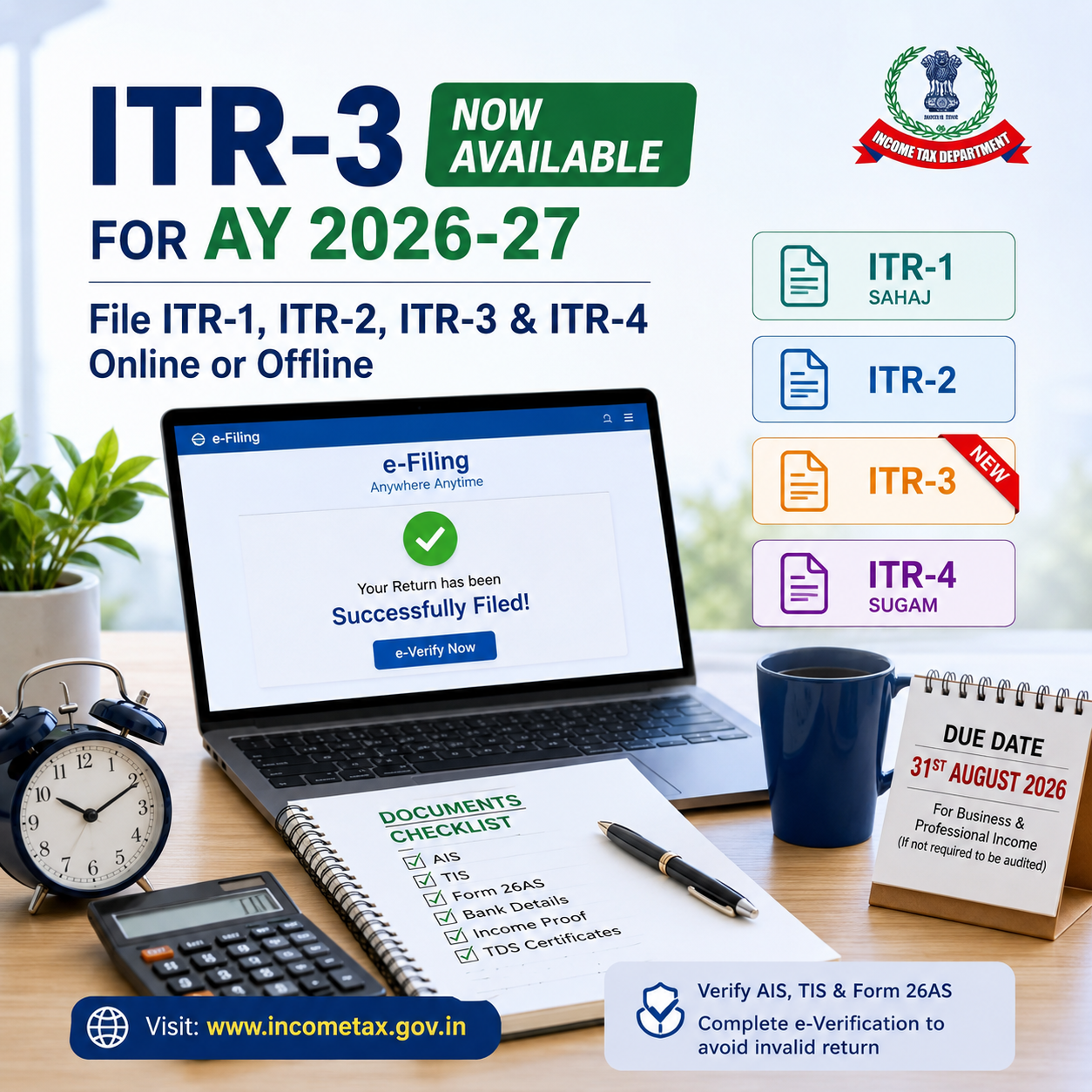
  • Business & Trust cases: Due date extended from 31 July to 31 August

  • Other non-audit cases: Due date continues to be 31 July

🔁 Revised Return – Section 139(5)

  • Time limit to file a revised return extended from 31 December to 31 March of the relevant assessment year.

🔄 TDS & TCS Updates

  • TDS and TCS rates rationalised to reduce complexity and mismatches.

🏠 Property Purchase from NRI – Key Relief

  • TAN requirement removed for buyers of property from an NRI.

  • A PAN-based challan system has been introduced for payment of TDS, simplifying the compliance process.

    Income Tax Slab Rates – Default (New) Tax Regime

    The following income tax slab rates will apply to individuals opting for the default new tax regime for FY 2026-27 (AY 2027-28):

    Total Income Tax Rate
    Up to ₹4,00,000 Nil
    ₹4,00,001 – ₹8,00,000 5%
    ₹8,00,001 – ₹12,00,000 10%
    ₹12,00,001 – ₹16,00,000 15%
    ₹16,00,001 – ₹20,00,000 20%
    ₹20,00,001 – ₹24,00,000 25%
    Above ₹24,00,000 30%

    These slab rates apply uniformly to all individuals, including salaried taxpayers, with no age-based differentiation.


    Key Features of the New Tax Regime

    1️⃣ Rebate under Section 87A

    Budget 2026 has enhanced tax relief through Section 87A:

    • Individuals with net taxable income up to ₹12,00,000 are eligible for a 100% tax rebate.

    • Consequently, the total tax liability becomes NIL for such taxpayers under the default regime.

    • This change significantly improves affordability for middle-income earners.

    2️⃣ Standard Deduction for Salaried Taxpayers

    • Salaried individuals can claim a standard deduction of ₹75,000 under the new tax regime.

    • Because of this deduction, effective tax-free income can extend up to ₹12.75 lakh.

    • This makes the default regime even more beneficial for salaried employees.


    Old Tax Regime (Optional)

    The old tax regime continues as an optional choice and follows a different slab structure. It allows various deductions and exemptions, such as HRA, Section 80C, Section 80D, and others.

    Income Tax Slabs under the Old Regime

    Income Slab Tax Rate
    Up to ₹2,50,000 Nil
    ₹2,50,001 – ₹5,00,000 5%
    ₹5,00,001 – ₹10,00,000 20%
    Above ₹10,00,000 30%

    While deductions are permitted under the old regime, it does not provide the higher rebate threshold available under the new tax regime. As a result, it may be less beneficial for taxpayers with limited deductions.


    Which Tax Regime Is Better for You?

    • Taxpayers with minimal deductions or exemptions may benefit more from the new default tax regime due to lower slab rates, higher rebate, and standard deduction.

    • Taxpayers who claim substantial deductions, such as housing loan interest, insurance premiums, and eligible investments, may still find the old regime more suitable.

    • It is advisable to perform a comparative tax calculation before choosing the appropriate regime.

Budget 2026: Budget Speech, Highlights and Official Government Documents

The Union Budget 2026 is not limited to the Budget Speech delivered in Parliament. To fully understand the intent, scope, and legal implications of the Budget proposals, it is important to review the supporting documents released by the Government. These include the Budget Speech, the Memorandum explaining the provisions of the Finance Bill, and the Finance Bill, 2026 itself. Each of these documents has a specific purpose, and together they provide a complete picture of policy announcements, tax changes, and their practical implementation.

📄 Access all Budget Documents here: indiabudget.gov.in

While the Budget Speech outlines the Government’s vision and direction, the detailed impact of Budget 2026 is reflected in the Memorandum and the Finance Bill. Taxpayers and professionals should not rely solely on headlines or summaries but refer to these official documents for accurate information and compliance planning. Reviewing all Budget 2026 documents carefully is crucial to understanding tax implications, policy amendments, and their application in the upcoming financial year.

Income Tax Changes Announced in Union Budget 2026

Direct Tax Proposals in Budget 2026 – Key Highlights

In Union Budget 2026, the Government has announced a wide-ranging and future-oriented set of Direct Tax reforms aimed at simplifying tax laws, reducing disputes, improving compliance, and enhancing India’s appeal as a global investment destination. These measures signal a decisive shift from a complex, enforcement-driven regime to a trust-based, technology-enabled, and taxpayer-friendly tax system, aligned with the vision of Viksit Bharat.


1. New Income-tax Act, 2025 – A Structural Overhaul

One of the most significant announcements in Budget 2026 is the replacement of the Income-tax Act, 1961 with the Income-tax Act, 2025, effective from 1 April 2026.

The new legislation is designed to:

  • Be substantially shorter and simpler, with fewer sections and chapters

  • Use clear and unambiguous language to minimise interpretational disputes

  • Be easier for taxpayers and tax authorities to understand and implement

Simplified Income-tax Rules and redesigned return forms will be notified shortly, enabling individuals to comply without professional assistance.


2. Taxpayer Relief & Ease of Living Measures

The Budget introduces multiple measures to address long-standing taxpayer concerns:

MACT Interest Exemption

  • Interest awarded by the Motor Accident Claims Tribunal (MACT) to individuals will be fully exempt from tax.

  • No TDS will apply, irrespective of the amount received.

Rationalisation of TCS under LRS

  • TCS on overseas tour packages reduced to 2% (from 5% / 20%), without any threshold.

  • TCS on education and medical remittances under LRS reduced from 5% to 2%.

Clarity on TDS for Manpower Supply

  • Manpower supply services classified as contractor payments.

  • TDS rate capped at 1% / 2%, eliminating ambiguity and litigation.

Automated Lower / Nil TDS Certificates

  • Eligible small taxpayers can obtain lower or nil TDS certificates through an automated, rule-based system without Assessing Officer interaction.

Simplification of Form 15G / 15H

  • Depositories authorised to accept declarations centrally and share them with multiple companies, reducing repetitive filings.


3. Rationalised Return Filing Timelines

To ease compliance pressure:

  • Belated and revised returns can now be filed up to 31 March (earlier 31 December) on payment of a nominal fee.

  • Staggered ITR due dates introduced:

    • ITR-1 & ITR-2 (Individuals): 31 July

    • Non-audit cases and trusts: 31 August


4. Relief for Property Transactions Involving NRIs

For purchase of immovable property from a non-resident:

  • Resident buyers are no longer required to obtain a TAN.

  • TDS can be deposited using a PAN-based challan, similar to resident transactions.


5. One-Time Foreign Asset Disclosure Scheme (FAST-DS, 2026)

A special 6-month disclosure window has been introduced for genuine hardship cases involving small taxpayers.

Category A

  • Undisclosed foreign income / assets up to ₹1 crore

  • Payment of:

    • 30% tax

    • 30% additional tax (in lieu of penalty)

  • Immunity from prosecution granted

Category B

  • Foreign assets up to ₹5 crore

  • One-time fee of ₹1 lakh

  • Full immunity from penalty and prosecution

Immunity from prosecution is also retrospectively extended for non-immovable foreign assets up to ₹20 lakh.


6. Rationalisation of Penalty & Prosecution Regime

Key reforms include:

  • Assessment and penalty proceedings to be concluded through a single consolidated order

  • No interest on penalty amounts during pendency of first appeal

  • Pre-deposit for appeal reduced from 20% to 10%, limited to core tax demand

Updated Returns Post Reassessment

  • Taxpayers can file updated returns even after reassessment initiation by paying an additional 10% tax.

Penalty to Fee Conversion

  • Certain technical defaults (audit, TP report, SFT) converted into fee-based non-criminal defaults.

Decriminalisation Measures

  • Minor offences punishable only with fines

  • Maximum imprisonment reduced to two years

  • Penalties graded based on tax evasion quantum


7. Targeted Tax Relief for Cooperatives

  • Deduction extended to supply of cattle feed and cotton seed by primary cooperatives

  • Inter-cooperative dividend income allowed as deduction under the new tax regime

  • Three-year dividend exemption for notified national cooperative federations, subject to redistribution


8. IT Sector Boost & Transfer Pricing Certainty

  • IT and IT-enabled services consolidated under “Information Technology Services”

  • Uniform safe harbour margin of 15.5%

  • Threshold enhanced from ₹300 crore to ₹2,000 crore

  • Automated safe harbour approvals valid for 5 years

  • Fast-track unilateral APA with targeted 2-year resolution


9. Measures to Attract Global Business & Talent

  • Tax holiday till 2047 for foreign cloud service providers using Indian data centres

  • 15% safe harbour margin for data-centre support entities

  • 5-year tax exemption for non-residents supplying capital goods to bonded zone manufacturers

  • Exemption of global income for foreign experts residing in India up to 5 years

  • MAT exemption for non-residents taxed on presumptive basis


10. Tax Administration Reforms

  • ICDS to be merged with Ind-AS from FY 2027-28

  • Definition of “accountant” rationalised to support global expansion of Indian advisory firms


11. Other Key Direct Tax Measures

  • Buyback taxation shifted to capital gains for all shareholders

  • Additional tax for promoters to prevent arbitrage

  • TCS on liquor, scrap and minerals reduced to 2%; tendu leaves from 5% to 2%

  • STT increased on futures and options

  • MAT to become final tax from 1 April 2026, rate reduced to 14%, with limited MAT credit set-off


Conclusion

The Direct Tax proposals in Budget 2026 mark a bold move towards simplicity, certainty, and trust-based taxation. With a new Income-tax Act, substantial compliance relief, rationalised penalties, and strong incentives for investment and global integration, the reforms aim to strike a balance between revenue mobilisation and taxpayer confidence, supporting long-term economic growth.

🔹 Income Tax Relief for Individuals There may be further rationalisation of income tax slabs, higher basic exemption limits, or enhancements in standard deduction to boost disposable income.

Union Budget 2026 – Overview and Expectations

India’s Union Budget 2026 is slated to be presented on 1 February 2026 (Sunday) by the Finance Minister. Although presenting the Budget on a Sunday had earlier triggered discussion, it has now been formally confirmed, and the government is fully prepared for this key fiscal announcement.

This Budget assumes added significance as it follows the introduction of the Income-tax Act, 2025, which focused mainly on simplifying legal language and compliance procedures rather than making major policy changes. As a result, Budget 2026 is expected to carry the primary burden of announcing substantive tax and regulatory reforms.


I. Economic Background & Budget Direction

India’s macroeconomic position remains relatively stable, supported by steady growth, moderated inflation, and sustained investment in infrastructure. Budget 2026 is expected to strike a careful balance between managing fiscal pressures in the short term and driving long-term structural reforms.

The government is likely to continue prioritising capital expenditure, welfare schemes, digital transformation, and regulatory certainty, with focused attention on sectors such as agriculture, healthcare, women empowerment, start-ups, and emerging areas of the new digital economy.


II. Key Expectations from Budget 2026

1. Taxation – Areas of Anticipated Change

Personal Income Tax
Large-scale rate cuts are not widely expected; however, revisions in tax slabs, exemption limits, or thresholds may be introduced to improve household spending power and stimulate consumption.

Capital Gains Tax
Existing capital gains provisions are under review. Rationalisation measures may be announced to improve clarity, simplify compliance, and encourage investment activity.

TDS Simplification
The government may streamline TDS provisions to reduce administrative and compliance challenges faced by businesses and taxpayers.

ESOPs and Foreign Tax Credit
Budget 2026 may bring clarity or relief measures related to ESOP taxation, particularly for employees of multinational companies, along with smoother mechanisms for claiming Foreign Tax Credit.


2. Sectoral and Social Priorities

Women-Centric Initiatives
Expect announcements aimed at improving women’s participation in the workforce, access to finance, skill development, and social security.

Agriculture and Rural Economy
Measures may include enhanced credit availability, farm modernisation programs, and targeted income-support mechanisms for farmers and rural households.

Senior Citizens
The government may extend or enhance benefits related to healthcare, savings, and taxation for senior citizens.


III. Virtual Digital Assets (Cryptocurrency) – Emerging Developments

1. Enhanced Monitoring, AML & KYC Framework

In early January 2026, the Financial Intelligence Unit (FIU) introduced tighter AML and KYC norms for crypto exchanges and VDA service providers. These measures aim to align the crypto ecosystem with mainstream financial regulations and improve traceability. Key elements include:

  • Live selfie verification using liveness detection to prevent misuse of static images or deepfakes

  • Geo-location capture, including latitude, longitude, IP address, date, and time for onboarding and transactions

  • Expanded KYC documentation, requiring PAN plus an additional government-issued ID along with OTP verification

  • Bank account authentication through penny-drop verification

  • Periodic KYC updates, with more frequent reviews for high-risk users

  • Continuous transaction monitoring and reporting of suspicious activities

These steps reflect the government’s intent to curb money laundering, terror financing, fraud, and misuse of anonymous crypto transactions, while strengthening investor confidence and systemic oversight.


2. Crypto Taxation – Industry Expectations

Under the current framework:

  • Gains from VDAs are taxed at a flat 30%, without allowing loss set-off

  • A 1% TDS applies on each transaction, which industry participants argue restricts liquidity and pushes traders to overseas platforms

For Budget 2026, crypto stakeholders are seeking:

  • Reduction in TDS (suggested at 0.01%) to improve market liquidity

  • Permission to offset losses against gains, bringing parity with other asset classes

  • More nuanced tax treatment, possibly based on holding period or integration with slab-based taxation

There is also discussion around establishing a clear regulatory authority structure, potentially involving SEBI for exchange oversight and RBI for cross-border monitoring, subject to Budget and post-Budget policy announcements.


IV. Indirect Tax and Regulatory Environment

GST and Customs

  • Industry is likely to seek GST rate rationalisation and faster processing of refunds

  • Customs duty structures may be reworked to support domestic manufacturing, technology adoption, and exports

Regulatory Coordination

Efforts are ongoing to move toward a single, well-defined regulatory framework for VDAs, reducing overlap among regulators and improving compliance clarity.


V. Core Themes Likely to Shape Budget 2026

Area Anticipated Focus
Taxation & Compliance Slab rationalisation, TDS simplification, crypto tax clarity
Digital Assets Stronger oversight, tracking mechanisms, regulatory structure
Women & Social Welfare Financial inclusion, employment, empowerment schemes
Agriculture & Rural Development Farmer support, rural infrastructure
Senior Citizens Health coverage and tax relief
Infrastructure & Capex Continued emphasis on public investment
Technology & Innovation R&D incentives, AI and digital economy push
Indirect Taxes GST simplification and customs duty rationalisation

In essence, Budget 2026 is expected to focus on stability, reform, and future readiness—combining fiscal prudence with growth-oriented policy measures across taxation, technology, and social development.

VI. Conclusion

Budget 2026 is expected to be a transformative fiscal roadmap, aimed at achieving sustainable economic growth, deeper social inclusion, and forward-looking regulatory reforms. In particular, the evolving approach toward the crypto and virtual digital asset ecosystem—marked by stricter KYC/AML requirements and closer regulatory supervision—signals the government’s intent to bring greater transparency, accountability, and investor confidence into the sector.

At the same time, market participants and industry stakeholders are looking toward the Budget for pragmatic tax rationalisation and clearer policy direction that encourages innovation and legitimate participation without diluting compliance standards. Overall, Budget 2026 is likely to reflect a careful balance between risk management and growth facilitation, reinforcing India’s commitment to a stable, inclusive, and future-ready economic framework.

✅ Who is Eligible to File ITR-U? You may file an Updated Return if you need to: Report missed or under-reported income Correct wrong income details Amend an incorrect tax rate Reduce excess loss or depreciation claimed Update wrong deductions or exemptions File a return even if no return was filed earlier

Income-tax law ke andar voluntary compliance ko badhava dene ke liye Updated Return (ITR-U) ka concept laya gaya hai. Iska main objective ye hai ki agar kisi taxpayer se return file karte samay koi income reh gayi ho, galat details report ho gayi ho, ya return file hi nahi hui ho, to wo apni galti khud se sudhaar sake — bas shart ye hai ki uske saath due tax, interest aur additional tax ka payment kiya jaye.

Recent amendments ke baad ITR-U ki time limit aur additional tax structure dono me kaafi bade badlav kiye gaye hain. Is article me updated provisions ko simple language me samjhaya gaya hai.


ITR-U kya hota hai?

ITR-U (Updated Income-tax Return) ek special return hai jo Income-tax Act ke Section 139(8A) ke tahat file ki jaati hai. Ye tab file hoti hai jab:

  • Pehle file ki hui return me koi income disclose nahi hui ho

  • Income ya details galat report hui ho

  • Taxpayer ne pehle koi return file hi nahi ki ho

👉 Lekin dhyaan rahe, ITR-U sirf tab allowed hai jab usse extra tax payable banta ho.


Kaun ITR-U file kar sakta hai?

Neeche diye gaye taxpayers ITR-U file kar sakte hain:

  • Individual

  • HUF

  • Firm

  • Company

  • AOP / BOI

  • Trust ya anya entities

Aap ITR-U file kar sakte hain agar:

  • Aapne pehle original / belated / revised return file ki ho

  • Ya pehle return file nahi ki ho, lekin ab income disclose karne par tax payable ho raha ho

🔔 Important condition:
Updated return file karne ke baad tax liability increase honi chahiye. Agar tax nil ho ya refund ban raha ho, to ITR-U file nahi ki ja sakti.


Kaun ITR-U file nahi kar sakta?

Nimn situations me ITR-U file karna allowed nahi hai:

  • Agar updated return se:

    • Refund mil raha ho, ya

    • Pehle se due refund ki amount badh rahi ho

  • Agar updated return se:

    • Total tax liability kam ho rahi ho

  • Agar us assessment year ke liye:

    • Search u/s 132

    • Survey (specified cases)

    • Requisition u/s 132A
      jaise proceedings start ho chuki ho

  • Agar taxpayer:

    • Carry forward loss ko increase karna chahta ho
      (loss sirf reduce kiya ja sakta hai, badhaya nahi)


ITR-U file karne ki time limit (Updated Provision)

Purana rule:
ITR-U sirf 24 months ke andar file ki ja sakti thi.

Naya rule (1 April 2025 se effective):
Ab ITR-U 48 months (4 saal) tak file ki ja sakti hai, relevant assessment year ke end se.

Example:

  • Assessment Year: 2024-25

  • AY ka end: 31 March 2025

  • ITR-U ki last date: 31 March 2029

👉 Is extension ka purpose ye hai ki taxpayers ko zyada samay mile voluntarily income disclose karne ke liye.


ITR-U par Additional Tax (Section 140B)

ITR-U file karte waqt taxpayer ko ye payments karni hoti hain:

  • Applicable Income Tax

  • Interest (Section 234A / 234B / 234C, jo bhi apply ho)

  • Additional Income-tax

Additional tax ka calculation Tax + Interest ke total amount par hota hai.


Additional Tax Rates – Updated Structure

ITR-U Filing Period Additional Tax
12 months ke andar 25%
12–24 months 50%
24–36 months 60%
36–48 months 70%

Delay jitna zyada, additional tax utna hi zyada — isliye early compliance financially faydemand hai.


Simple Example

Maan lijiye:

  • Additional tax payable: ₹1,00,000

  • Interest: ₹10,000

  • Total (Tax + Interest): ₹1,10,000

12 months ke andar filing:

  • Additional tax @25% = ₹27,500

  • Total payable = ₹1,37,500

3rd year me filing (24–36 months):

  • Additional tax @60% = ₹66,000

  • Total payable = ₹1,76,000


Important Practical Points

  • ITR-U ka use refund claim ke liye nahi ho sakta

  • Ye facility sirf voluntary disclosure ke liye hai

  • Interest calculation me chhoti si galti additional tax ko bhi badha sakti hai

  • Har assessment year ke liye sirf ek baar ITR-U file ki ja sakti hai

  • Hamesha correct ITR-U form aur latest utility ka hi use karein

Updated Income Tax Slabs Applicable for FY 2025–26 (AY 2026–27)

Complete Overview of Income Tax Slabs, Rebate, Standard Deduction, Surcharge & Cess

The Government has retained the New Tax Regime as the default option and further streamlined the income tax slab structure to offer greater relief to middle-income taxpayers. For Financial Year 2025–26 (Assessment Year 2026–27), the revised framework emphasizes higher basic exemption limits, an enhanced rebate, and a standard deduction for salaried individuals, making the regime more taxpayer-friendly.

This article provides a comprehensive explanation of the latest income tax slab rates, along with details on the rebate under Section 87A, standard deduction, health and education cess, applicable surcharge, and the categories of taxpayers to whom these provisions apply.

1. New Income Tax Slab Rates – FY 2025–26 (AY 2026–27)

Under the New Tax Regime, income is taxed at progressive slab rates as outlined below:

Total Income Applicable Tax Rate
Up to ₹4,00,000 Nil
₹4,00,001 – ₹8,00,000 5%
₹8,00,001 – ₹12,00,000 10%
₹12,00,001 – ₹16,00,000 15%
₹16,00,001 – ₹20,00,000 20%
₹20,00,001 – ₹24,00,000 25%
Above ₹24,00,000 30%

👉 Note: Income tax is calculated slab-wise, meaning each portion of income is taxed at the applicable rate, not the entire income at one single rate.


2. Income Up to ₹4,00,000 – No Tax Liability

For FY 2025–26, the basic exemption limit under the New Tax Regime stands at ₹4,00,000.
Accordingly, individuals whose total taxable income does not exceed ₹4 lakh are not required to pay any income tax.


3. Rebate Under Section 87A – Significant Relief

Eligibility Criteria

  • Available only to Resident Individual taxpayers

  • Applicable exclusively under the New Tax Regime

Rebate Provisions

  • If taxable income does not exceed ₹12,00,000

  • 100% rebate of tax payable is allowed

  • Maximum rebate amount: ₹60,000

👉 As a result, income up to ₹12 lakh becomes effectively tax-free under the New Regime.

Practical Clarification

  • Tax is first computed as per slab rates

  • If the calculated tax liability is ₹60,000 or less, the rebate completely offsets it

  • Net tax payable becomes Nil


4. Standard Deduction of ₹75,000

Who Can Claim?

  • Salaried employees

  • Pensioners

Deduction Amount

  • A flat standard deduction of ₹75,000 is available under the New Tax Regime

Tax Impact

Due to this deduction:

  • A salaried individual earning up to ₹12,75,000

  • After deducting ₹75,000, taxable income becomes ₹12,00,000

  • 👉 No income tax is payable

This significantly enhances the attractiveness of the New Regime for salaried taxpayers who do not rely heavily on deductions.


5. Health and Education Cess

  • 4% Health and Education Cess

  • Levied on income tax plus surcharge, if any

  • Applicable to all categories of taxpayers without exception


6. Surcharge on Higher Income Levels

Surcharge is levied when total income crosses ₹50 lakh, as per the following structure:

Total Income Surcharge Rate
₹50 lakh – ₹1 crore 10%
₹1 crore – ₹2 crore 15%
₹2 crore – ₹5 crore 25%
Above ₹5 crore 37%

Marginal Relief

Marginal relief is available to ensure that the additional tax payable due to surcharge does not exceed the additional income earned over the threshold limit.


7. Applicability of These Provisions

Applicable To

  • Resident Individuals

  • Salaried taxpayers

  • Pensioners

  • Professionals and business owners opting for the New Tax Regime

Not Applicable / Points of Caution

  • Non-resident individuals (Section 87A rebate not available)

  • Taxpayers with income taxed at special rates (such as lottery winnings or certain capital gains)

  • Individuals who claim substantial deductions under the Old Regime (80C, HRA, housing loan interest, etc.)


8. New Tax Regime vs Old Tax Regime – Practical Comparison

The New Tax Regime is more suitable if:

  • You have minimal deductions

  • You are a salaried taxpayer with a simple salary structure

  • Your annual income is around ₹12–13 lakh

The Old Tax Regime may be preferable if:

  • You claim major deductions under sections 80C, 80D, HRA, or home loan interest

  • You have substantial tax-saving investments

👉 Tip: Always compute tax liability under both regimes before filing your Income Tax Return to choose the most beneficial option.

January 2026: Complete Compliance & Filing Schedule for Businesses

January marks more than just the start of a new calendar year—it is also one of the busiest compliance months for businesses, professionals, and employers. A tight cluster of statutory obligations such as GST returns, TDS filings, PF-ESI contributions, and MCA compliances leaves little room for error. Missing even one due date can trigger late fees, interest, penalties, or system-generated notices.

As we enter January 2026, the compliance environment continues to become more stringent, backed by tighter deadlines, automated checks, and enhanced portal validations. To help businesses, taxpayers, and professionals stay on track, this article provides a comprehensive, date-wise compliance calendar for January 2026, covering GST, Income Tax, TDS/TCS, PF, ESI, and MCA requirements—all consolidated in one place.


GST Compliance

Due Date | Return/Form | Period | Applicability
7 January 2026 | GSTR-7 | December 2025 | GST TDS deductors
7 January 2026 | GSTR-8 | December 2025 | E-commerce operators
11 January 2026 | GSTR-1 | December 2025 | Monthly outward supply filers
20 January 2026 | GSTR-3B | December 2025 | Monthly GST return
22/24 January 2026 | GSTR-3B (QRMP) | Oct–Dec 2025 | Based on state category
20 January 2026 | GSTR-5A | December 2025 | OIDAR service providers

GST Composition Scheme
18 January 2026 | CMP-08 | Oct–Dec 2025


TDS/TCS & Income-Tax Compliances

Monthly TDS/TCS Payment
7 January 2026 – Deposit of TDS/TCS for December 2025
(Generally payable by the 7th of the following month)

Quarterly TDS/TCS Returns
15 January 2026 | Form 27EQ (TCS) | Oct–Dec 2025
31 January 2026 | Forms 24Q, 26Q, 27Q | Oct–Dec 2025

Income-Tax Update
As per CBDT indications, new ITR forms and procedures under the simplified Income-tax framework are expected to be notified by January 2026, ahead of implementation from 1 April 2026.


PF & ESI Compliance

15 January 2026
• EPF contribution payment & return – December 2025
• ESI contribution payment & return – December 2025

(PF and ESI dues are generally payable by the 15th of the subsequent month.)


MCA / ROC Filings

31 January 2026
• Filing of Annual Returns and Financial Statements for FY 2024-25
• Ensure timely submission of AOC-4 and MGT-7 within the extended timeline

LLPs should also verify due dates for Form 11 and other applicable ROC filings based on entity-specific requirements.


Other Important Statutory Compliances

Professional Tax (PT)
Generally payable by 31 January 2026 for December 2025 salary deductions (state-specific rules apply).

Advance Tax
No advance tax installment is due in January; the next installment falls in March 2026.


Consequences of Delayed Compliance – Quick Snapshot

GST: Late fees and interest on net tax liability
TDS/TCS: Interest and penalties for late payment or return filing
PF/ESI: Interest and statutory damages under respective laws


In today’s technology-driven compliance framework, delays rarely go unnoticed. GST filings, TDS payments, PF-ESI contributions, and MCA submissions are closely monitored through integrated systems. Timely compliance is no longer optional—it is essential.

Use this January 2026 Compliance Calendar as a ready reference, plan your filings in advance, and complete all obligations well before due dates. Staying proactive today helps avoid financial exposure, legal complications, and unnecessary stress in the future.

Top 10 Changes in GST & Income Tax Applicable from January 1, 2026

Important Tax Compliance Changes from 1 January 2026 – What Every Taxpayer Must Know

The commencement of 1 January 2026 brings significant compliance implications under GST and Income Tax laws in India. Multiple statutory deadlines expire on 31 December 2025, after which several system-driven restrictions, penalties, and consequences automatically come into force.

Failure to act before these cut-off dates may lead to late fees, interest liabilities, denial of Input Tax Credit (ITC), inoperative PAN, suspension of GST registration, and increased tax burden.

This article outlines the key changes effective from 1 January 2026, including several often overlooked but high-risk compliance areas.


1. GSTR-9 / GSTR-9C Due Date Expired – Late Fees Triggered

The last date to file GSTR-9 and GSTR-9C for FY 2024-25 is 31 December 2025.

From 1 January 2026, these returns can still be filed, but mandatory late fees will apply based on turnover slabs.

GSTR-9 Late Fee Structure (Applicable from FY 2022-23 onwards)

Annual Turnover Late Fee per Day (CGST + SGST) Maximum Late Fee
Up to ₹5 crore ₹50 (₹25 + ₹25) 0.04% of turnover
₹5 crore – ₹20 crore ₹100 (₹50 + ₹50) 0.04% of turnover
Above ₹20 crore ₹200 (₹100 + ₹100) 0.05% of turnover

Important Points:

  • Late fees continue to accumulate until the return is filed

  • No automatic waiver is available after the due date

  • GSTR-9C cannot be filed unless GSTR-9 is first filed

  • Late fee for GSTR-9C is ₹200 per day, capped at 0.05% of turnover


2. Belated and Revised ITR Filing Window Closes on 31 December 2025

For FY 2024-25 (AY 2025-26):

  • Belated Return under Section 139(4)

  • Revised Return under Section 139(5)

👉 Both are permitted only up to 31 December 2025.

From 1 January 2026, taxpayers will no longer be allowed to file either a belated or revised return for this financial year.


3. Updated Return Remains the Only Option – At a High Cost

Post 31 December 2025, the only return filing option available is the Updated Return under Section 139(8A).

Key Rules for Updated Returns

  • Can be filed up to 4 years from the end of the relevant assessment year

  • Allowed only in cases of:

    • Omitted income

    • Incorrect claims of exemptions, deductions, or losses

  • Refunds cannot be claimed

  • Losses cannot be carried forward

  • Additional tax payment is mandatory

📌 Updated returns are meant for tax recovery, not routine corrections.


4. PAN Becomes Inoperative If Aadhaar Is Not Linked

Failure to link PAN with Aadhaar results in the PAN becoming inoperative, leading to serious consequences.

Impact of Inoperative PAN

  • Income Tax Return cannot be filed

  • Tax refunds will not be issued

  • TDS will be deducted at higher rates

  • Certain banking transactions may be restricted

  • PAN becomes invalid for GST, investments, loans, and other financial compliance

    5. GSTR-3B Filing to Be Blocked Due to ITC Restrictions from 1 January 2026

    Starting with returns filed for January 2026 onwards, the GST portal will restrict GSTR-3B filing in certain ITC-related mismatch situations.

    ITC Reclaim Ledger Validation

    The amount of ITC reclaimed in Table 4(D)(1) must not exceed:

    • Closing balance of the ITC Reclaim Ledger, plus

    • ITC reversed in Table 4(B)(2) during the current tax period

    Reverse Charge (RCM) Ledger Validation

    ITC claimed under RCM in Table 4A(2) / 4A(3) must not exceed:

    • RCM tax paid and reported in Table 3.1(d), plus

    • Available balance in the RCM Ledger

    Any negative balance in the ITC or RCM ledger will automatically block GSTR-3B filing.


    6. Non-Submission of Bank Details Will Trigger GST Registration Suspension

    As per Rule 10A of the CGST Rules, furnishing bank account details is mandatory:

    • Within 30 days of GST registration, or

    • Before filing GSTR-1 or IFF, whichever occurs first

    Consequences of Non-Compliance

    • GST registration will be system-suspended

    • Taxpayer will be unable to file returns

    • E-way bill generation will be blocked

    • Suspension remains until bank details are updated


    7. GST Returns Older Than Three Years Become Non-Fileable

    A critical but frequently overlooked provision:

    👉 GST returns pending for more than 3 years become time-barred and cannot be filed.

    This restriction applies to:

    • GSTR-1

    • GSTR-3B

    • GSTR-4

    • GSTR-5, 6, 7, 8, and 9

    📌 Once a return becomes time-barred:

    • Related ITC is permanently forfeited

    • Annual return reconciliation becomes impossible

    • Departmental notices and demand proceedings may follow


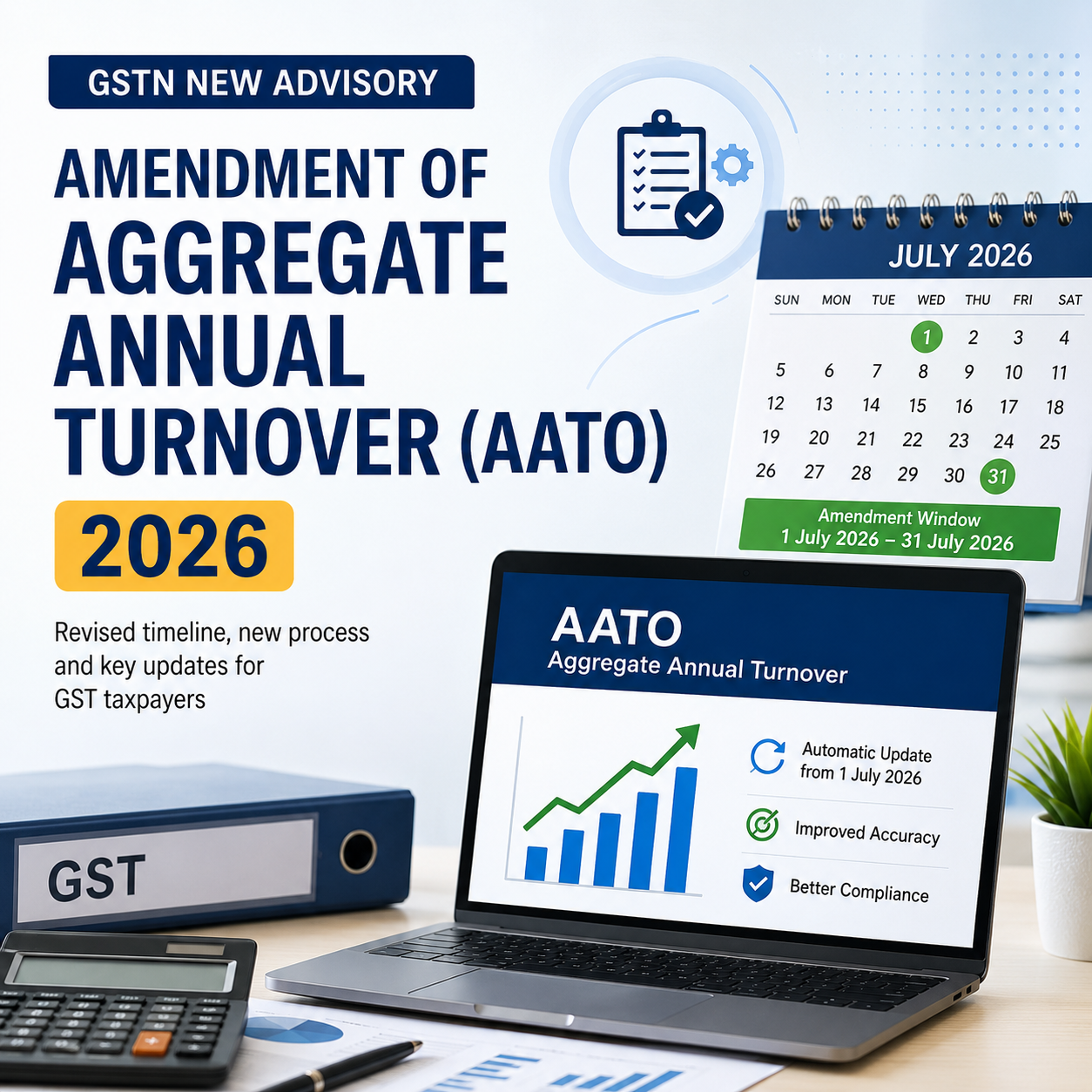
    8. Reassess Aggregate Annual Turnover (AATO) – GST Registration May Be Required

    At the beginning of a new financial cycle, businesses should recalculate their Aggregate Annual Turnover (AATO).

    GST registration becomes mandatory if AATO exceeds:

    • ₹20 lakh (₹10 lakh for special category states), or

    • ₹40 lakh for goods suppliers, subject to prescribed conditions

    Failure to register can result in:

    • Tax demand along with interest

    • Monetary penalties

    • Denial of ITC to customers, affecting business credibility


    9. Pay Advance Tax by 15 March to Avoid Interest Liability

    Where total tax liability exceeds ₹10,000, payment of advance tax is compulsory.

    • Final instalment due: 15 March (100% of tax liability)

    Non-payment or short payment may attract:

    • Interest under Sections 234B and 234C

    • Additional tax cost even if the ITR is filed within the due date


    10. Regular Monitoring of Income Tax Portal Is Essential

    Taxpayers must frequently review communications available on the Income Tax Portal, including:

    • E-proceedings and notices

    • Intimations under Section 143(1)

    • Defective return alerts

    • Refund adjustments

    • AIS/TIS mismatch communications

    Ignoring portal notices may lead to:

    • Best judgment assessments

    • Withholding of refunds

    • Penalty and prosecution proceedings

CBDT issues statement after Income Tax Department sends SMS to taxpayers

NEW DELHI: The Central Board of Direct Taxes (CBDT) on Tuesday urged taxpayers to voluntarily recheck the deductions and exemptions claimed in their annual income tax returns, after data analysis revealed that a significant number of claims were incorrect or ineligible.

Issuing a clarification following widespread discussion on social media about SMS alerts sent by the Income Tax Department, the CBDT said it has launched a special initiative to prompt taxpayers to review and rectify such claims on their own.

Under this drive, identified taxpayers are being contacted through SMS and email as part of the “Non-intrusive Usage of Data to Guide and Enable (NUDGE)” campaign, encouraging them to correct errors and file revised returns by December 31, 2025.

The CBDT explained that using advanced data analytics under its risk management framework, cases for Assessment Year 2025–26 have been flagged where claims such as bogus donations to Registered Unrecognised Political Parties (RUPPs) or other inadmissible deductions and exemptions appear to have been made. In some instances, incorrect or invalid PAN details of donees were used, or the deduction amounts claimed exceeded permissible limits, said CBDT spokesperson V Rajitha.

Taxpayers have been advised to verify the accuracy of their claims and submit revised returns wherever necessary to avoid further scrutiny.

However, the CBDT clarified that taxpayers whose deductions and exemptions are genuine and fully compliant with the law need not take any action.

Those who miss the December 31, 2025 deadline will still have the option to file an updated return from January 1, 2026, subject to payment of additional tax as prescribed.

The statement added that during FY 2025–26, over 21 lakh taxpayers have already updated their ITRs for assessment years 2021–22 to 2024–25, resulting in the collection of more than ₹2,500 crore. Additionally, more than 15 lakh returns have already been revised for the current assessment year.