New GST FAQ on Rate Changes (Effective 22.09.2025) Released on 16 September

The GST Council, in its 56th meeting held on 3rd September 2025, along with subsequent circulars and clarifications, has brought several important changes impacting businesses, service providers, and consumers. The National Pharmaceutical Pricing Authority (NPPA) and the GST Council have issued detailed guidelines on GST rates, exemptions, and compliance procedures. Below is a simplified breakdown of the key points.


1. Medicines & Medical Devices – Revised MRP Implementation

  • All drug manufacturers/marketers must revise the Maximum Retail Price (MRP) of medicines and devices to reflect revised GST rates.
  • revised/supplementary price list (Form V/VI) must be issued to dealers, retailers, State Drug Controllers, and the Government.
  • Re-labelling or recalling old stock (before 22nd Sept 2025) is not mandatory, provided compliance is ensured at the retailer level.

2. GST on Drones

  • Previously, drones attracted different GST rates depending on usage (5%, 18%, or 28%).
  • Now, a uniform 5% GST applies to all drones, irrespective of type or use.

3. GST on Bricks

  • Under the Special Composition Scheme (from April 2022):
    • Bricks attract 6% GST without ITC or 12% with ITC (threshold ₹20 lakhs).
  • No major change in Sept 2025, except:
    • Sand lime bricks – GST rate reduced from 12% to 5%.

4. Life & Health Insurance Services

  • Individual life and health insurance policies (including for family) are exempt from GST.
  • Reinsurance services for such policies are also exempted.
  • Other inputs (like brokerage/commission) – ITC to be reversed since output is exempt.

5. Hotel Accommodation Services

  • For rooms costing ≤ ₹7,500/day:
    • GST is 5% without ITC (mandatory).
    • Hotels cannot opt for 18% with ITC on such rooms.

6. Beauty & Wellness Services

  • Attract 5% GST without ITC (mandatory).
  • Service providers cannot opt for 18% with ITC.

7. Input Tax Credit (ITC) Rules for 5% without ITC Supplies

  • ITC cannot be taken for goods/services exclusively used for such supplies.
  • For mixed-use inputs, proportionate ITC reversal is required under Section 17(2) of CGST Act.

8. Job Work Services

  • Bus body building – 18% with ITC.
  • Bricks job work – 5% with ITC (where output bricks attract 5%).

9. Multimodal Transportation of Goods

  • Without air transport: 5% GST with restricted ITC (limited to 5% of value of transport input services).
  • With air transport involved: 18% GST with full ITC.

10. Local Delivery Services via E-Commerce Operators (ECOs)

  • Covered under Section 9(5) CGST Act.
  • GST @18% applicable:
    • If supplied by unregistered person via ECO → ECO pays GST.
    • If supplied by registered person via ECO → Supplier pays GST.
  • ECO-provided delivery services are not treated as GTA (Goods Transport Agency).

11. Leasing & Renting Services

  • Without operator → taxed at same rate as supply of like goods.
  • With operator (e.g., car + driver) → option of:
    • 5% with ITC on input services of same line, OR
    • 18% with full ITC.
GST Update: CBIC Issues Clarification on Post-Sale Discounts (Circular No. 251/08/2025)

On 12th September 2025, the Central Board of Indirect Taxes and Customs (CBIC) issued Circular No. 251/08/2025-GST to address long-standing doubts on the GST treatment of secondary or post-sale discounts. The clarification aims to bring uniformity in practice across taxpayers, dealers, and field formations.


Click here to Download Circular


🔑 Key Issues Addressed in the Circular

1. Input Tax Credit (ITC) & Financial/Commercial Credit Notes

  • Many suppliers issue financial or commercial credit notes after sales, reducing the amount payable by the buyer.
  • Earlier, there was confusion if the recipient should reverse ITC in such cases.
  • Clarification:
    • Supplier issuing a financial/ commercial credit note cannot reduce their original tax liability.
    • Since the tax charged originally remains unchanged, recipient is not required to reverse ITC.
    • Example: If goods worth ₹1,00,000 + GST ₹18,000 were sold, and later supplier issues a ₹10,000 commercial credit note, the GST still applies on ₹1,00,000. Buyer keeps full ITC of ₹18,000.

2. Post-Sale Discounts & Consideration

  • Question: If a manufacturer gives a discount to a dealer, can it be treated as “consideration” for the dealer’s sale to the end customer?
  • Clarification:
    • Normally, the manufacturer sells to the dealer, and the dealer sells to the customer — these are two independent principal-to-principal transactions.
    • A discount given by the manufacturer simply reduces the dealer’s purchase price, helping competitive pricing. It is not an inducement and hence not “consideration”.
    • Exception: If the manufacturer has a direct agreement with the end customer to sell at a discounted price, and instructs the dealer accordingly, then such a discount is treated as part of the consideration (since it influences the supply to the end consumer).

3. Post-Sale Discounts vs. Promotional Services

  • Dealers sometimes undertake promotional activities after receiving discounts.
  • Clarification:
    • If these activities are incidental (e.g., boosting their own sales), the discount is simply a reduction in sale price, not payment for services.
    • However, if there is a specific agreement where the dealer provides services like:
      • Advertising campaigns
      • Co-branding
      • Special sales drives
      • Customer support
      • Exhibitions or events
      • Customization/branding services
        then these are independent supplies of service and GST will apply on the consideration received for such services.

📌 Practical Impact of This Circular

  1. For Dealers/Distributors
    • Can continue to avail full ITC even when receiving post-sale discounts via financial/ commercial credit notes.
    • No ITC reversal required unless linked with a formal agreement involving promotional services.
  2. For Manufacturers
    • Discounts given for competitive pricing will not attract GST as “consideration”.
    • But if discount is tied to a specific end-customer agreement or services rendered by dealer, GST may apply.
  3. For Auditors & Tax Professionals
    • Important to check agreements carefully — whether a discount is just commercial in nature or tied to service obligations.
    • This distinction affects GST liability significantly.

✅ Conclusion

The new Circular No. 251/08/2025-GST clears a long-pending ambiguity around post-sale discounts.

  • Normal trade discounts = No GST impact, no ITC reversal.
  • Service-linked discounts = Consideration, GST applicable.

This brings greater clarity and helps both suppliers and dealers avoid unnecessary disputes during audits.

Cess हटने से कितना मिलेगा फायदा? पुराने Stock और Credit पर क्या असर पड़ेगा?
  • From 22nd September 2025, compensation cess is removed for most goods under GST 2.0.
  • Exception: Tobacco and tobacco-related products (cigarettes, pan masala, gutkha, chewing tobacco, bidi) will continue to attract compensation cess until outstanding GST compensation loans and interest are fully repaid.
  • For consumers, this means many goods may become cheaper. For businesses, it raises issues like unutilised cess credits and treatment of old inventory.

Background — Why Compensation Cess Was Introduced

When GST was implemented in 2017, states were worried about revenue losses. To compensate them, the central government introduced compensation cess on certain goods, mostly luxury and sin products. The cess collected was used to pay states for their revenue shortfall. Over time, loans were also taken against this cess fund.


What the Government Decided

  • The GST Council simplified slabs under GST 2.0. As part of this, compensation cess is discontinued for most goods from 22nd September 2025.
  • Only tobacco-related products will continue to attract compensation cess until the loans and interest obligations of the cess account are cleared.

Items Where Compensation Cess is Removed

Compensation cess is removed for almost all goods. Examples include:

  • Consumer electronics and appliances
  • Automobiles and vehicles (moved under new GST slabs)
  • Coal and other raw materials where cess earlier applied

If an item’s new GST rate is notified without cess, it means the cess is no longer applicable.


Items Still Attracting Compensation Cess

  • Cigarettes
  • Pan masala
  • Gutkha
  • Chewing tobacco (like zarda)
  • Unmanufactured tobacco and bidi

These will continue under the existing GST + cess structure until the government clears all dues under the compensation cess account.


Practical Issues for Businesses

1. Unutilised Cess Credits

Many businesses, especially automobile dealers, have accumulated cess credit balances. With the cess removed, there’s no future liability to adjust these credits. Unless the government allows refunds or special transition rules, these credits could lapse, causing big financial losses.

2. Old Inventory

Dealers holding stock purchased under old GST + cess rates may not be able to recover the cess already paid on those goods. This could mean a cash-flow loss and may force discounting or write-offs.

3. Consumer Pricing

While tax on many items is reduced, the final benefit depends on whether businesses pass on the reduction. Companies may need to revise MRP using stickers or new packaging, and compliance will be checked by the Legal Metrology Department.

4. Tobacco Exception

Consumers buying cigarettes, pan masala, or tobacco products will not see any relief, as these continue to attract cess until the cess account loans are repaid.


FAQs

Q1 — From which date is compensation cess removed?
22nd September 2025, except for tobacco products.

Q2 — Will prices come down automatically?
Not necessarily. It depends on how quickly businesses update MRP and whether they pass on the tax cut to consumers.

Q3 — What about existing compensation cess credits?
Unclear. Businesses are demanding refunds or transitional provisions. Until notified, credits may remain blocked.

Q4 — Why are tobacco products excluded?
Because large loans and interest payments were taken against cess collections. Until those are repaid, cess will continue on tobacco.

Q5 — What about old stock?
Old stock purchased under higher tax + cess may need MRP revisions through stickers or re-labeling. Businesses must follow official rules for compliance.


What Businesses & Consumers Should Do

Businesses:

  • Reconcile cess credit balances and plan for possible losses.
  • Review inventory and pricing strategies.
  • Watch for official notifications on transition rules.
  • Communicate MRP changes transparently to customers.

Consumers:

  • Expect lower prices on many goods after cess removal, but benefits may take time to reflect.
  • No relief for tobacco-related products.

The removal of compensation cess for most goods is a major simplification of GST and a relief for consumers. However, businesses face short-term challenges due to unutilised credits and old inventory. Until the government issues detailed transition rules, taxpayers should carefully track notifications and plan ahead.

GST Update: 3-Year Return Filing Rule Gets Fresh Implementation Date

The Goods and Services Tax Network (GSTN) has issued an important advisory dated 9th September 2025, reminding taxpayers about the 3-year time limit for filing GST returns. This advisory is based on amendments made in the Finance Act, 2023 (8 of 2023), effective from 1st October 2023 via Notification No. 28/2023 – Central Tax dated 31st July 2023.


🔎 What Does the Rule Say?


As per the amendment, taxpayers will not be allowed to file GST returns after the expiry of 3 years from the due date of furnishing the return.

This restriction applies to the following key sections of the CGST Act:

  • Section 37 – Outward Supplies (GSTR-1, IFF, etc.)
  • Section 39 – Payment of liability (GSTR-3B, GSTR-4, GSTR-5, etc.)
  • Section 44 – Annual Return (GSTR-9, 9C)
  • Section 52 – TCS Returns (GSTR-8)

✅ Returns Covered

This includes most compliance forms:

  • GSTR-1, GSTR-1A, IFF
  • GSTR-3B (Monthly/Quarterly)
  • GSTR-4, GSTR-5, GSTR-5A
  • GSTR-6, GSTR-7, GSTR-8
  • GSTR-9, GSTR-9C

📅 When Will This Apply?


The restriction will be implemented on the GST portal starting from September 2025 tax period.

👉 This means:

  • Any return whose due date is older than 3 years and is still pending will be barred from filing.
  • Practically, the system will lock out old returns after the 3-year window.

📊 Illustration: Returns That Will Be Barred from 1st October 2025


GST Form Latest Tax Period Allowed Barred From Filing
GSTR-1 / IFF August 2022 1 Oct 2025
GSTR-1 (Quarterly) Apr–Jun 2022 1 Oct 2025
GSTR-3B (Monthly) August 2022 1 Oct 2025
GSTR-3B (Quarterly) Apr–Jun 2022 1 Oct 2025
GSTR-4 FY 2021–22 1 Oct 2025
GSTR-5 August 2022 1 Oct 2025
GSTR-6 August 2022 1 Oct 2025
GSTR-7 August 2022 1 Oct 2025
GSTR-8 August 2022 1 Oct 2025
GSTR-9 / 9C FY 2020–21 1 Oct 2025

⚠️ Example:

  • If you missed filing GSTR-3B for August 2022, after 1st October 2025, you will never be able to file it.
  • Similarly, if you have not filed GSTR-9 (Annual Return) for FY 2020-21, you will be permanently barred from doing so.

🧾 Why This Matters?

  1. Permanent Closure: Once 3 years are over, you lose the right to file the return.
  2. Compliance Risk: Non-filing may lead to notices, penalties, late fees, and disallowance of ITC.
  3. Reconciliation Issues: Mismatches in GSTR-2A/2B and books of accounts will remain unresolved.
  4. Business Impact: Pending returns may affect loan approvals, audits, and vendor relationships.

✅ Advisory to Taxpayers

  • Reconcile your records immediately.
  • File all pending GST returns before the 3-year cut-off.
  • Don’t wait until the portal locks them permanently in October 2025.

🔎 What the Earlier Advisory (7th June 2025) Said

  • GSTN reminded taxpayers that, as per Finance Act 2023no GST return can be filed after 3 years from its due date.
  • Covered returns: GSTR-1, 3B, 4, 5, 5A, 6, 7, 8, 9.
  • Implementation date: from July 2025 tax period onwards.
  • This was a general reminder – “3-year bar rule is coming, reconcile your returns.”
  • It referred back to the first advisory issued on 29th October 2024, when this provision was first highlighted.

👉 In short, June advisory = Heads-up alert that the 3-year cut-off will soon start applying (from July 2025 period).


🔎 What the Latest Advisory (9th September 2025) Adds

  • It goes one step ahead by giving clear illustration + cut-off periods.
  • It specifies exactly which old returns will be barred from 1st October 2025.
  • Example: GSTR-3B of Aug 2022, GSTR-1 of Aug 2022, GSTR-9 of FY 2020–21 → all these will be permanently locked after Oct 1, 2025.
  • Thus, it’s no longer a general reminder – it is the final warning with dates and examples.

👉 September advisory = Practical effect is now visible – some returns are getting permanently locked after 3 years.


✅ What It Means for Taxpayers

  1. Earlier (Oct 2024 & June 2025 advisories) → Awareness stage: Law exists, deadline is coming.
  2. Now (Sep 2025 advisory) → Execution stage: Portal will start barring old returns in real-time.

⚠️ Bottom line:

  • No more chances after 3 years.
  • Any pending returns beyond the 3-year limit will be permanently closed on the GST portal.
Government Allows Revision of MRP on Unsold Inventory After GST Rate Change

The Ministry of Consumer Affairs, Food and Public Distribution has allowed manufacturers, packers, and importers of pre-packaged commodities to revise the retail sale price (MRP) on unsold stock after the recent GST rate changes.

👉 Key Points:

  1. Revised MRP Declaration – Can be done by stamping, stickers, or online printing on the unsold stock manufactured/packed/imported before GST revision.
  2. Conditions:
    • The original MRP must still be visible, and the revised price cannot overwrite it.
    • The difference between old and new MRP should only reflect the exact impact of tax increase or reduction (not more).
    • In case of tax reduction, the revised MRP cannot exceed the reduced tax benefit.
  3. Public Notice Requirement:
    • Manufacturers/packers/importers must publish at least two newspaper advertisements and circulate notices to dealers and Legal Metrology Directors (both Central & State) regarding the change in prices.
  4. Timeline:
    • This relaxation is available till 31st December 2025 or until the old stock/packaging material is exhausted, whichever is earlier.

📌 Meaning for Consumers & Businesses:

  • Businesses can legally update prices on old stock due to GST changes.
  • Consumers can still see both original and revised MRPs for transparency.
  • Revised prices must be genuine and only reflect the GST impact (no artificial hike).
GST 2.0: CBIC issues clarification on social media buzz regarding transition benefits under new GST framework

The Central Board of Indirect Taxes and Customs (CBIC) has dismissed a viral message circulating on social media that claimed that the new transition benefits under the revised GST rules will be applicable from September 22, 2025.

Social media users are sharing a phoney message purporting to be sent from the chairman of the CBIC. The message claims that new GST transition benefits, including the unutilised cess credit, the ITC of exempt supply, and new price adjustment provisions will take effect on September 22, 2025.

CBIC said that such claims are factually incorrect and misleading.


The CBIC clarified in an official statement, “It has come to notice that an informal message claiming to be from Chairman CBIC is being widely circulated on social media claiming that certain Transition Benefits under GST will be applicable from 22nd September 2025 on issues related to: Unutilised cess credit, ITC of exempted supplies; new price adjustment provisions, etc.

“It is hereby informed that such claims are factually incorrect and misleading.”

Also, CBIC has requested that the general public, members of the trade and industry communities and other stakeholders should only refer to the official Government-issued notifications, circulars, FAQs, etc., for the better understanding of the next-generation reforms under GST.

The GST council meeting last week announced a two-slab structure of the tax- 5% and 18%.
While the council cut GST on many household essentials, the tax was also cut on a number of life-saving drugs.

CBIC is the body that collects GST.

GST council meeting key announcements

The 56th meeting of the GST council, chaired by Union Finance Minister Nirmala Sitharaman, approved the ‘next-gen’ GST reforms on September 3, 2025.

According to a statement from the Press Information Bureau (PIB), “The shift to a two-slab system of 5% and 18%, removing the earlier 12% and 28% rates, will make taxation more transparent and easier to follow.”
The statement also said that at the same time, 40% GST on luxury and sin goods such as pan masala, tobacco, aerated drinks, high-end cars, yachts, and private aircraft ensures fairness and revenue balance.
Along with that, registration and return filing have been simplified, refunds have been made faster, and compliance costs have been reduced, easing the burden on businesses, especially MSMEs and startups, the statement further says.

Important FAQs on GST 2.0 from PIB website

When will the changes in GST rates come into force?

As per the recommendations made in the 56th GST council meeting, the changes in GST rates on services and goods other than cigarettes, chewing tobacco products like zarda, unmanufactured tobacco and beedi will be effective from September 22, 2025. For the specified goods namely, cigarettes, chewing tobacco products like zarda, unmanufactured tobacco and beedi, for which the existing rates of GST and compensation cess will continue to apply and the new rates will be implemented at a later date to be notified, based on discharging of entire loan and interest liabilities on account of compensation cess.

Source link

GST 2.0: Relief for Hotels & Restaurants with Lower Tax, But Loss of Input Credit a Concern

However, industry executives and analysts say the overall effect could be limited as the GST Council did not extend input tax credit to restaurants on the goods and services they buy—a key industry demand.

Goods and services tax (GST) on budget and mid-priced hotel chains has also been slashed, from the previous 12% rate to 5%, but without input tax credit.

“Restaurants will have two major benefits from this,” Pranav Rungta, vice president of the National Restaurant Association of India, told Mint. “The cost of input purchases, where we don’t get input tax credit anyway, will drop by 7%. This will benefit QSRs [quick service restaurants] more as they use a lot of processed foods, which were in the 12% tax slab until now.”

Other restaurant inputs whose costs will reduce include utensils, other kitchen goods, and packaging materials, some of which will now be taxed at 5% instead of 12%. “These inputs together than can account for up to 30% of total costs for restaurants, especially casual and QSR chains. In total, topline savings for restaurants can be between 0.5-1.5%,” Rungta said.

Shares of QSR operators rose during trade today. Shares of Devyani International, which operates brands like KFC and Pizza Hut, closed 2.7% higher, while Domino’s Pizza operator Jubilant FoodWorks jumped nearly 3%. Sapphire Foods rose nearly 1%.

Restaurants have been asking for input tax credit on certain costs, including rent and commissions paid to food delivery aggregators. This has not come through.

“We pay GST even on rent (of restaurant premises) to unregistered landlords under the reverse charge mechanism,” NRAI’s Rungta explained. “This has been a major hit for restaurants since the GST Council’s decision in December last year. The issue has not been addressed.”

Hotel Pains

Mid-priced and budget hotel chains are also set to face a lower tax burden, down from 12% to 5%, for rooms priced 7,500 or below. For hotels in smaller cities, the drop in taxes is expected to boost demand among value-conscious travellers, as India’s domestic tourism industry thrives.

“By reducing the tax burden on mid-scale and upper mid-scale hotels, the government has unlocked new opportunities for stronger domestic travel, weekend leisure breaks, and business mobility – factors that are critical to the hospitality sector’s growth,” Nikhil Sharma, MD & COO, South Asia, at Radisson Hotel Group said in a statement. The cut in rates will make hotel stays more affordable for a large share of Indian travellers, co-founder and group CEO Rajesh Magow of online travel aggregator MakeMyTrip said.

“We anticipate this will translate into a measurable uptick in demand, particularly from domestic travellers who are price-sensitive and increasingly looking for value-driven stays,” Saurabh Gahoi, senior vice president at Ramee Group of Hotels, told Mint.

However, hotel industry executives and representative bodies are unhappy about losing the input tax credit altogether. They say it will increase the cost of expansion and operation.

“The rate on hotel accommodation priced at 7,500 and below from 12% to 5% may provide some relief only to the travellers,” the Hotel Association of India said in a statement. “Removal of ITC (input tax credit) may in fact prove detrimental for hotel companies operating in the segment and may act as a disincentive for much needed investment and expansion in the category; the full impact on hotel operators will depend on the effects of the ITC reduction, which experts will need to assess further.”

For larger chains and newer ones alike, the lack of input tax credit will hit margins first, potentially jeopardising any benefits from the tax cut.

“The government has done half the job and reduced the GST of hotel rooms sub 7500 a night but this will surely increase their overheads and impact margins of these hotels slightly,” Vikramjit Singh, founder of Alivaa Hotels, a new-age hotel brand backed by Ananta Capital told Mint.

Sanjay Sethi, MD & CEO of Chalet Hotels Ltd suggested changes to the newly announced GST tax structure. “To ensure the intent of the reform is fully realised, I would urge three corrective measures: retain the benefit of ITC for this segment, and revise the tariff threshold upward to 12,000, with ITC, in line with current market dynamics, and link future tariff thresholds to the Consumer Price Index (CPI), so that periodic resets are not required.”

 

Source link

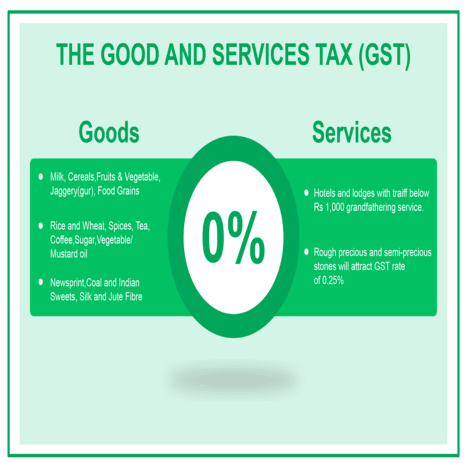
0% GST: Complete List of Tax-Free Goods & Services

The 56th GST Council meeting has rationalised India’s GST structure into two main slabs – 5% and 18%, with a Nil rate for essential goods and services,


📌 Effective Date of Nil GST Rates

  • 22nd September 2025

🥛 Essential Food Products – Now Nil Rated

HSN Code Description Earlier GST Rate New GST Rate
0401 Ultra-High Temperature (UHT) milk 5% Nil
0406 Chena or paneer, pre-packaged and labelled 5% Nil
1905 Pizza bread 5% Nil
1905 / 2106 Khakhra, chapathi or roti 5% Nil
2106 Paratha, parotta and other Indian breads (by any name called) 18% Nil

💊 Life-Saving Drugs & Medicines – Now Nil Rated

Group 1 – Earlier @5% → Nil

  • Agalsidase Beta
  • Imiglucerase
  • Eptacog alfa (activated recombinant coagulation factor VIIa)

Group 2 – Earlier @12% → Nil

  • Onasemnogene abeparvovec
  • Asciminib
  • Mepolizumab
  • Pegylated Liposomal Irinotecan
  • Daratumumab (IV & Subcutaneous)
  • Teclistamab
  • Amivantamab
  • Alectinib
  • Risdiplam
  • Obinutuzumab
  • Polatuzumab vedotin
  • Entrectinib
  • Atezolizumab
  • Spesolimab
  • Velaglucerase Alpha
  • Agalsidase Alfa
  • Rurioctocog Alpha Pegol
  • Idursulphatase
  • Alglucosidase Alfa
  • Laronidase
  • Olipudase Alfa
  • Tepotinib
  • Avelumab
  • Emicizumab
  • Belumosudil
  • Miglustat
  • Velmanase Alfa
  • Alirocumab
  • Evolocumab
  • Cystamine Bitartrate
  • CI-Inhibitor injection
  • Inclisiran

📚 Stationery & Education Items – Now Nil Rated

HSN Code Description Earlier GST Rate New GST Rate
4016 Erasers 5% Nil
4802 Uncoated paper & paperboard for notebooks 12% Nil
4820 Exercise book, graph book, laboratory notebook, notebooks 12% Nil
4905 Maps, atlases, wall maps, globes, topographical charts 12% Nil
8214 Pencil sharpeners 12% Nil
9608, 9609 Pencils, crayons, pastels, chalks (drawing/writing/tailor’s) 12% Nil

💎 Other Goods Now Nil Rated

Category Earlier GST New GST
Technical documentation in respect of goods exempted under notification No. 19/ 2019-Customs dated 06.07.2019. IGST 18% Nil
Natural cut & polished diamonds ≤ 25 cents (imported under Diamond Imprest Scheme) IGST 18% Nil
Works of art and antiques IGST 18% Nil
Flight & Target Motion Simulators (and parts) IGST 18% Nil
Parts & sub-assemblies of HACFS / IADWS IGST 18% Nil
Military transport aircraft (C-130, C-295MW) IGST 18% Nil
Deep Submergence Rescue Vessel IGST 18% Nil
Unmanned underwater vessels/platforms IGST 18% Nil
Ejection seats for fighter aircraft IGST 18% Nil
High performance batteries for drones & special equipment IGST 18% Nil
Communication devices including SDRs & accessories IGST 18% Nil
Air diving & rebreather sets, diving systems, accessories IGST 18% Nil
Sonobuoys for naval air assets IGST 18% Nil
Ship launched missiles IGST 18% Nil
Rockets >100mm calibre IGST 18% Nil
Remote Piloted Aircraft (military use) IGST 18% Nil
Parts, sub-assemblies, spares, accessories, tools, testing equipment, literature for defence weapons & aircrafts (except certain excluded arms) IGST 18% Nil

🛡️ Insurance Services – Now Nil Rated

Service Earlier GST Rate New GST Rate
All individual health insurance (including reinsurance) 18% with ITC Exempt
All individual life insurance (including reinsurance) 18% with ITC Exempt

What is the GST rate on food preparations not elsewhere specified in any of the schedules?

Food preparations not elsewhere specified will attract a GST rate of 5%.

UHT (Ultra High Temperature) milk has been exempted. Does exemption to UHT milk also cover plant-based milk?

All dairy milk, other than UHT milk, were already exempt from GST. Hence UHT milk has been exempted to provide same tax treatment to similar goods. Plant based milk drinks except soya milk drinks attracted 18% GST while soya milk drink attracted 12% GST. The GST rate on plant-based milk drinks and soya milk drinks have now been reduced to 5%.

What is the reason for revising GST rate only on specified varieties of Indian bread?

Bread was already exempt while pizza bread, roti, porotta, paratha etc attracted different rates. All Indian breads, by whatever name called have been exempted even though only few goods have been mentioned by way of illustrative example.

Why is there a different tax treatment between paneer and other cheese?

Prior to rate rationalisation, paneer sold in other than pre-packaged and labelled form already attracted nil rate. Therefore the changes have been made only in respect of paneer supplied in pre-packaged and labelled form. Paneer is an Indian cottage cheese. This is mostly produced in small scale sector. The measure is intended to promote Indian cottage cheese.

What is the reason for differential tax treatment for natural honey and artificial honey?

This is intended to promote natural honey.

Why have all medicines not been exempted from GST in general?

If drugs/ medicines are fully exempted, the manufacturers/dealers would not be able to claim input tax credit on GST paid on raw materials and will have to reverse the ITC paid on the inputs. This would increase their effective tax incidence and cost of production. This may in turn be passed on to consumers/ patients in the form of higher prices which in turn would make the measure counterproductive.

Why has the GST rate been reduced on medical devices? Will this not lead to inverted duty structure?

The measure is intended to lower the cost of healthcare and thereby benefit patients, particularly the poor. This measure does not create any new inverted duty structure as the existing structure already had inverted duty structure although this measure may deepen theinversion. However, under GST, refund of accumulated input tax credit arising on account of

inverted duty structure is available to manufacturers. GST Council has also recommended process reforms to enable expedited refunds.

Tata Motors Cuts Car Prices by up to ₹1.45 Lakh Post GST Changes: See Complete List

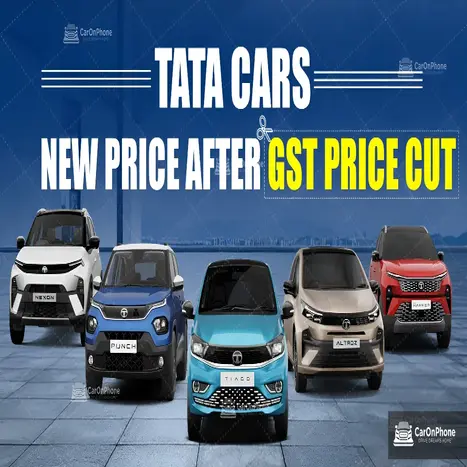
Tata Motors on Friday announced slashing prices of passenger vehicles up to 1.45 lakh from September 22, in a move that is set to benefit customers ahead of the festive season.

Tata Motors price drop: A Tata Motors logo is pictured outside the company showroom in Mumbai, India.(Reuters)

The announcement comes days after the GST council, earlier this week, reduced the tax rates for most of the goods, including vehicles.

The Mumbai-based automobile manufacturer said that it would pass on the full benefit of the recent GST reduction on cars and SUVs to customers.

The revised prices would be applicable from September 22, when the revised GST rates come into effect. While Tiago will see a reduction of up to 75,000, the price of Safari will see the biggest cut of 1,45,000.

Tata Motors have reduced the prices of passenger cars.
 

Tata Motors have reduced the prices of passenger cars.

The auto major said that the price of Tiago will be cheapter by 75,000, the Tigor by 80,000, and the Altroz by 1.10 lakh.

The Punch will see a reduction of up to 85,000, the Nexon by as much as 1.55 lakh, and the Curvv by up to 65,000. Meanwhile Harrier and Safari will see a price cut of up to 1,40,000 and 1,45,000 respectively.

The move comes after the GST Council approved limiting slabs to 5 per cent and 18 per cent from September 22, the first day of Navaratri. Under the revised GST rates, petrol, LPG and CNG vehicles of less than 1,200 cc and not more than 4,000 mm length and diesel vehicles of up to 1,500 cc and 4,000 mm length would move to the 18 per cent rate.

Shailesh Chandra, Managing Director of Tata Motors Passenger Vehicles Ltd, while making the announcement, said, “The reduction in GST on passenger vehicles, effective 22nd September 2025, is a progressive and timely decision that will make personal mobility more accessible for millions across India.”

“This will make our popular range of cars and SUVs even more accessible across segments, enabling first-time buyers and accelerating the shift towards new age mobility for a wider spectrum of customers,” he added.

Source link

Updated GST Slabs: Complete List of Goods & Services Taxed at 5% and 18%

The Goods and Services Tax (GST) Council on Wednesday approved a new two-slab structure of 5% and 18%, bringing a major simplification to India’s indirect tax system. The new rates will take effect from September 22, replacing the earlier four-tier structure of 5%, 12%, 18% and 28%.

Customers at a grocery store, in Mumbai, Thursday, Sept. 4, 2025. The GST Council, in its meeting on Wednesday, simplified the GST from the current four slabs to a two-rate structure – 5 and 18 per cent. A special 40 per cent slab is also proposed for a select few items such as high-end cars, tobacco and cigarettes.(Representative image/PTI)

After day-long marathon meeting of the GST council in New Delhi, finance minister Nirmala Sitharaman said the reforms were carried out with a focus on the common man.

The finance minister said, “We have reduced the slabs, there shall be only two slabs, and we are also addressing issue of compensation cess, ease of living, simplifying registration, return filing, and refunds.”

“Every tax on the common man’s daily use items has gone through a rigorous review and in most cases the rates have come down drastically,” she added.

New two-slab structure

The 56th GST Council replaced the existing four-rate system to a simplified two-slab structure of 5% and 18%, with the exception of cigarettes, chewing tobacco and pan masala, which will remain under the higher category of 40%.


Under the revised structure, most personal-use and household items, including air conditioners and washing machines, will attract lower taxes as the government seeks to spur domestic consumption amid pressure from US tariffs.

What gets cheaper at 5% GST

Daily-use essentials, farm equipment, healthcare products and education supplies have largely moved to the 5% slab, giving relief to households and farmers.

1. Daily essentials

  • Hair oil, shampoo, toothpaste, toilet soap, toothbrushes, shaving cream (down from 18%)
  • Butter, ghee, cheese, dairy spreads (down from 12%)
  • Pre-packaged namkeens, bhujia, mixtures (down from 12%)
  • Utensils (down from 12%)
  • Feeding bottles, napkins for babies, clinical diapers (down from 12%)
  • Sewing machines and parts (down from 12%)

2. Healthcare

  • Individual health and life insurance (down from 18% to Nil)
  • Thermometers (18% → 5%)
  • Medical grade oxygen (12% → 5%)
  • Diagnostic kits & reagents (12% → 5%)
  • Glucometers and test strips (12% → 5%)
  • Corrective spectacles (12% → 5%)

3. Farm & agriculture

  • Tractor tyres & parts (18% → 5%)
  • Tractors (12% → 5%)
  • Bio-pesticides, micro-nutrients (12% → 5%)
  • Drip irrigation systems, sprinklers (12% → 5%)
  • Agricultural, horticultural & forestry machines (12% → 5%)

4. Education

  • Maps, charts, globes (12% → Nil)
  • Pencils, sharpeners, crayons, pastels (12% → Nil)
  • Exercise books, notebooks (12% → Nil)
  • Erasers (5% → Nil)

What’s under 18% GST

High-value goods such as automobiles and electronic appliances will now fall under the 18% slab, reduced from 28% earlier.

  1. Automobiles
  • Petrol & petrol hybrid, LPG, CNG cars (not exceeding1200 cc & 4000 mm) – 28% → 18%
  • Diesel & diesel hybrid cars (not exceeding 1500 cc & 4000 mm) – 28% → 18%
  • Three-wheeled vehicles – 28% → 18%
  • Motorcycles (350 cc and below) – 28% → 18%
  • Motor vehicles for transport of goods – 28% → 18%

2. Electronic appliances

  • Air conditioners – 28% → 18%
  • Televisions above 32 inches (including LED & LCD) – 28% → 18%
  • Monitors and projectors – 28% → 18%
  • Dishwashing machines – 28% → 18%

40% slab for sin goods

A separate 40% slab has been created for luxury and sin goods. This will cover: High-end cars, Tobacco and cigarettes

1. Tobacco and Pan Masala (Sin Goods)

  • Pan masala
  • Gutka
  • Chewing tobacco
  • Unmanufactured tobacco and tobacco refuse (excluding leaves)
  • Cigarettes
  • Cigars, cheroots, cigarillos, and similar substitutes

2. Aerated and Sugary Beverages

  • Carbonated drinks
  • Cold drinks with sugar
  • Caffeinated carbonated beverages

3. Luxury Cars

  • Petrol cars with engine capacity above 1200 cc
  • Diesel cars with engine capacity above 1500 cc

4. High-End Motorcycles

  • Motorcycles with engine capacity above 350 cc

5. Super-Luxury Marine and Aircraft

  • Yachts
  • Personal aircraft, including helicopters

6. Other Sin or Luxury Items (broader category)

  • Coal, lignite, peat
  • Online gambling and gaming services

Source link