Major Rules Changing from 1 October 2026: GST, Tax, UPI, PF & TDS Updates You Need to Know
Several new rules are scheduled to take effect, important compliance deadlines will fall during the month, and some major policy developments may also emerge.
In particular, people should keep an eye on important updates related to Income Tax, GST, UPI, PF, TDS, Aadhaar, and LPG.
It is important to note that not all of these changes will come into effect on 1 October itself. Some rules will become effective from 1 October, some are important developments taking place during October, while others were introduced in September but may have a more visible practical impact from October onwards.
Let us understand these updates one by one.
1. UPI MDR to Apply from 15 October 2026 — What You Need to Know
One of the major UPI-related developments in October concerns the introduction of a Merchant Discount Rate (MDR) framework.
From 15 October 2026, a new MDR framework will apply to specified Person-to-Merchant (P2M) UPI transactions. For eligible merchant transactions above ₹2,000, the standard MDR will be 0.4%. For transactions of ₹75,000 or more, the maximum MDR will be capped at ₹300 per transaction.
However, this does not mean that customers will have to pay a 0.4% charge on every UPI payment.
Person-to-Person (P2P) UPI transactions will continue to remain free. MDR will also not apply to merchant payments up to ₹2,000 and eligible transactions involving small merchants covered under the zero-MDR framework.
Another important point is that MDR is not a Government tax. It is a merchant-side charge distributed among participants in the payment ecosystem. Banks have also been advised to ensure that merchants do not pass this cost on to customers.
Therefore, if you make a UPI payment of ₹5,000 or ₹10,000, it should not automatically be interpreted as a “0.4% UPI tax” on the customer.
2. Tax Audit: Penalty Risk After 30 September 2026
For businesses and professionals, 30 September 2026 is an important compliance deadline.
For tax audit cases relating to FY 2025-26 (AY 2026-27), the due date for furnishing the tax audit report is 30 September 2026. The Income Tax Department has clarified that tax audits for FY 2025-26 will continue to be governed by the Income-tax Act, 1961, even if the audit report is filed after 1 April 2026.
If the tax audit report is not furnished by 30 September and the Government does not grant any extension, there may be an exposure to penalty under Section 271B.
The penalty is generally:
0.5% of turnover or gross receipts
or
₹1,50,000
whichever is lower.
ITR Due Date for Tax Audit Cases
For regular tax audit cases, the due date for filing the Income Tax Return (ITR) is 31 October 2026. Different deadlines may apply to taxpayers covered by transfer-pricing provisions.
According to the Income Tax Department’s FAQ, for FY 2025-26, the tax audit report is due by 30 September 2026, while the applicable ITR for audit cases is generally due by 31 October 2026.
3. Important GST Council Meeting Scheduled for 7 October 2026
Another major event for GST taxpayers in October is the upcoming 57th GST Council Meeting.
The 57th GST Council Meeting is now scheduled to be held on 7 October 2026 in New Delhi. The meeting was originally planned for 12 September but was later rescheduled. The meeting of GST officials is expected to take place on 5–6 October.
The meeting may discuss several GST process and compliance reforms, including matters relating to ITC rules, GST registration, e-invoicing, refunds, and GST-related litigation.
However, taxpayers should keep one important point in mind:
A discussion or recommendation by the GST Council does not automatically mean that a new GST rule will become effective on the same day.
Where required, any proposed change may need a formal notification, amendment to the rules, or a legislative amendment before it becomes applicable.
Therefore, taxpayers with an existing GST demand, ITC dispute, or statutory compliance deadline should not postpone their existing compliance obligations simply because they are waiting for the 7 October meeting.
4. No TAN Requirement for Property Purchase from an NRI
From 1 October 2026, the TAN requirement for a resident Individual or HUF purchasing immovable property from an NRI for TDS purposes is being removed.
As per Budget 2026, in such transactions the buyer will be able to deduct and report TDS using their PAN. The seller’s PAN will also need to be quoted in the relevant challan-cum-statement.
In simple terms, the earlier mechanism was:
Resident Individual/HUF + NRI Seller → TAN required
From 1 October 2026, the mechanism will be:
Resident Individual/HUF + NRI Seller → PAN-based TDS compliance
It is important to understand that removal of the TAN requirement does not mean that the TDS obligation itself has been abolished. Applicable TDS provisions will continue to apply, and the buyer must comply with the relevant requirements.
This change is particularly relevant for individuals and HUFs purchasing immovable property from NRI sellers.
5. EPF Wage Ceiling Increased from ₹15,000 to ₹25,000
A significant employee-related development concerns EPFO coverage.
The Government has increased the wage ceiling for mandatory EPFO coverage from:
₹15,000 → ₹25,000 per month
The change is effective from 17 September 2026, meaning its practical implications may start appearing in October payroll and subsequent payroll processing. According to the Government, around 51 lakh additional employees could potentially come under EPFO coverage.
This means that a substantial number of eligible employees earning wages between ₹15,000 and ₹25,000 per month may now come within the statutory EPF framework, subject to the applicable scheme provisions.
For example, if the contribution is calculated at 12% on the revised ceiling of ₹25,000:
₹25,000 × 12% = ₹3,000
Under the earlier ₹15,000 ceiling:
₹15,000 × 12% = ₹1,800
This results in a potential difference of:
₹3,000 − ₹1,800 = ₹1,200
However, the actual EPF contribution for an individual employee will depend on the person’s applicable EPF membership status and the relevant provisions of the scheme.
6. Children’s Aadhaar Mandatory Biometric Update — Free Facility Available Until 30 September
Parents should also take note of an important deadline at the end of September.
According to UIDAI, the Mandatory Biometric Update (MBU) for children aged 5 to 17 years is available free of charge until 30 September 2026.
Therefore, if your child’s mandatory biometric update is still pending, it would be advisable to complete it before 30 September, as the special free-of-cost facility is available only until this date.
One important clarification is that this is not the regular Aadhaar authentication process. It refers specifically to the Mandatory Biometric Update, under which biometric details such as the child’s fingerprints, iris scans, and photograph are updated.
7. Aadhaar Biometric Authentication Required for Subsidised LPG
Another important consumer-related development takes effect from October.
From 1 October 2026, domestic LPG consumers will need to complete Biometric Aadhaar Authentication (BAA) to book refills at the regulated retail selling price along with the applicable subsidy.
Consumers who have not yet completed the authentication can reportedly do so through any of the following options:
- At the time of LPG delivery
- At the LPG distributor’s showroom
- Through the relevant Oil Marketing Company’s mobile application
According to the Government, 27.43 crore consumers, or approximately 89.9%, had already completed the authentication. Those consumers do not need to take any further action.
LPG consumers should therefore check whether their Aadhaar biometric authentication has already been completed.
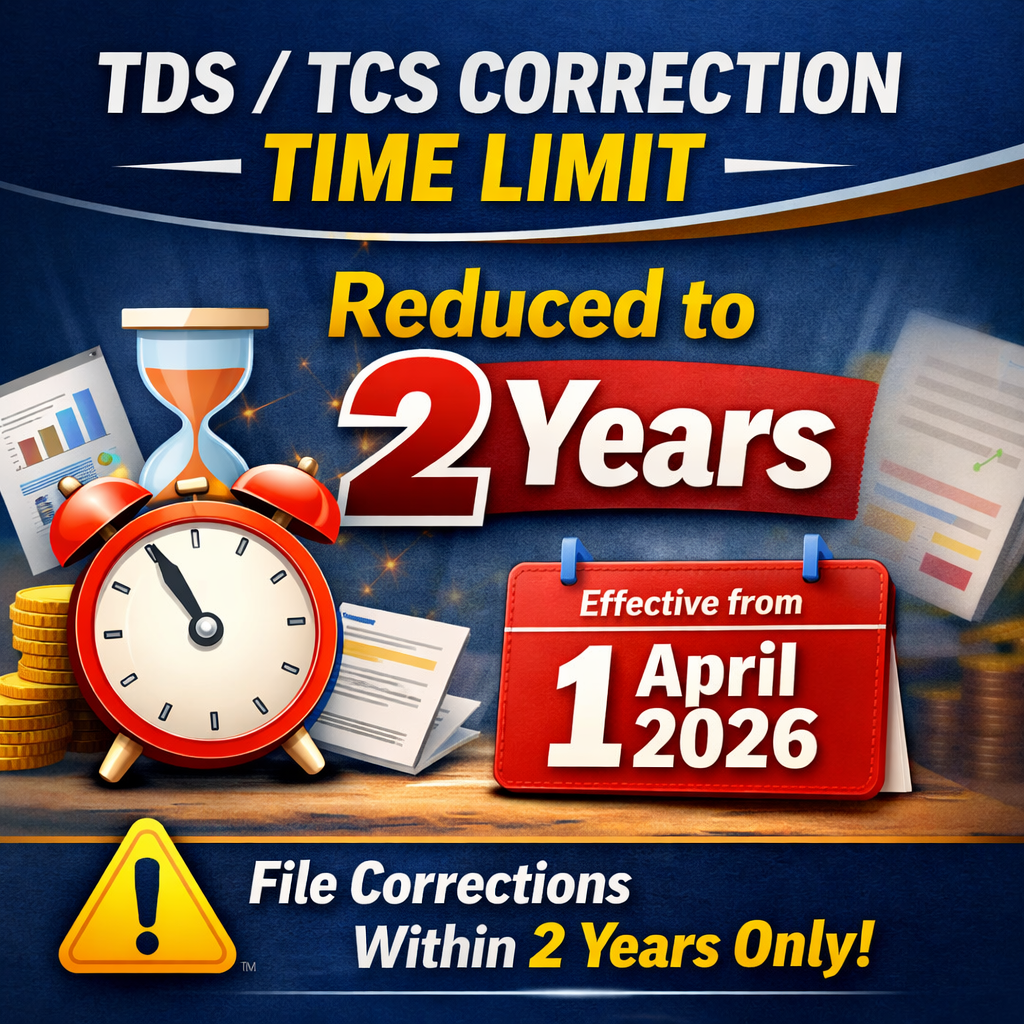
8. TDS and TCS: Key Points to Keep in Mind During October
TDS and TCS compliance will also remain important for businesses during October. With the transition to the new Income-tax Act, taxpayers must be particularly careful not to confuse FY 2025-26 / AY 2026-27 with FY 2026-27 / Tax Year 2026-27.
Compliance relating to income earned during FY 2025-26 (AY 2026-27) will continue to be governed by the Income-tax Act, 1961.
On the other hand, income relating to FY 2026-27 (Tax Year 2026-27) will fall under the framework of the new Income-tax Act, 2025.
The Income Tax Department has provided clarification regarding this transition.
Therefore, while filing TDS/TCS returns, making challan payments, issuing certificates, or completing other related compliances during October, taxpayers should ensure that they select the correct financial year, tax year, applicable Act, and relevant form.
9. Companies Should Also Review Their MCA/ROC Compliance
For companies, October is not limited to tax-related compliance. Depending on the company’s AGM date and applicable provisions, several MCA/ROC filings may also become due during October.
These may include, where applicable:
- AOC-4 / AOC-4 XBRL
- ADT-1
- MSME-related reporting
- Other event-based ROC filings
The exact due date is not the same for every company. Certain filings depend on factors such as the actual AGM date and the company’s category.
Companies should therefore review their MCA compliance calendar before the beginning of October and identify all applicable filing deadlines.
10. Do Not Miss Regular GST and Other October Compliance Deadlines
The GST Council meeting is not the only GST-related development to watch in October. Regular GST return filing and tax payment obligations will continue to apply according to their respective due dates.
Taxpayers should not assume that the 7 October GST Council meeting will automatically postpone existing GST return or tax payment deadlines.
Accordingly, GSTR-1, GSTR-3B, CMP-08, and other applicable GST compliances should continue to be completed within their respective due dates, unless the Government officially announces a specific extension.
October 2026: Major Updates at a Glance
| Update | Important Date | Who Is Affected? |
|---|---|---|
| TAN requirement removed for resident Individual/HUF purchasing property from an NRI | 1 October 2026 | NRI property buyers |
| Aadhaar Biometric Authentication for LPG | 1 October 2026 | Eligible subsidised LPG consumers |
| 57th GST Council Meeting | 7 October 2026 | GST taxpayers and businesses |
| UPI MDR framework | 15 October 2026 | Specified merchant transactions |
| PF wage ceiling increased from ₹15,000 to ₹25,000 | 17 September 2026; impact on October payroll | Eligible employees and employers |
| Free Aadhaar MBU facility for children ends | 30 September 2026 | Children aged 5–17 |
| Tax Audit Report due date | 30 September 2026 | Tax audit cases |
| ITR due date for audit cases | 31 October 2026 | Tax audit cases |
Conclusion
October 2026 is more than just the beginning of a new month. It brings several important compliance requirements, regulatory developments, and financial updates that may affect taxpayers, businesses, employees, and consumers.
Before October begins, it is therefore important to prepare a checklist covering GST returns, tax audit, ITR filing, TDS/TCS, PF, Aadhaar, LPG requirements, MCA/ROC filings, and other applicable compliances.
Keeping track of the relevant dates and completing the required actions on time can help taxpayers and businesses stay up to date with the applicable rules.