GSTR-3B Changes from Feb 2026: New GST ITC Rules Bring Relief to Taxpayers

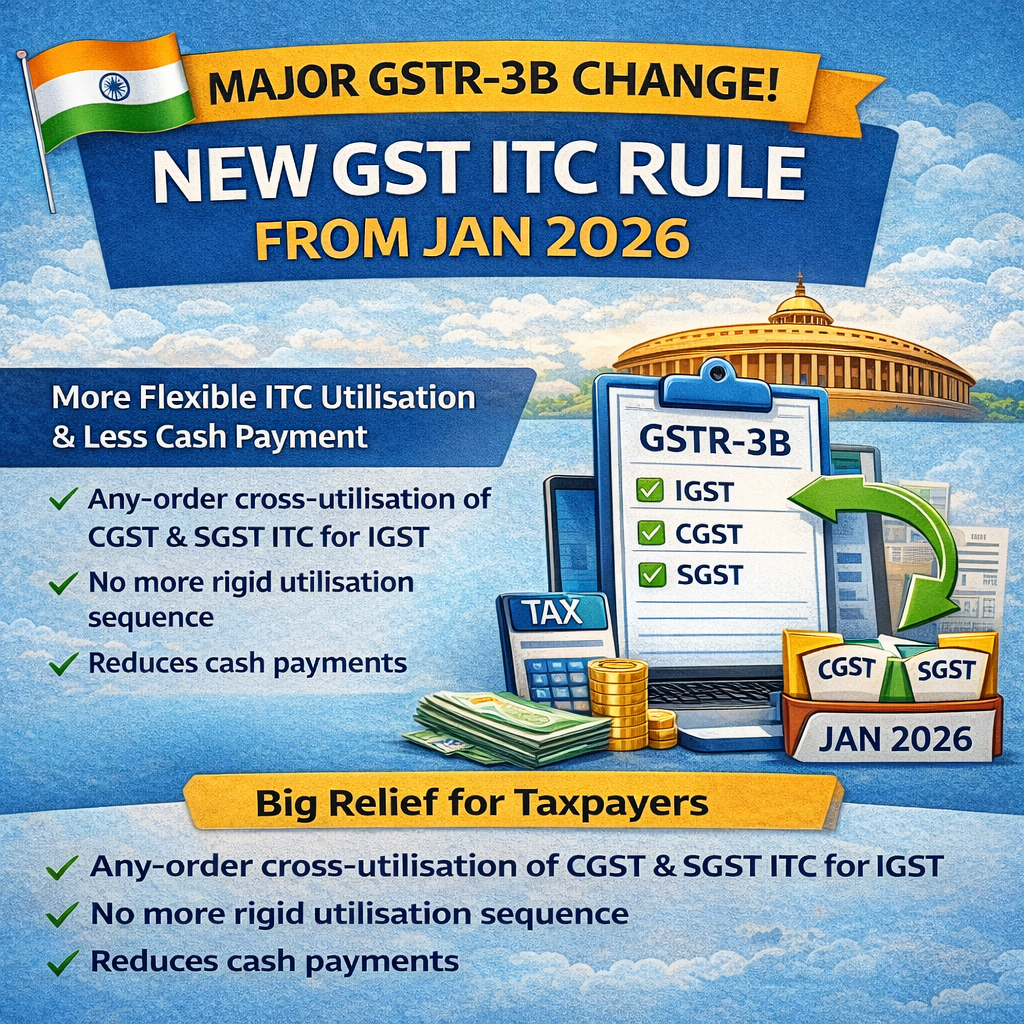
To reduce taxpayer hardship, the GST Portal will roll out a major change in ITC utilisation from the January 2026 return period, relaxing the rigid utilisation sequence followed earlier.

1. Earlier ITC Set-Off Rule – Compliance Challenge

Statutory Position (Earlier Framework)

Under the earlier GST law and portal system, Input Tax Credit utilisation was subject to a strict and compulsory sequence:

  • IGST ITC was required to be utilised first:

    • Against IGST liability

    • Then against CGST liability

    • Then against SGST liability

  • CGST ITC could be utilised only:

    • Against CGST liability

    • Then against IGST liability

  • SGST ITC could be utilised only:

    • Against SGST liability

    • Then against IGST liability

Direct cross-utilisation between CGST and SGST was not permitted.

Practical Difficulty for Taxpayers

Because of this rigid utilisation order, taxpayers often had to make cash payments, even when sufficient ITC was available under a different tax head. This resulted in blocked credits and avoidable cash outflow.

Illustration – Earlier Rule (Before January 2026)

Output Tax Liability

  • IGST: ₹1,00,000

  • CGST: ₹40,000

  • SGST: ₹40,000

Available ITC

  • IGST ITC: ₹1,00,000

  • CGST ITC: ₹50,000

  • SGST ITC: ₹50,000

Utilisation as per Earlier Rules

  • IGST ITC of ₹1,00,000 adjusted fully against IGST liability

  • CGST liability of ₹40,000 paid using CGST ITC

  • SGST liability of ₹40,000 paid using SGST ITC

✔ In this scenario, no hardship arose.

Problem Scenario Under Earlier Rules

  • Output IGST Liability: ₹80,000

  • Available ITC:

    • CGST ITC: ₹60,000

    • SGST ITC: ₹20,000

Under the old system:

  • CGST ITC could not be used to pay SGST

  • SGST ITC could not be used to pay CGST

Result:
Despite total ITC being sufficient, cash payment became unavoidable due to utilisation restrictions. This was a common and recurring compliance issue.


2. New ITC Utilisation Rule – Effective from January 2026

What Has Changed?

🔹 System-level modification in Table 6.1 of GSTR-3B

From the January 2026 tax period onwards, once IGST ITC is fully exhausted, the GST Portal will allow utilisation of CGST and SGST ITC for payment of IGST liability in any sequence.

📌 This flexibility is enabled through the GST Portal system, without changing the basic statutory framework.


3. Salient Features of the New Rule

  • Applicable only after full utilisation of IGST ITC

  • CGST and SGST ITC can be used in any order

  • Cross-utilisation permitted only for IGST liability

  • Implemented through automated portal logic in GSTR-3B

  • Reduces cash outflow and accumulation of idle ITC


4. Illustration – New Rule (From January 2026)

Output IGST Liability: ₹80,000

Available ITC

  • IGST ITC: Nil

  • CGST ITC: ₹60,000

  • SGST ITC: ₹20,000

Utilisation under New Rule

  • CGST ITC utilised: ₹60,000

  • SGST ITC utilised: ₹20,000

IGST liability fully discharged through ITC, with no cash payment

✔ Earlier: Cash payment was mandatory
✔ Now: Entire liability settled via ITC


5. Practical Impact on Taxpayers

✅ Significant Relief

  • Eliminates unnecessary cash payments

  • Prevents ITC pile-up under a single tax head

  • Improves liquidity and working capital efficiency

✅ Easier Compliance

  • System-driven utilisation suggestions

  • Reduced chances of manual errors

  • More logical and business-friendly ITC usage


6. Important Points to Remember

  • Direct cross-utilisation between CGST and SGST is still not allowed

  • Flexibility is permitted only for IGST liability

  • Applicable prospectively from January 2026

  • Taxpayers should analyse ITC balances before filing GSTR-3B

GST Advisory on GSTR-3B Updates Applicable from February 2026

Advisory on Interest Collection and Related Enhancements in GSTR-3B

GSTR-3B Filing Service

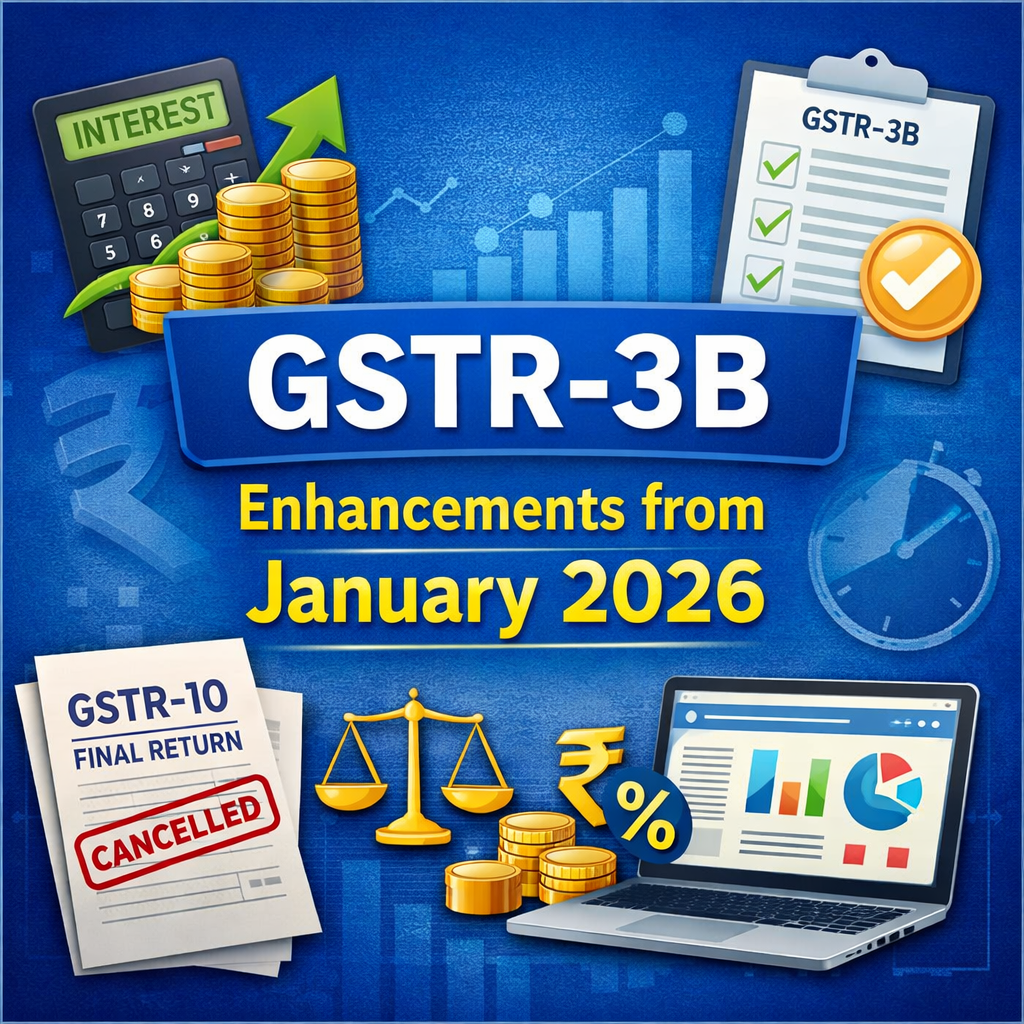
It is hereby informed that from January-2026 period onwards, few enhancements have been made in filing of GSTR-3B. For detailed advisory, kindly click on the link given below:

https://tutorial.gst.gov.in/downloads/news/advisory_on_interest_calculator.pdfThanks,
Team GSTN


The GST Network has issued an important advisory titled “Advisory on Interest Collection and Related Enhancements in GSTR-3B”, bringing multiple system-level changes in the filing of Form GSTR-3B, effective from the January-2026 tax period onwards.

These changes primarily focus on:

  • Revised interest computation methodology
  • System-driven population of tax liability breakup
  • Flexibility in ITC cross-utilisation
  • Interest recovery in GSTR-10 for cancelled registrations

The enhancements aim to align portal functionality with Section 50 of the CGST Act, 2017 and Rule 88B of the CGST Rules, 2017, while reducing disputes and ensuring fair interest computation.


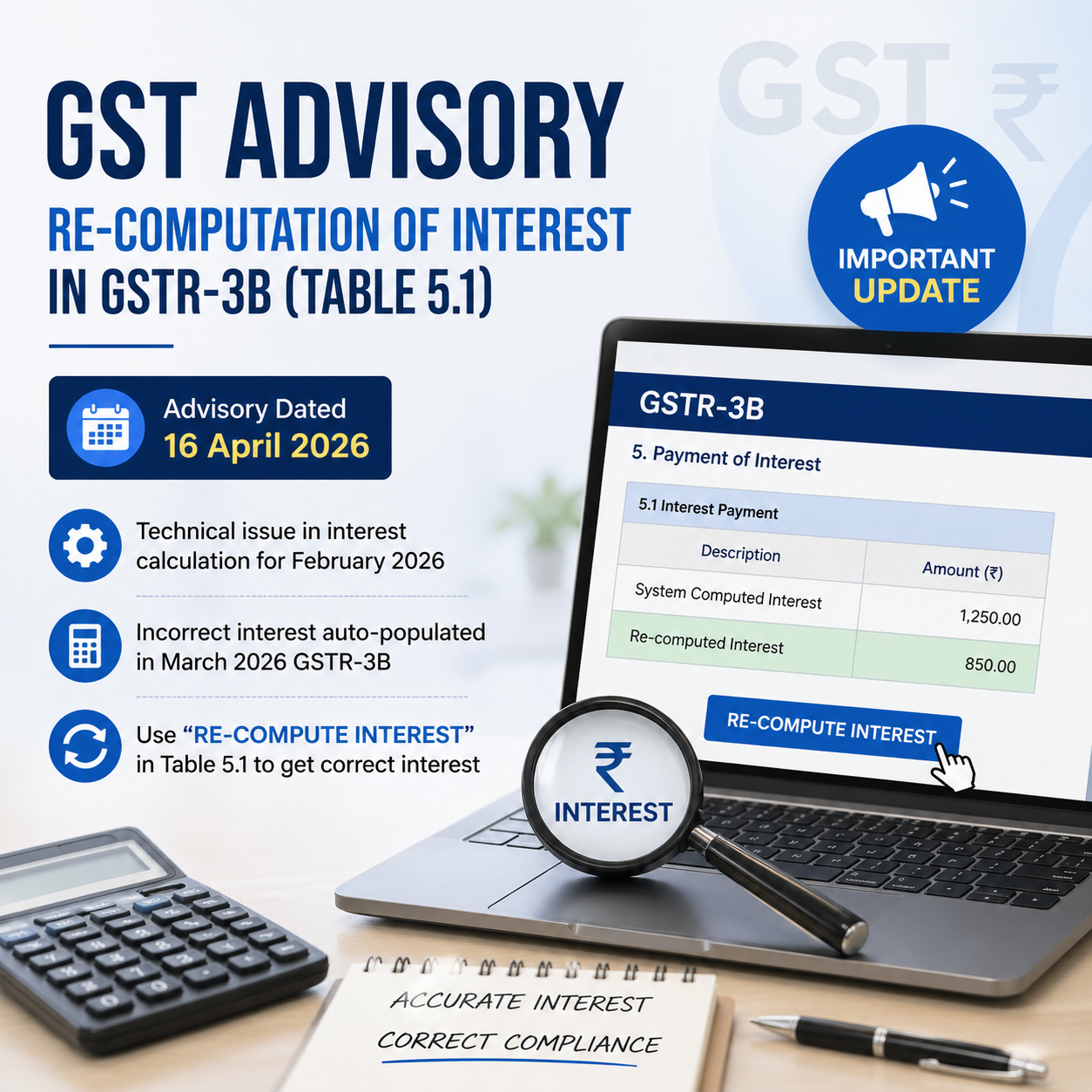
Update in Interest Computation for GSTR-3B (Table 5.1)

1.1 What Has Changed from January-2026?

From the January-2026 tax period onwards, the interest calculation in Table 5.1 of GSTR-3B has been enhanced to provide relief to taxpayers by factoring in the minimum cash balance available in the Electronic Cash Ledger (ECL).

This change is made in line with the proviso to Rule 88B(1) of the CGST Rules, 2017.

➡️ Practical impact:
If a taxpayer had sufficient cash balance lying in the Electronic Cash Ledger from the due date of return till the actual date of tax payment (offset), interest will not be charged on that portion.


Applicability Timeline

  • Applicable for delayed GSTR-3B returns of January-2026
  • Interest will be auto-populated in February-2026 GSTR-3B

Revised Interest Computation Formula

Interest = (Net Tax Liability – Minimum Cash Balance in ECL from due date to date of debit)
× (Number of days delayed ÷ 365)
× Applicable Interest Rate

Tax Planning Service

Key Takeaway

Earlier, interest was calculated on the entire net cash liability. Now, idle cash balance already available with the Government is reduced before interest computation — a major relief for compliant taxpayers.


System-Computed Interest in Table 5.1 – Now Non-Editable

Non-Editable Downward

From January-2026 onwards:

Taxpayer Education Course
  • Interest auto-populated in Table 5.1 will be non-editable downward
  • Taxpayers cannot reduce the system-computed interest

Upward Modification Allowed

  • Auto-populated interest represents minimum interest payable
  • Taxpayers must self-assess their correct interest liability
  • Upward modification is permitted, if required

➡️ Compliance Note:
Responsibility of correct interest payment continues to rest with the taxpayer, despite system computation.


Auto-Population of Tax Liability Breakup Table in GSTR-3B

What Is the Tax Liability Breakup Table?

This table captures:

  • Supplies pertaining to previous tax periods
  • Reported in current period
  • For which tax is being paid now

New Enhancement from January-2026

The GST Portal will auto-populate the Tax Liability Breakup Table based on:

  • Document dates
  • Supplies reported in:
    • GSTR-1
    • GSTR-1A
    • IFF
  • Pertaining to earlier tax periods
  • Where tax liability is discharged in current GSTR-3B

Objective of This Enhancement

  • Accurate period-wise allocation of tax
  • Correct interest computation as per proviso to Section 50 of CGST Act
  • Reduction in manual errors and litigation

Important Characteristics

  • Auto-populated values are suggestive in nature
  • Taxpayers may revise the figures upwards
  • Downward revision may attract scrutiny

Navigation Path on Portal

Login → GSTR-3B Dashboard → Table 6.1 (Payment of Tax) → Tax Liability Breakup


Update in Table 6.1 – Suggestive Cross-Utilisation of ITC

Change in ITC Utilisation Logic

From January-2026 onwards:

  • Once IGST ITC is fully exhausted
  • The portal will allow payment of IGST liability
  • Using CGST and SGST ITC in any sequence

Benefit to Taxpayers

  • Increased flexibility
  • Reduced working capital blockage
  • Alignment with judicial interpretations on ITC utilisation

Collection of Interest in GSTR-10 for Cancelled Taxpayers

New Provision Introduced

For cancelled GST registrations:

  • If the last applicable GSTR-3B is filed after due date
  • Interest on delayed filing shall be:
    • Levied
    • Collected through Final Return (GSTR-10)

Practical Implication

Taxpayers can no longer avoid interest liability merely because registration is cancelled. Interest compliance is now linked to GSTR-10 filing.


Overall Impact & Professional Analysis

Area Impact
Interest Computation Fair, cash-balance adjusted
Editability System minimum enforced
Tax Liability Allocation Automated & document-driven
ITC Utilisation Flexible & taxpayer-friendly
Cancelled Registrations Interest leakage plugged

The January-2026 enhancements in GSTR-3B mark a significant shift towards system-driven, legally aligned GST compliance. While automation reduces errors, self-assessment responsibility remains intact. Taxpayers and professionals must closely monitor cash ledger balances, document dates, and interest computation, especially in delayed filings and past-period adjustments.

Top 10 Changes in GST & Income Tax Applicable from January 1, 2026

Important Tax Compliance Changes from 1 January 2026 – What Every Taxpayer Must Know

The commencement of 1 January 2026 brings significant compliance implications under GST and Income Tax laws in India. Multiple statutory deadlines expire on 31 December 2025, after which several system-driven restrictions, penalties, and consequences automatically come into force.

Failure to act before these cut-off dates may lead to late fees, interest liabilities, denial of Input Tax Credit (ITC), inoperative PAN, suspension of GST registration, and increased tax burden.

This article outlines the key changes effective from 1 January 2026, including several often overlooked but high-risk compliance areas.


1. GSTR-9 / GSTR-9C Due Date Expired – Late Fees Triggered

The last date to file GSTR-9 and GSTR-9C for FY 2024-25 is 31 December 2025.

From 1 January 2026, these returns can still be filed, but mandatory late fees will apply based on turnover slabs.

GSTR-9 Late Fee Structure (Applicable from FY 2022-23 onwards)

Annual Turnover Late Fee per Day (CGST + SGST) Maximum Late Fee
Up to ₹5 crore ₹50 (₹25 + ₹25) 0.04% of turnover
₹5 crore – ₹20 crore ₹100 (₹50 + ₹50) 0.04% of turnover
Above ₹20 crore ₹200 (₹100 + ₹100) 0.05% of turnover

Important Points:

  • Late fees continue to accumulate until the return is filed

  • No automatic waiver is available after the due date

  • GSTR-9C cannot be filed unless GSTR-9 is first filed

  • Late fee for GSTR-9C is ₹200 per day, capped at 0.05% of turnover


2. Belated and Revised ITR Filing Window Closes on 31 December 2025

For FY 2024-25 (AY 2025-26):

  • Belated Return under Section 139(4)

  • Revised Return under Section 139(5)

👉 Both are permitted only up to 31 December 2025.

From 1 January 2026, taxpayers will no longer be allowed to file either a belated or revised return for this financial year.


3. Updated Return Remains the Only Option – At a High Cost

Post 31 December 2025, the only return filing option available is the Updated Return under Section 139(8A).

Key Rules for Updated Returns

  • Can be filed up to 4 years from the end of the relevant assessment year

  • Allowed only in cases of:

    • Omitted income

    • Incorrect claims of exemptions, deductions, or losses

  • Refunds cannot be claimed

  • Losses cannot be carried forward

  • Additional tax payment is mandatory

📌 Updated returns are meant for tax recovery, not routine corrections.


4. PAN Becomes Inoperative If Aadhaar Is Not Linked

Failure to link PAN with Aadhaar results in the PAN becoming inoperative, leading to serious consequences.

Impact of Inoperative PAN

  • Income Tax Return cannot be filed

  • Tax refunds will not be issued

  • TDS will be deducted at higher rates

  • Certain banking transactions may be restricted

  • PAN becomes invalid for GST, investments, loans, and other financial compliance

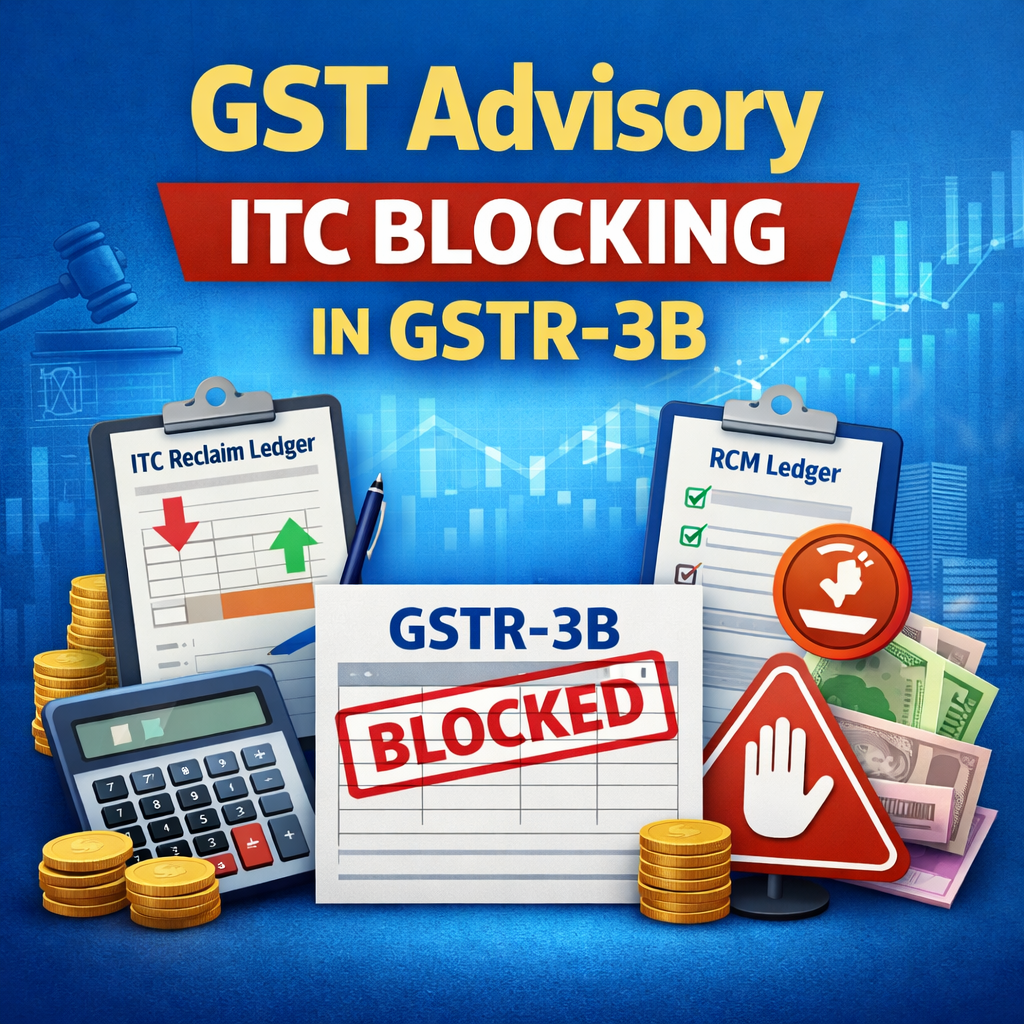
    5. GSTR-3B Filing to Be Blocked Due to ITC Restrictions from 1 January 2026

    Starting with returns filed for January 2026 onwards, the GST portal will restrict GSTR-3B filing in certain ITC-related mismatch situations.

    ITC Reclaim Ledger Validation

    The amount of ITC reclaimed in Table 4(D)(1) must not exceed:

    • Closing balance of the ITC Reclaim Ledger, plus

    • ITC reversed in Table 4(B)(2) during the current tax period

    Reverse Charge (RCM) Ledger Validation

    ITC claimed under RCM in Table 4A(2) / 4A(3) must not exceed:

    • RCM tax paid and reported in Table 3.1(d), plus

    • Available balance in the RCM Ledger

    Any negative balance in the ITC or RCM ledger will automatically block GSTR-3B filing.


    6. Non-Submission of Bank Details Will Trigger GST Registration Suspension

    As per Rule 10A of the CGST Rules, furnishing bank account details is mandatory:

    • Within 30 days of GST registration, or

    • Before filing GSTR-1 or IFF, whichever occurs first

    Consequences of Non-Compliance

    • GST registration will be system-suspended

    • Taxpayer will be unable to file returns

    • E-way bill generation will be blocked

    • Suspension remains until bank details are updated


    7. GST Returns Older Than Three Years Become Non-Fileable

    A critical but frequently overlooked provision:

    👉 GST returns pending for more than 3 years become time-barred and cannot be filed.

    This restriction applies to:

    • GSTR-1

    • GSTR-3B

    • GSTR-4

    • GSTR-5, 6, 7, 8, and 9

    📌 Once a return becomes time-barred:

    • Related ITC is permanently forfeited

    • Annual return reconciliation becomes impossible

    • Departmental notices and demand proceedings may follow


    8. Reassess Aggregate Annual Turnover (AATO) – GST Registration May Be Required

    At the beginning of a new financial cycle, businesses should recalculate their Aggregate Annual Turnover (AATO).

    GST registration becomes mandatory if AATO exceeds:

    • ₹20 lakh (₹10 lakh for special category states), or

    • ₹40 lakh for goods suppliers, subject to prescribed conditions

    Failure to register can result in:

    • Tax demand along with interest

    • Monetary penalties

    • Denial of ITC to customers, affecting business credibility


    9. Pay Advance Tax by 15 March to Avoid Interest Liability

    Where total tax liability exceeds ₹10,000, payment of advance tax is compulsory.

    • Final instalment due: 15 March (100% of tax liability)

    Non-payment or short payment may attract:

    • Interest under Sections 234B and 234C

    • Additional tax cost even if the ITR is filed within the due date


    10. Regular Monitoring of Income Tax Portal Is Essential

    Taxpayers must frequently review communications available on the Income Tax Portal, including:

    • E-proceedings and notices

    • Intimations under Section 143(1)

    • Defective return alerts

    • Refund adjustments

    • AIS/TIS mismatch communications

    Ignoring portal notices may lead to:

    • Best judgment assessments

    • Withholding of refunds

    • Penalty and prosecution proceedings

GST Authorities Notify Revised Advisory on ITC Blocking in GSTR-3B

Background of the Advisory

To improve discipline in Input Tax Credit (ITC), minimise manual mistakes, and enable accurate tracking of ITC reversals, reclaims, and Reverse Charge Mechanism (RCM) credits, GSTN has introduced two dedicated electronic statements on the GST portal:

  • Electronic Credit Reversal and Re-claimed Statement (ITC Reclaim Ledger)

  • RCM Liability / ITC Statement (RCM Ledger)

Initially, these statements were only informational and displayed warning messages. However, GSTN has now decided to enforce strict system-based validations, under which GSTR-3B filing will be blocked if excess ITC is claimed or ledger balances turn negative.

This advisory is particularly critical for regular GST taxpayers, especially those involved in:

  • ITC reversals under Rules 37, 42, and 43

  • Temporary ITC reversals followed by re-claims

  • Transactions covered under Reverse Charge Mechanism (RCM)


1. Electronic Credit Reversal & Re-claimed Statement (ITC Reclaim Ledger)

Introduction & Applicability

This ledger has been implemented from:

  • August 2023 for monthly filers

  • July–September 2023 quarter for QRMP taxpayers

Objective

Its main purpose is to monitor ITC that is reversed temporarily and subsequently reclaimed, ensuring proper linkage between the two.

Details Captured

The statement records:

  • ITC reversed in Table 4(B)(2) of GSTR-3B

  • ITC reclaimed through:

    • Table 4(A)(5)

    • Table 4(D)(1)

This mechanism ensures that only ITC previously reversed can be reclaimed.

Navigation Path

Dashboard → Services → Ledger → Electronic Credit Reversal and Re-claimed Statement


2. Current System Behaviour (Till Now)

At present:

  • If reclaimed ITC exceeds the available reversed balance,
    👉 the system only displays a warning message

  • GSTR-3B filing is still permitted

GSTN observed that many taxpayers ignored these alerts, which resulted in:

  • Negative balances in ledgers

  • Excess utilisation of ITC

  • Increased scrutiny, disputes, and notices later


3. RCM Liability / ITC Statement (RCM Ledger)

Introduction & Applicability

This ledger became operational from:

  • August 2024 for monthly filers

  • July–September 2024 quarter for QRMP taxpayers

Purpose

It ensures that:

  • RCM tax liability is properly discharged

  • ITC under RCM is claimed only after payment

Information Tracked

The statement captures:

  • RCM liability reported in Table 3.1(d) of GSTR-3B

  • Corresponding ITC claimed in:

    • Table 4(A)(2) – RCM on inward supplies

    • Table 4(A)(3) – RCM on import of services

Navigation Path

Services → Ledger → RCM Liability / ITC Statement


4. Opening Balance Facility – Relief Provided Earlier

GSTN had earlier allowed taxpayers multiple opportunities to:

  • Declare opening balances in both ledgers

  • Correct excess reversals or excess RCM ITC claimed earlier

  • Rectify historical mismatches before enforcement

This was offered as a one-time corrective measure to help taxpayers clean up past errors.


5. Key Upcoming Change – Mandatory System Validation

GSTN has now announced that shortly:

  • ❌ Negative ledger balances will not be allowed

  • ❌ Excess ITC claims will result in blocking of GSTR-3B filing


6. New Validation Rules – Explained Simply

A. Validation for ITC Re-claim (Table 4(D)(1))

ITC reclaimed in Table 4(D)(1) must not exceed:

Closing balance of ITC Reclaim Ledger
+
ITC reversed in Table 4(B)(2) of the same return

In simple terms:
You can reclaim ITC only if:

  • It was reversed earlier, or

  • It is being reversed again in the same tax period


B. Validation for RCM ITC Claim

RCM ITC claimed in Table 4(A)(2) and 4(A)(3) must not exceed:

RCM tax paid in Table 3.1(d) of the same period
+
Available balance in the RCM Ledger

In simple terms:
RCM ITC can be claimed only when:

  • The corresponding RCM tax is paid, or

  • Adequate balance is available in the RCM ledger


7. What If the Ledger Balance Is Already Negative?

A. Negative ITC Reclaim Ledger

A negative balance indicates that excess ITC was reclaimed in the past.

👉 Mandatory correction to file GSTR-3B:

  • Reverse the excess ITC in Table 4(B)(2)

    📌 When No ITC Is Available

    If sufficient ITC is not available for reversal:

    • The reversed amount will be automatically added to tax liability

    Illustration:

    • Closing balance: –₹10,000

    • ITC reversed in Table 4(B)(2): ₹10,000

    • If ITC is insufficient → the amount must be paid in cash as tax


    B. Negative RCM Ledger

    A negative balance in the RCM ledger indicates that RCM ITC has been claimed without corresponding tax payment.

    To successfully file GSTR-3B, the taxpayer must choose either of the following:

    1️⃣ Pay the pending RCM liability in Table 3.1(d)
    OR
    2️⃣ Reduce the RCM ITC claimed in Table 4(A)(2) / 4(A)(3)

    Illustration:

    • RCM Ledger balance: –₹5,000

    Options available:

    • Pay ₹5,000 as RCM tax
      OR

    • Reduce RCM ITC claim by ₹5,000


    8. Effect on GSTR-3B Filing – Practical Impact

    Once system validations are implemented:

    • ❌ GSTR-3B filing will be blocked if ledger balances are negative

    • ❌ Excess ITC re-claims or RCM ITC claims will not be permitted

    • ✔ Only accurate and reconciled ITC will be accepted

    This represents a clear transition from advisory-based compliance to strict enforcement.


    9. Important Takeaways for Taxpayers & Professionals

    ✔ Reclaim only ITC that was genuinely reversed earlier
    ✔ Claim RCM ITC only after ensuring tax payment
    ✔ Review ITC Reclaim Ledger and RCM Ledger regularly
    ✔ Rectify negative balances without delay
    ✔ Never ignore system warning messages
    ✔ Reconcile GSTR-3B figures with ledger balances every month


    10. Who Needs to Be Extra Vigilant?

    This advisory is particularly critical for:

    • Businesses facing delays in vendor payments

    • Taxpayers applying Rule 37 reversals

    • Entities availing provisional ITC

    • Businesses with high RCM exposure

    • Chartered Accountants and consultants managing multiple clients

    • Taxpayers who made manual ITC adjustments in earlier years


    Final Note

    This advisory signals a decisive move towards automated and system-driven ITC governance.
    Manual adjustments and post-compliance justifications are no longer sustainable.

    👉 Ledger balance now determines return filing eligibility.

    Taxpayers are strongly advised to immediately review their ITC Reclaim Ledger and RCM Ledger and correct discrepancies before validations are enforced, to avoid return filing blocks, additional cash payments, and departmental notices.

Understanding GST Compliance and Reconciliation with Easy Smart Shop Software

GST (Goods and Services Tax) has revolutionized the Indian taxation system since its introduction in 2017. It has simplified the tax structure by replacing multiple indirect taxes with a unified tax regime. To ensure compliance and streamline the tax process, businesses need to understand various aspects of GST, including GSTR-1, GSTR-3B, GST rates, and the importance of reconciling GSTR-2A and GSTR-2B. In this article, we will explore these concepts and how Easy Smart Shop Software can help businesses navigate through the complexities of GST.

GSTR-1: Return for Outward Supplies

GSTR-1 is a monthly or quarterly return that businesses need to file to provide details of their outward supplies of goods or services. It includes information such as the invoice number, taxable value, and GST rate applicable. GSTR-1 is crucial for the recipient to claim input tax credit and for the government to verify the tax liability of the supplier.

GSTR-3B: Summary Return

GSTR-3B is a monthly return that businesses need to file to provide a summary of their sales and purchases. It includes details of the tax liability and input tax credit claimed. GSTR-3B acts as a self-assessment tool for businesses to report their tax liability and pay any outstanding tax dues.

GST Rates

GST rates are categorized into different slabs: 5%, 12%, 18%, and 28%. These rates vary depending on the nature of goods or services. It is essential for businesses to correctly identify the applicable GST rate for their products or services to ensure accurate tax calculation and compliance.

GSTR-2A Reconciliation

GSTR-2A is an auto-generated return that reflects the details of inward supplies of goods or services as uploaded by the supplier. It acts as a ready reckoner for the recipient to verify and reconcile their purchases with the supplier’s data. Reconciliation of GSTR-2A helps in identifying any discrepancies and ensures that the input tax credit claimed is accurate.

GSTR-2B Reconciliation

GSTR-2B is a new form introduced by the government to provide a static view of the inward supplies and input tax credit available. It includes details of the purchases made from registered suppliers and the input tax credit available for utilization. Reconciling GSTR-2B helps businesses in verifying the accuracy of their input tax credit claims and identifying any missed opportunities for claiming credit.

Easy Smart Shop Software: Simplifying GST Compliance

Managing GST compliance and reconciliation can be a daunting task for businesses, especially when dealing with a large volume of transactions. This is where Easy Smart Shop Software comes into play. It is a comprehensive software solution that automates various aspects of GST compliance, making it easier for businesses to stay on top of their tax obligations.

With Easy Smart Shop Software, businesses can generate GSTR-1 and GSTR-3B returns effortlessly. The software ensures accurate calculation of tax liability and input tax credit, minimizing the chances of errors. It also provides real-time updates on the applicable GST rates, ensuring businesses apply the correct rates to their products or services.

The software’s advanced reconciliation features help businesses reconcile their GSTR-2A and GSTR-2B data with ease. It automatically identifies discrepancies, missing invoices, and any potential errors in the input tax credit claimed. This ensures businesses claim the right amount of input tax credit and avoid any penalties or audits.

In conclusion, understanding and complying with GST regulations are crucial for businesses operating in India. By familiarizing themselves with concepts such as GSTR-1, GSTR-3B, GST rates, and reconciling GSTR-2A and GSTR-2B, businesses can ensure accurate tax reporting and minimize compliance risks. Easy Smart Shop Software acts as a reliable tool to simplify GST compliance, making it an essential asset for businesses navigating the complexities of GST.