
GST in 2025: Simplified tax rates, quicker dispute resolution, and stricter compliance
Representative Image
Nearly ten years after its introduction, the Goods and Services Tax (GST) entered a more stable and mature phase in 2025. The emphasis moved away from resolving transitional challenges to creating a predictable, consistent, and trust-based tax system. Tax professionals have termed this phase GST 2.0, as multiple policy initiatives and compliance reforms reshaped India’s indirect tax landscape.
Experts say 2025 represents a decisive shift for GST, moving beyond legacy problem-solving towards addressing deeper structural inefficiencies. The focus this year was on curbing litigation and laying the groundwork for a more transparent and growth-oriented tax regime.
GST rate rationalisation takes centre stage
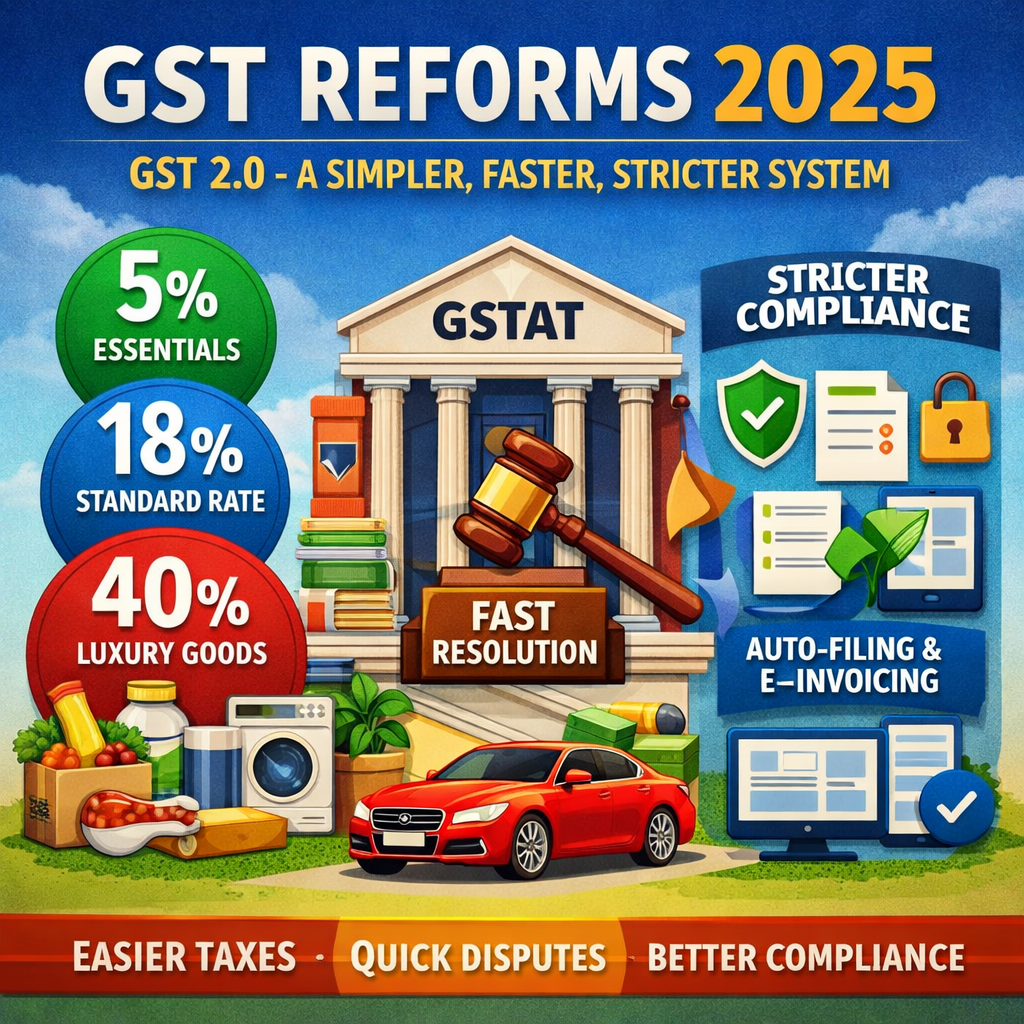
One of the most significant developments in 2025 was the rollout of GST rate rationalisation in September. The revised framework consolidated tax rates into fewer slabs — 5% for essential goods, 18% as the standard rate, and 40% for luxury and sin goods.
This restructuring aimed to ease the tax burden on widely consumed items while safeguarding government revenues. It also sought to resolve persistent classification disputes and inverted duty structures that had long fuelled litigation between taxpayers and authorities.
GST Appellate Tribunal finally operational
After prolonged delays, the GST Appellate Tribunal (GSTAT) became functional in 2025, completing the dispute resolution mechanism under GST.
The tribunal is expected to reduce pressure on high courts, ensure uniform interpretation of GST laws across states, and enable faster resolution of disputes. For MSMEs and mid-sized enterprises, this marks a crucial development that could substantially lower litigation costs and timelines.
“The operationalisation of the GST Appellate Tribunal completes the adjudication framework. It is expected to bring consistency in rulings, reduce the burden on high courts, and provide quicker and more predictable dispute resolution,” an expert said.
Government acts to safeguard revenue
In 2025, the government also addressed a key revenue concern by overturning the Supreme Court’s ruling in the Safari Retreats case, which had permitted input tax credit (ITC) on construction costs where buildings were used for taxable rentals.
Through the Finance Act, 2025, Section 17(5)(d) of the CGST Act was amended retrospectively from July 1, 2017. A subtle yet significant change in wording — replacing “plant or machinery” with “plant and machinery” — aligned the provision with the statutory definition that excludes buildings and civil structures. As a result, ITC on construction of buildings now stands explicitly blocked, even when such properties generate taxable rental income.
While the government described the earlier wording as a drafting oversight, experts noted that the amendment has far-reaching implications, particularly for the real estate and leasing sectors.
“This amendment could negatively impact businesses engaged in renting commercial properties. Its consequences may require companies to reassess financial and operational strategies,” an expert observed.
Relief for post-sale discounts
Among the more taxpayer-friendly measures introduced in 2025 was the relaxation of rules governing post-sale discounts. Following the 56th GST Council meeting, amendments to Sections 15(3)(b) and 34 of the CGST Act now permit suppliers to issue GST credit notes for post-sale discounts without linking them to individual invoices.
Experts say this reform brings GST law closer to standard commercial practices such as annual turnover-based rebates, reduces compliance burdens, minimises disputes, and improves overall ease of doing business.
As India approaches the next decade of GST, 2025 is likely to stand out as the year when the tax system transitioned decisively from stabilisation to deep structural reform.