India–EU Trade Pact: Lower Prices, Bigger Gains—Here’s Who Benefits

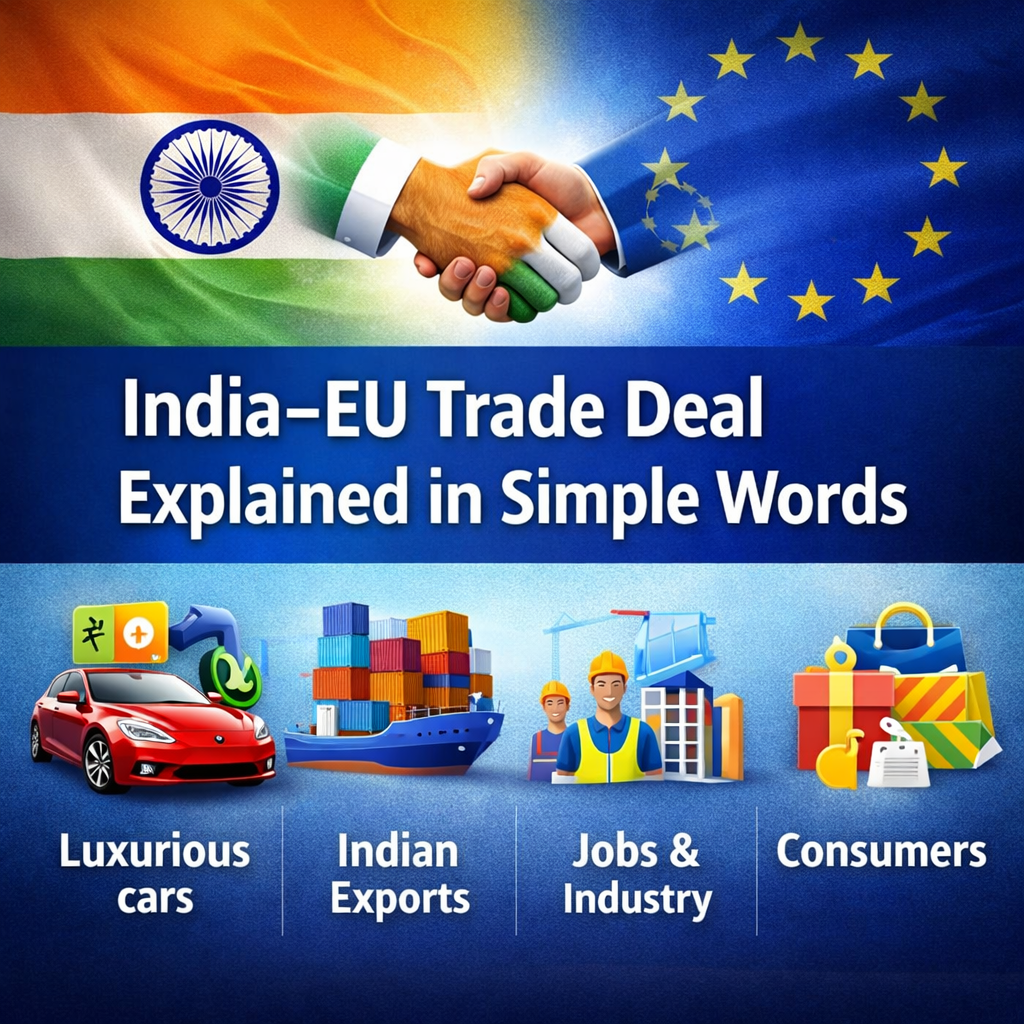
India–EU Trade Deal Explained Simply: What It Means for India, Businesses, and Consumers

India has recently concluded a landmark trade agreement with the European Union (EU). This India–EU Free Trade Agreement (FTA) is being described as one of the most significant trade deals in India’s history, as it affects exports, imports, industries, employment, investments, and consumer prices.

While the reduction in luxury car prices has grabbed headlines, the scope of this agreement goes far beyond automobiles.


What Is the India–EU Trade Deal?

The India–EU Free Trade Agreement is a pact where:

  • India will lower import duties on selected European products

  • The European Union will reduce or eliminate duties on many Indian goods

  • Both sides will simplify procedures by reducing regulatory and non-tariff barriers

In simple terms, trade between India and Europe becomes cheaper, faster, and easier.


Why Is This Deal Important for India?

The European Union is one of India’s largest trading partners. Earlier:

  • Indian exports faced high tariffs and strict compliance requirements in Europe

  • European goods attracted high import duties in India

This agreement aims to:

  • Boost Indian exports

  • Lower the cost of imports

  • Improve investor and business confidence

  • Strengthen India’s position in global trade


1️⃣ Impact on Luxury Cars and Premium Vehicles

Why Luxury Cars Are Getting Cheaper

Most luxury cars—such as Audi, BMW, Mercedes, and Porsche—are imported from Europe or use European components.

Earlier:

  • High import duties made these vehicles extremely expensive

After the trade deal:

  • Import duties on premium vehicles are being reduced

  • Manufacturers are passing on the benefit to buyers

Real-World Example

  • Earlier price of a luxury SUV: ₹2.30 crore

  • New price after duty reduction: ₹1.60 crore

  • Savings for the buyer: around ₹70 lakh

Who Benefits Most?

  • Buyers of high-end imported vehicles

  • The premium and luxury automobile segment

Mass-market vehicles are unlikely to see major price changes.


2️⃣ Impact on Indian Exports

Indian exporters stand to gain significantly from this agreement.

Key Beneficiary Sectors:

  • Textiles and garments

  • Leather products and footwear

  • Engineering goods

  • Chemicals and pharmaceuticals

  • Marine products

  • Gems and jewellery

With reduced European import duties:

  • Indian products become more price-competitive

  • Export volumes can rise

  • Indian manufacturers can expand their global footprint


3️⃣ Impact on Jobs and Manufacturing

As exports grow:

  • Production levels increase

  • New manufacturing units are established

  • Employment opportunities rise

Labour-intensive sectors such as textiles, leather, and jewellery are expected to generate large-scale employment, especially for semi-skilled workers. This also supports the Make in India initiative.


4️⃣ Impact on Services Sector (IT and Professionals)

India’s strength in services is another major advantage under this deal.

Expected benefits include:

  • Better market access for Indian IT and software firms

  • More opportunities for consultants, engineers, and professionals

  • Easier movement for short-term overseas assignments

  • Growth in services exports

This can significantly boost India’s service-based economy.


5️⃣ Impact on Foreign Investment

The agreement provides a stable and predictable framework for investors.

Likely outcomes:

  • Increased European investment in India

  • Establishment of manufacturing facilities

  • Technology transfer

  • Joint ventures with Indian companies

India becomes a preferred destination for European firms looking to expand in Asia.


6️⃣ Impact on Indian Consumers (Beyond Cars)

Consumers may benefit through:

  • Access to better-quality imported products

  • More competitive pricing in selected categories

  • Greater choice and variety

However:

  • Price reductions will happen gradually

  • Sensitive domestic sectors are protected

  • The government is ensuring local industries are not harmed abruptly


7️⃣ Strategic and Global Importance

This deal goes beyond trade numbers.

It reflects:

  • India’s commitment to global trade norms

  • Reduced reliance on a limited set of trading partners

  • Stronger economic ties with developed economies

It also enhances India’s image as a reliable and long-term trade partner.


8️⃣ Will the Benefits Be Immediate?

Not all benefits will be seen right away.

Key points to note:

  • Tariff reductions will be phased over time

  • Many benefits will unfold over 2–5 years

  • Certain sectors will open gradually to protect domestic players

Luxury car price reductions are among the first visible outcomes, but they are only the beginning.


Simple Conclusion

The India–EU trade deal is a win-win agreement.

  • Exporters gain better market access

  • Manufacturers get growth opportunities

  • Consumers enjoy better choices and pricing

  • Luxury car buyers see immediate savings

  • The economy benefits in the long term

Cheaper luxury cars may be the most noticeable change today, but the real impact of this trade deal will be felt across industries, employment, and economic growth in the years ahead.

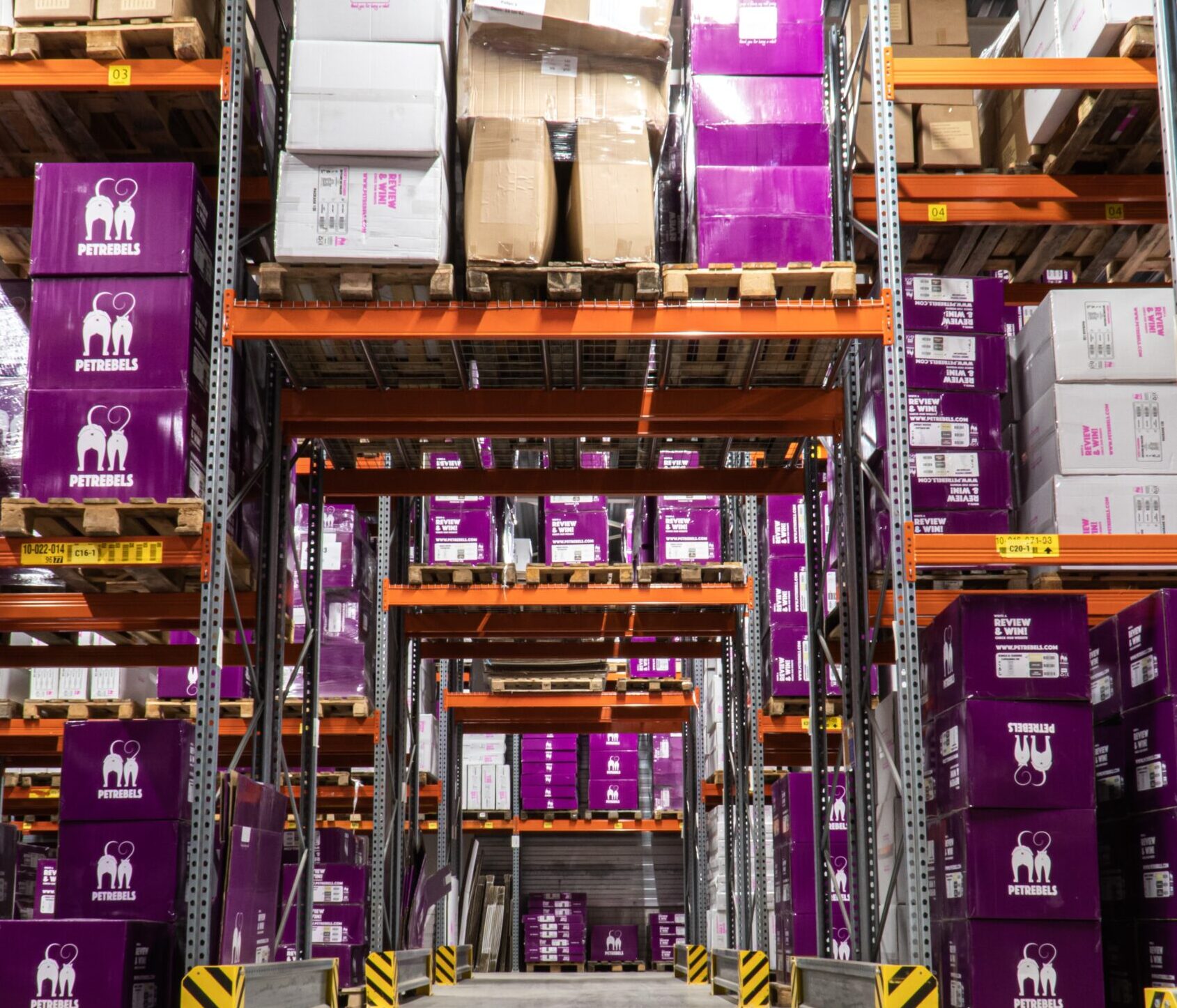
purple and brown wooden shelf
Inventory Management: Understanding the Basics of Inventory

When it comes to running a successful business, effective inventory management is crucial. But what exactly is inventory? In simple terms, inventory refers to the goods and materials that a company holds for production, sales, or any other purpose related to its operations. It can include raw materials, work-in-progress items, finished products, and even supplies needed for day-to-day operations.

Why is Inventory Management Important?

Inventory management plays a vital role in the overall success of a business. Here are a few reasons why it is important:

  • Meeting customer demands: By having the right amount of inventory on hand, businesses can fulfill customer orders promptly and efficiently. This helps in maintaining customer satisfaction and loyalty.
  • Reducing costs: Proper inventory management helps in minimizing costs associated with holding excess inventory or stockouts. It allows businesses to optimize their inventory levels and avoid unnecessary expenses.
  • Optimizing production: With effective inventory management, businesses can ensure that they have the necessary raw materials and components to maintain a smooth production process. This prevents delays and disruptions.
  • Forecasting and planning: By analyzing inventory data, businesses can make informed decisions regarding future production, sales, and procurement. This helps in creating accurate forecasts and efficient planning.

Key Elements of Inventory Management

Inventory management involves various elements that work together to ensure efficient control and utilization of inventory. Here are some key elements:

Inventory Tracking

Accurate inventory tracking is essential for effective management. This involves keeping a record of all incoming and outgoing items, including quantities, dates, and locations. Inventory tracking can be done manually or by using specialized software or systems.

Inventory Classification

Inventory classification helps in categorizing items based on their value, demand, and other factors. This allows businesses to prioritize their inventory management efforts and allocate resources accordingly. Common classification methods include ABC analysis, where items are classified as A, B, or C based on their importance and value.

Inventory Replenishment

Inventory replenishment involves determining when and how much inventory needs to be ordered to maintain optimal stock levels. This is often based on factors such as lead time, demand forecasting, and reorder points. Implementing efficient replenishment strategies helps businesses avoid stockouts and excess inventory.

Inventory Optimization

Inventory optimization focuses on finding the right balance between inventory levels and customer demand. It involves analyzing data and using various techniques, such as economic order quantity (EOQ) and just-in-time (JIT) inventory management, to minimize costs while meeting customer needs.

Benefits of Effective Inventory Management

Implementing effective inventory management practices can bring several benefits to a business:

  • Improved cash flow: By minimizing excess inventory and optimizing stock levels, businesses can free up cash that would otherwise be tied up in inventory.
  • Reduced holding costs: Holding excess inventory can lead to additional costs such as storage, insurance, and obsolescence. Effective inventory management helps in reducing these costs.
  • Enhanced customer satisfaction: With the right inventory levels, businesses can fulfill customer orders promptly, leading to higher customer satisfaction and repeat business.
  • Increased operational efficiency: Efficient inventory management streamlines production, reduces lead times, and minimizes disruptions, resulting in improved operational efficiency.

Conclusion

Inventory management is a critical aspect of running a successful business. By understanding what inventory is and implementing effective inventory management practices, businesses can improve customer satisfaction, reduce costs, and optimize their operations. With the right balance of inventory levels, businesses can stay competitive and thrive in today’s dynamic market.