GSTR-3B Data Access to Be Blocked from December 2025, Says GSTN

Table 3.2 in GSTR-3B – Reporting Framework and New Restrictions

Table 3.2 of Form GSTR-3B captures details of inter-state outward supplies made to the following categories:

  • Unregistered persons

  • Composition taxpayers

  • UIN holders

The values reported in this table are system-generated based on the aggregate outward supplies declared in Table 3.1 and Table 3.1.1 of GSTR-3B. They are auto-populated using data furnished in GSTR-1, GSTR-1A, and IFF.


Key Update – Effective for the November 2025 Tax Period

1. Table 3.2 Will Become Non-Editable

Starting from the November 2025 return period, taxpayers will no longer be able to manually modify the numbers appearing in Table 3.2.

The system-generated figures must be used as-is while filing GSTR-3B.

This measure aims to strengthen consistency between the outward supply returns (GSTR-1 / IFF) and the tax liability reported in GSTR-3B.


Making Corrections to Auto-Populated Table 3.2 Values

In case the values shown in Table 3.2 are incorrect due to mistakes made in GSTR-1 or IFF:

2. Revisions Can Be Made Only Through GSTR-1A

Taxpayers may:

  • Rectify or amend the relevant entries in GSTR-1A for the same tax period.

  • Once GSTR-1A is submitted, Table 3.2 is updated instantly, allowing filing of GSTR-3B with the corrected figures.

Further amendments, if required, may still be made in the GSTR-1/IFF of subsequent tax periods in accordance with standard amendment provisions.


Recommended Compliance Practices

3. Ensure Accurate Reporting in GSTR-1 / GSTR-1A / IFF

To avoid mismatches and repeated amendments, taxpayers should:

  • Carefully verify the draft GSTR-1 or GSTR-1A before submission.

  • Ensure correct classification of inter-state supplies.

  • Review B2C inter-state reporting thoroughly.

  • File GSTR-1/GSTR-1A only after confirming accuracy, since GSTR-3B will rely entirely on system-populated values.

Proper reporting ensures seamless auto-population of Table 3.2 without discrepancies.


Frequently Asked Questions (FAQs)

Q1. What is the new rule regarding Table 3.2?

From the November 2025 tax period onward, Table 3.2 of GSTR-3B will be non-editable. Taxpayers must file GSTR-3B using the auto-populated values sourced from GSTR-1/GSTR-1A/IFF.


Q2. How can incorrect values be corrected?

If errors arise due to incorrect GSTR-1 reporting:

  • Make necessary amendments in GSTR-1A for that specific tax period.

  • GSTR-1A instantly updates Table 3.2.

  • File GSTR-3B thereafter with the corrected figures.

Additional corrections may later be made in GSTR-1/IFF of following periods.


Q3. How can taxpayers ensure accuracy in Table 3.2?

  • Cross-verify all outward supply details before filing GSTR-1/GSTR-1A/IFF.

  • Immediately correct mistakes using GSTR-1A.

  • Accurately report inter-state B2C supplies.

  • Maintain consistency between outward supply returns and tax payment returns to avoid issues.


Q4. What is the deadline for filing GSTR-1A for Table 3.2 corrections?

GSTR-1A can be filed anytime after GSTR-1 is filed and up to the moment GSTR-3B is filed for the same tax period.

Therefore, corrections to Table 3.2 can be made using GSTR-1A right until GSTR-3B filing.

Income Tax Refunds: 31st December 2025 Is the Cut-off Date

Every year, many taxpayers either miss or postpone filing their Income Tax Return (ITR). However, the Income-tax Act allows you to claim a refund only if your ITR is filed within the prescribed time limit.

For Assessment Year (AY) 2025–26, the absolute last date to file a belated or revised ITR and secure any pending refund is:

➡️ 31 December 2025

Missing this deadline means your refund lapses — you permanently lose the right to claim the amount due to you.


📌 Why 31 December 2025 Is the Final Deadline

As per Sections 139(4) and 139(5) of the Income-tax Act:

  • A belated return (late ITR), and

  • A revised return (corrected ITR)

…can be filed only up to 31 December of the relevant assessment year.

For AY 2025–26:

  • The assessment year begins on 1 April 2025, and

  • The last permissible date to file a belated or revised ITR is 31 December 2025.

After this date, the income tax portal will not accept your return unless:

  • The government announces an extension (which is uncommon), or

  • You apply for Condonation of Delay under Section 119(2)(b) — a time-consuming process with no assurance of approval.

    What happens if you miss the 31 December 2025 ITR deadline?

    1️⃣ You forfeit any income-tax refund
    All types of refundable tax will become unclaimable if you don’t file on time: TDS on salary, TDS on fixed-deposit interest, TDS on professional fees, or any excess tax paid as advance/self-assessment tax.

    2️⃣ No chance to correct past mistakes
    You can only submit a revised return up to 31 Dec 2025. After that the law won’t let you fix errors in earlier returns.

    3️⃣ You lose the ability to carry forward losses
    Certain losses are allowed to be carried forward only if the ITR is filed within the due period. These include: business losses, speculative losses, capital-gains losses, and losses from racehorse ownership. Miss the deadline → you forfeit carry-forward claims.

    4️⃣ Penalties, interest and compliance notices
    Failing to file may invite:

    • Late-filing fee under Section 234F,

    • Interest under Sections 234A/234B/234C,

    • Automated compliance flags for AIS/TIS mismatches, and

    • System-generated notices where TDS doesn’t match the ITR.


    Who should definitely file by 31 Dec 2025?

    • ✅ Anyone expecting a refund (TDS deducted)

    • ✅ Individuals with taxable income after deductions

    • ✅ Salaried employees where employer TDS appears excessive

    • ✅ Freelancers, professionals and business owners (or anyone with books of account)

    • ✅ Senior citizens with TDS on bank FD interest

    • ✅ Students/interns/part-timers who had TDS deducted

    • ✅ Anyone who must revise a previously filed incorrect ITR

    Even if your taxable income is below the threshold, file if TDS was deducted or you maintain books — it preserves refund rights and documentation.


    Missed the deadline — any rescue options?

    Only limited, uncertain remedies:

    • Condonation of Delay (Section 119(2)(b)) — you can apply, but the CBDT may take 6–12 months to decide and may refuse the request. It’s not a reliable plan.

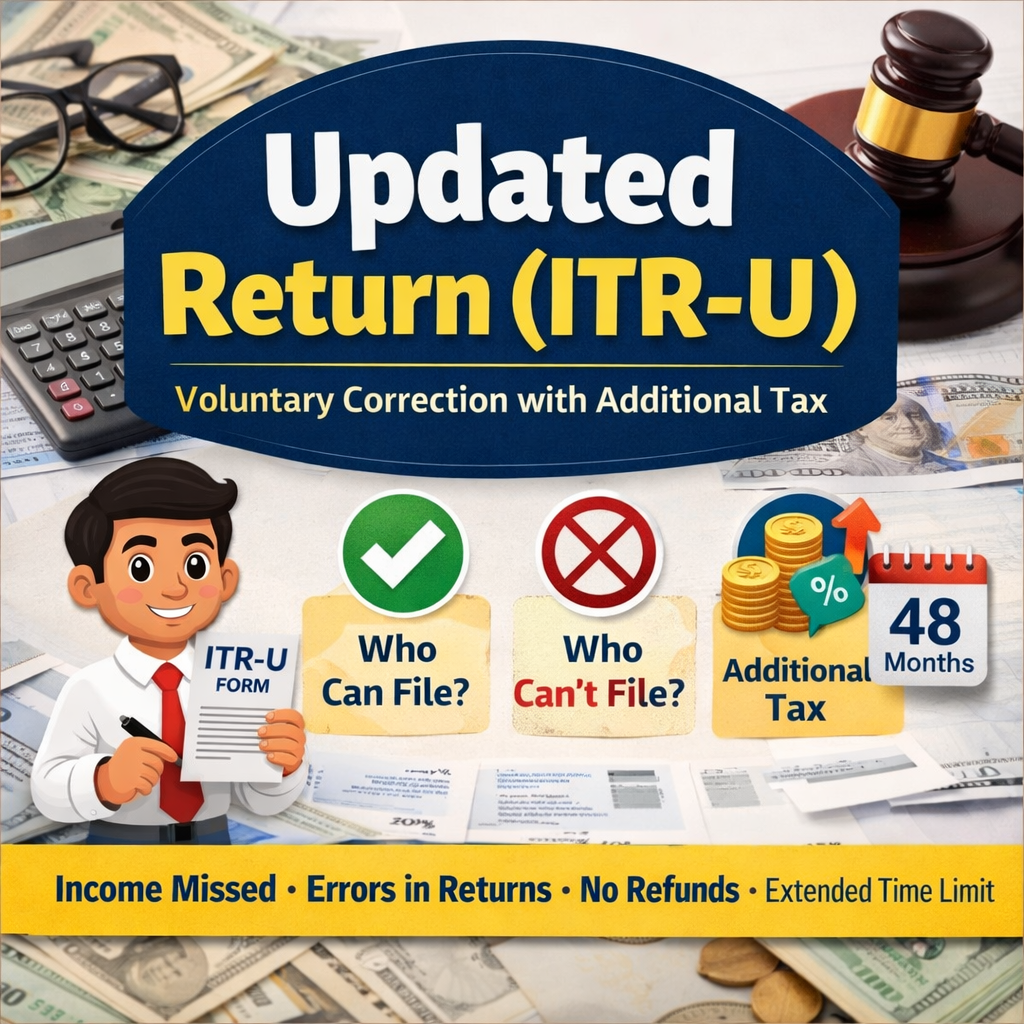
    • Updated ITR (ITR-U) can be filed later for corrections, but it does not allow claiming refunds.

    Don’t rely on these — they’re slow and uncertain.


    Practical tax-expert advice (short and actionable)

    • File your ITR before 31 Dec 2025 if a refund is due — even when income is below taxable limit.

    • Reconcile AIS, TIS, Form 26AS and bank interest entries before you file.

    • If you filed incorrectly earlier, revise the return before the 31 Dec deadline.

    • Remind family members (especially salaried employees and senior citizens) — many refund losses happen because people simply don’t know the deadline.

ITR Refund Delays: CBDT Chairman Explains the Reasons Behind the Hold-Up

The chairman of the Central Board of Direct Taxes (CBDT) on Monday issued a key update on the ongoing delays in processing income tax refunds for FY 2024–25. He noted that the department is currently reviewing cases where incorrect or questionable deductions may have been claimed.

According to the CBDT chief, several refund requests have been categorized as “high-value” or have been “red-flagged” by the system because of certain deduction-related claims.

Although the ITR filing deadline for this year was September 16, many taxpayers across the country are still awaiting their refunds.

The Chairman of the Central Board of Direct Taxes (CBDT) on Monday issued a key update on the ongoing delays in issuing income tax refunds for the financial year 2024–25. He noted that the department is currently reviewing instances where taxpayers may have incorrectly claimed certain deductions.

According to the chairman, several refund requests have been flagged by the system as either “high-value” or “suspicious” due to questionable deduction claims. Although the deadline for filing ITRs this year was September 16, many taxpayers across the country are still awaiting their refunds.


When can taxpayers expect their ITR refund?

CBDT Chairman Ravi Agrawal clarified that smaller-value refunds are already being processed, as reported by PTI. He added that all remaining refunds are expected to be issued either within this month or by December.

Agrawal explained that the department has detected several cases involving incorrect refund or deduction claims. These are currently under verification, he said, after inaugurating a taxpayer lounge at the ongoing India International Trade Fair (IITF).


Why are refunds getting delayed?

Agrawal said the delay is primarily due to a detailed review of wrongful or inaccurate deduction claims submitted by some taxpayers. Several refund requests have been categorised as “high-value” or have been red-flagged by the system because of discrepancies in the deductions claimed.

“We have also written to some taxpayers advising them to file a revised return if they have missed declaring any information,” he noted.

The chairman added that there is currently negative growth in refund volumes, which may be linked to a fall in refund claims even though TDS rates were rationalised.

According to PTI, refund issuances have dropped by around 18%, standing at over ₹2.42 lakh crore between April 1 and November 10.


Other Updates

Agrawal also mentioned that the department is working to reduce litigation in direct tax matters. Appellate authorities are making significant progress, with over 40% more appeals disposed of this year compared to last year. He expects the total number of resolved cases to be substantially higher by the end of the year.

Additionally, the Income Tax Department will soon release the new ITR forms and rules under the simplified Income Tax Act, 2025, which will take effect from the next financial year.

Income Tax Department flags cases of foreign assets not reported in ITR; SMS and email alerts to be issued soon.

The Income Tax Department announced on Thursday that it has flagged several “high-risk” cases where taxpayers failed to disclose their foreign assets while filing Income Tax Returns (ITRs) for Assessment Year (AY) 2025-26.

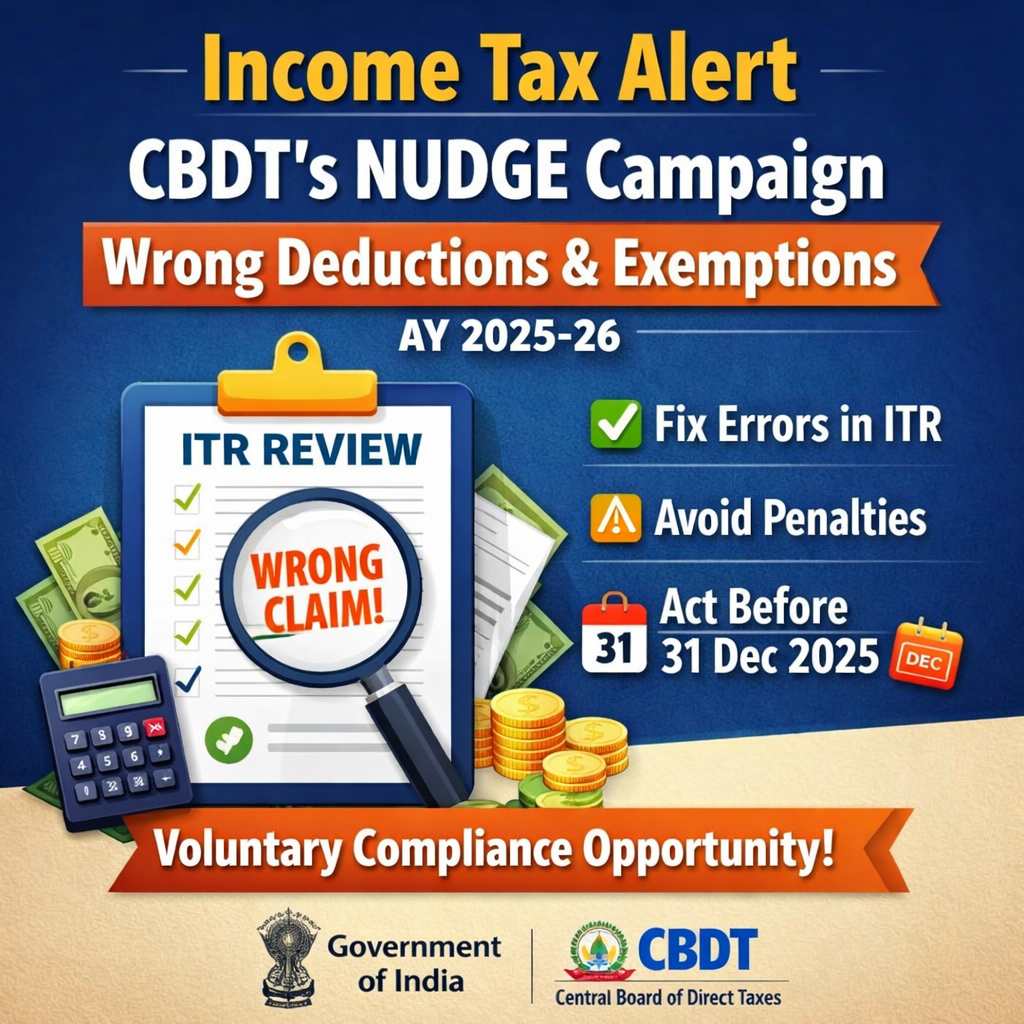
Starting November 28, the department will begin issuing SMS and email alerts to such taxpayers, advising them to file a revised ITR by December 31, 2025 to avoid penalties.

A similar exercise was carried out last year, when targeted messages were sent to taxpayers identified through data received from foreign jurisdictions under the Automatic Exchange of Information (AEOI) framework. These individuals were found to be holding foreign assets that were not reported in their ITRs for AY 2024-25.

This compliance-nudge initiative saw a strong response — 24,678 taxpayers (including many who did not receive alerts) revisited their filings and disclosed foreign assets worth ₹29,208 crore, along with foreign-source income of ₹1,089.88 crore during AY 2024-25.

According to the department, fresh analysis of AEOI data for FY 2024-25 (CY 2024) has again revealed cases where unreported foreign assets appear to exist, despite ITRs already filed for AY 2025-26.

The Central Board of Direct Taxes (CBDT) receives information on foreign financial assets of Indian residents under the Common Reporting Standard (CRS) and from the U.S. under the Foreign Account Tax Compliance Act (FATCA). This data helps the department identify inconsistencies and guide taxpayers toward accurate and timely compliance.

The ongoing campaign is intended to ensure correct reporting in Schedule Foreign Assets (FA) and Foreign Source Income (FSI) in ITRs. Accurate disclosure of foreign holdings and foreign-source income is a legal obligation under both the Income-tax Act, 1961, and the Black Money (Undisclosed Foreign Income and Assets) and Imposition of Tax Act, 2015.

Essential Tax & Corporate Filing Due Dates for December 2025 – GST, IT, ITR & MCA

December is a crucial month for compliance, as it covers the 3rd instalment of Advance Tax, regular monthly GST filings, and key year-end submissions such as GSTR-9 and GSTR-9C. Below is a concise and practitioner-oriented calendar

Compliance Dates for December 2025

7 December 2025

TDS/TCS Payment for November 2025

All deductors must deposit the TDS/TCS collected in November by 7th December.
Delayed payment will attract interest and late-fee consequences.


10 December 2025

ITR Filing Deadline – Audit Cases (Extended)

The extended due date for filing Income Tax Returns for taxpayers requiring audit, as per the earlier CBDT notification.


11 December 2025

GSTR-1 for November 2025 (Monthly Filers)

Monthly GST filers must report and upload outward supply details for November by 11th December.


13 December 2025

GST Returns for Special Categories

Due dates for:

  • GSTR-5 – Non-resident taxable persons

  • GSTR-6 – Input Service Distributors (ISD)

  • IFF Upload – For QRMP taxpayers opting for Invoice Furnishing Facility


15 December 2025

1. Advance Tax – 3rd Instalment (75%)

Taxpayers with annual tax liability above ₹10,000 must pay 75% of their total advance tax by this date.

2. PF & ESI Contributions for November 2025

Employers must remit:

  • EPF contribution for November

  • ESI contribution for November

Both payments are due by the 15th of the following month.

3. Form 24G – Government Deductors

Government offices depositing TDS/TCS without a challan must submit Form 24G for November.


20 December 2025

GSTR-3B for November 2025 (Monthly Filers)

Monthly GST filers must submit GSTR-3B and pay any GST dues.
This includes:

  • Tax payment

  • ITC reconciliation

  • Matching outward supplies with GSTR-1

Also due:
GSTR-5A – For OIDAR (online information & database access) service providers.


25 December 2025

PMT-06 Payment for QRMP (Monthly Tax Payment) – November 2025

QRMP taxpayers opting for the monthly payment method must deposit tax for November via PMT-06 by 25th December.


30 December 2025

Challan-cum-Statement for Select TDS Sections

Due date for TDS statements relating to transactions of November under:

  • Section 194-IA

  • Section 194-IB

  • Section 194-M

  • Section 194-N (where applicable)


31 December 2025

1. GSTR-9 (Annual Return) – FY 2024-25

Mandatory for taxpayers whose turnover exceeds the prescribed threshold.

2. GSTR-9C (Audit Reconciliation Statement) – FY 2024-25

Applicable to taxpayers crossing the GST audit limit.
Certification by a Chartered Accountant is required.

3. Belated & Revised ITR for AY 2025-26

Last date for filing:

  • Belated returns

  • Revised returns

Only if assessment is not yet completed.


📌 ROC / MCA Compliance (Extended to 31 December 2025)

Since ROC due dates depend on each company’s AGM date, timelines vary. Generally:

  • AOC-4 → Due within 30 days of AGM

  • MGT-7 / MGT-7A → Due within 60 days of AGM

Companies must follow their individual AGM-based deadlines for December.


🔎 Practical CA Checklist – December 2025

Before 7 December

  • Deposit TDS/TCS for November

  • Reconcile 26AS/TIS for advance tax planning

By 11–13 December

  • File GSTR-1 for November

  • File GSTR-5, GSTR-6, and IFF (as applicable)

By 15 December

  • Pay 3rd instalment of advance tax

  • Deposit PF & ESI for November

  • Submit Form 24G (if applicable)

By 20 December

  • File GSTR-3B

  • Complete ITC matching and validation

By 25 December

  • QRMP taxpayers to deposit PMT-06 for November

By 30 December

  • File monthly TDS challan-cum-statements

By 31 December

  • File GSTR-9 and GSTR-9C for FY 2024-25

  • File belated or revised ITR for AY 2025-26

.

“Major GST and Income Tax Amendments Applicable From 1 December 2025”

Option 1 (Professional & Clear)

As we approach the beginning of 2026 and enter the final month of 2025, several new compliances under GST and Income Tax have been introduced for professionals to take note of.

Option 2 (Simple & Direct)

With 2026 around the corner and 2025 nearing its end, professionals must be aware of the new GST and Income Tax compliances now added to their checklist.

Option 3 (Formal & Detailed)

As the year 2025 draws to a close and the new year 2026 approaches, professionals should stay updated with the latest GST and Income Tax compliances that have recently come into effect.

Option 4 (Concise & Blog-friendly)

With 2025 ending and 2026 about to begin, new GST and Income Tax compliances have been rolled out for professionals to follow.

Option 5 (Engaging Tone)

The year 2026 is almost here, and as we wrap up 2025, experts and professionals must gear up for the new GST and Income Tax compliance requirements now in force.

GST & Income Tax Updates Effective 1 December 2025 — Key Changes You Must Know

1. GST — Time-barred Returns (Applicable from 1-Dec-2025)

What’s changing:
The GST portal will begin blocking older tax periods from filing. From 1 December 2025, the following returns will become time-barred and can no longer be filed online:

  • GSTR-1 / IFF: Up to Oct 2022

  • GSTR-1Q: Jul–Sep 2022

  • GSTR-3B / 3BM: Up to Oct 2022

  • GSTR-3BQ: Jul–Sep 2022

  • GSTR-4: FY 2021–22

  • GSTR-5: Oct 2022

  • GSTR-6: Oct 2022

  • GSTR-7: Oct 2022

  • GSTR-8: Oct 2022

  • GSTR-9 / 9C: FY 2020–21

Practical impact:
Any GSTIN with pending returns for these periods will not be able to file them after 1-Dec-2025, which may lead to:

  • Annual return mismatches

  • ITC restrictions

  • Notices from the department

Action steps:

  • Immediately run a pending-return check for all managed GSTINs

  • File any pending returns before 1-Dec-2025

  • For GSTR-9/9C (FY 2020–21), finish reconciliation and approvals now

  • If technical issues block filing, keep a documented remediation trail (emails, screenshots, etc.)


2. Rule 10A — Mandatory Submission of Bank Account Details

What’s changing:
All taxpayers (except TDS/TCS and suo-moto registrations) must provide bank account details within 30 days of registration or before filing GSTR-1/IFF, whichever occurs first. GSTN will start enforcing this shortly, and non-filing may lead to suspension.

Practical impact:
Failure to add a bank account may result in:

  • GSTIN suspension

  • Blocked GSTR-1 filing

  • E-way bill blocking

Action steps:

  • Check if bank account details are updated under Registration → Bank Accounts

  • If missing, file an amendment (Non-Core Fields) with supporting documents

  • Ensure all new registrants upload bank details within 30 days

  • Maintain ARN tracking for all amendments


3. GSTR-9 / 9C — Filing Deadline: 31-Dec-2025

What’s changing:
The filing window for GSTR-9 and 9C is open, and 31 December 2025 is the final due date.

Practical impact:
Entities requiring annual reconciliation and audit must complete records and file before the cutoff.

Action steps:

  • Prioritize clients requiring audit (turnover above threshold)

  • Complete 3-way reconciliation: Books ↔ GSTR-1 ↔ GSTR-3B

  • Prepare and upload GSTR-9C with audit documentation


4. Income Tax — ITR (Audit Cases) Due by 10-Dec-2025

What’s changing:
The due date for filing ITR for audit cases (FY 2024–25) has been extended to 10 December 2025.

Practical impact:
Late filing may lead to penalties, interest, or loss of carry-forward benefits.

Action steps:

  • Finalize Tax Audit Reports (Form 3CB/3CD)

  • Ensure ITR filing is completed by 10-Dec-2025

  • Set internal cut-off timelines for client submission of data


5. Advance Tax — 3rd Instalment Due on 15-Dec-2025

What’s changing:
The third instalment of advance tax is payable by 15 December 2025.

Practical impact:
Delay in payment attracts interest under Sections 234B & 234C.

Action steps:

  • Prepare updated advance tax workings for clients

  • Arrange challans and verify payment credits

  • Reassess surcharge/cess impact where applicable


6. Belated / Revised ITR (FY 2024–25) — Deadline: 31-Dec-2025

What’s changing:
Belated or revised returns for FY 2024–25 can be filed only up to 31 December 2025. After this date, only ITR-U (Updated Return) will be permitted — and ITR-U does not allow refunds.

Practical impact:
Filing after 31-Dec-2025 may result in loss of refunds.

Action steps:

  • Identify clients with potential refunds

  • File belated/revised return before deadline

  • Correct missing TDS/TCS or income mismatches promptly


7. MCA — Compliances Extended to 31-Dec-2025

What’s changing:
MCA has extended deadlines for various statutory filings (annual returns, financial statements, etc.) up to 31 December 2025.

Practical impact:
Companies get additional time, but many filings interact with taxation and banking requirements.

The Supreme Court has fixed the maximum TDS on foreign remittances at 10%, stating that provisions of the Income Tax Act cannot prevail over those in the DTAA.

New Delhi: The Supreme Court on Tuesday ruled that tax deducted at source (TDS) on payments made to non-resident entities cannot exceed the 10% limit prescribed under various Double Tax Avoidance Agreements (DTAAs). Any higher demand raised by the income tax authorities would therefore be contrary to treaty provisions.

The Court dismissed appeals filed by the income tax department, which had sought a 20% TDS rate from IT companies such as Mphasis, Wipro, and Manthan Software Services. The department’s position was that a higher rate should apply when the foreign recipient does not provide a permanent account number (PAN), as required under Section 206AA of the Income Tax Act, 1961.

The Supreme Court held that the TDS provisions under the Income Tax Act must be interpreted in conjunction with the DTAA, and that when a foreign recipient qualifies for treaty benefits, the tax deduction cannot exceed the DTAA’s specified ceiling—often 10%.

Affirming a 2022 judgment of the Karnataka High Court, the bench stated that the DTAA rate takes precedence over Section 206AA. Any interpretation permitting tax authorities to levy more than the treaty rate would be inconsistent with the statutory framework, the Court noted.

This position aligns with the Supreme Court’s 2023 affirmation of a Delhi High Court ruling from July 2022, which also held that Section 206AA cannot override DTAA provisions.

The revenue department had earlier argued that a survey conducted under Section 133A(2A) revealed remittances made to non-residents without appropriate TDS. According to the department, failure to furnish a PAN automatically triggered the 20% TDS rate under Section 206AA(1)(iii).

During the proceedings, the IT companies contended that their payments were for technical services rendered by foreign entities and were subject to the beneficial tax rates outlined under the respective DTAAs.

Updated Tax Rates Applicable to Individuals, HUFs, Firms, Companies and Co-operative Societies for FY 2025-26 & AY 2026-27

The Income-tax framework for Assessment Years 2025–26 and 2026–27 introduces updated slab rates, surcharge rules, cess applicability, and special concessional regimes for various categories of taxpayers. This consolidated guide provides a structured and up-to-date reference of the tax rates applicable to Individuals, HUFs, AOPs, BOIs, Firms, LLPs, Companies, Co-operative Societies, and Local Authorities. It also summarises key provisions relating to AMT, MAT, rebate under Section 87A, and concessional tax regimes under Sections 115BAC, 115BAA, 115BAB, 115BAD, and 115BAE.
The objective of this document is to offer a clear and reliable snapshot of the statutory tax structure as amended by the Finance Act, 2025.


Tax Rates

1. Individuals (Resident or Non-resident), HUFs, AOPs, BOIs, and Other Artificial Juridical Persons

a. Individuals (Other than Resident Senior or Super Senior Citizens)

Net Income Range AY 2026–27 AY 2025–26
Up to ₹2,50,000 Nil Nil
₹2,50,000 to ₹5,00,000 5% 5%
₹5,00,000 to ₹10,00,000 20% 20%
Above ₹10,00,000 30% 30%

b. Resident Senior Citizens

(60 years or more but less than 80 years during the previous year)

Net Income Range AY 2026–27 AY 2025–26
Up to ₹3,00,000 Nil Nil
₹3,00,000 to ₹5,00,000 5% 5%
₹5,00,000 to ₹10,00,000 20% 20%
Above ₹10,00,000 30% 30%

c. Resident Super Senior Citizens

(80 years or more during the previous year)

Net Income Range AY 2026–27 AY 2025–26
Up to ₹5,00,000 Nil Nil
₹5,00,000 to ₹10,00,000 20% 20%
Above ₹10,00,000 30% 30%

d. Hindu Undivided Family (Including AOPs, BOIs, and Other Artificial Juridical Persons)

Net Income Range AY 2025–26 AY 2024–25
Up to ₹2,50,000 Nil Nil
₹2,50,000 to ₹5,00,000 5% 5%
₹5,00,000 to ₹10,00,000 20% 20%
Above ₹10,00,000 30% 30%

Surcharge

Surcharge is levied on the amount of income tax at the following rates when the total income exceeds the specified thresholds:

Total Income Range Surcharge Rate
₹50 lakh to ₹1 crore 10%
₹1 crore to ₹2 crore 15%
₹2 crore to ₹5 crore 25%
Above ₹5 crore 37%

Important Note:

  1. The higher surcharge rates of 25% and 37% do not apply to:

    • Dividend income

    • Income taxable under Sections 111A, 112, 112A, and 115AD(1)(b)

  2. For such incomes, the maximum surcharge is capped at 15%.

    (3) Surcharge Exemption for Specified Funds

    No surcharge is applicable if the total income of a ‘specified fund’ (as defined under Section 10(4D)) includes income from securities referred to in Section 115AD(1)(a).

    Marginal Relief – Conditions and Application

    Marginal relief is provided so that the increase in tax liability (including surcharge) is not disproportionately higher than the increase in income. It applies as follows:

    1. Income above ₹50 lakh and up to ₹1 crore:
      The tax plus surcharge should not exceed the tax payable on ₹50 lakh by more than the amount by which the income exceeds ₹50 lakh.

    2. Income above ₹1 crore and up to ₹2 crore:
      The combined tax and surcharge cannot be more than the tax payable on ₹1 crore plus the income exceeding ₹1 crore.

    3. Income above ₹2 crore and up to ₹5 crore:
      Total tax liability (tax + surcharge) shall not exceed the tax on ₹2 crore by more than the additional income above ₹2 crore.

    4. Income exceeding ₹5 crore:
      The tax plus surcharge should not go beyond the tax payable on ₹5 crore by more than the income exceeding ₹5 crore.


    b. Health and Education Cess

    A cess of 4% is charged on the total of income-tax plus surcharge.

    Exceptions:

    1. No cess is levied on a specified fund (Section 10(4D)) if its income includes securities income covered under Section 115AD(1)(a).

    2. A resident individual with taxable income up to ₹5,00,000 is eligible for rebate under Section 87A, reducing their income-tax liability (before cess) by 100% of tax or ₹12,500, whichever is lower.


    Alternate Minimum Tax (AMT)

    AMT applies when the regular tax payable is less than 18.5% of the adjusted total income. In such cases, tax is computed at 18.5% of adjusted total income.

    For non-corporate taxpayers who are units in an IFSC and earn solely in foreign exchange, AMT is charged at a reduced rate of 9% (plus applicable cess and surcharge).


    1.1 Special Tax Rates for Individuals, HUFs, AOPs, BOIs, and AJPs

    Section 115BAC offers an optional lower tax rate regime (now the default regime). To opt for this structure, the taxpayer must forego various deductions and exemptions.

    Tax Slabs – Assessment Year 2025–26

    Net Income Tax Rate
    Up to ₹3,00,000 Nil
    ₹3,00,001 – ₹7,00,000 5%
    ₹7,00,001 – ₹10,00,000 10%
    ₹10,00,001 – ₹12,00,000 15%
    ₹12,00,001 – ₹15,00,000 20%
    Above ₹15,00,000 30%

    Tax Slabs – Assessment Year 2026–27

    Net Income Tax Rate
    Up to ₹4,00,000 Nil
    ₹4,00,001 – ₹8,00,000 5%
    ₹8,00,001 – ₹12,00,000 10%
    ₹12,00,001 – ₹16,00,000 15%
    ₹16,00,001 – ₹20,00,000 20%
    ₹20,00,001 – ₹24,00,000 25%
    Above ₹24,00,000 30%

    Additional Tax Components

    a. Surcharge

    Surcharge is imposed on income-tax based on the total income:

    Income Range Surcharge Rate
    ₹50 lakh – ₹1 crore 10%
    ₹1 crore – ₹2 crore 15%
    ₹2 crore – ₹5 crore 25%
    Above ₹5 crore 37%

    Notes:

    • The 25% surcharge is not applicable to dividend income or incomes taxed under Sections 111A, 112, 112A, and 115AD(1)(b). For such incomes, the surcharge cannot exceed 15%.

    • If an AOP has only corporate members, surcharge is capped at 15%.

    • Specified funds under Section 10(4D) with eligible securities income have no surcharge.

    Marginal Relief under New Regime

    Provided similarly as in the old regime:

    • Ensures tax + surcharge does not exceed tax on the threshold (₹50 lakh / ₹1 crore / ₹2 crore) by more than the excess income above that threshold.


    Health & Education Cess (New Regime)

    A cess of 4% is charged on tax plus surcharge, except when the taxpayer is a specified fund covered under Section 115AD(1)(a).


    Important Notes

    (a) Rebate under Section 87A

    • Up to AY 2025–26:
      Residents opting for Section 115BAC(1A) and having income up to ₹7,00,000 get a rebate up to ₹25,000.

    • From AY 2026–27:
      Rebate increased to ₹60,000 for residents with income up to ₹12,00,000 under Section 115BAC(1A).
      Rebate cannot exceed the actual tax computed.

    (b) Marginal Rebate (AY 2026–27 onwards)

    If income slightly exceeds ₹7 lakh or ₹12 lakh (as applicable), rebate is adjusted (marginal relief) so that:

    • The tax payable does not exceed the amount by which income exceeds the threshold.

    (c) AMT Exemption under New Regime

    Taxpayers opting for the new regime under Section 115BAC(1A) are not subject to AMT provisions.

    2. Partnership Firm

    A partnership firm, including an LLP, is taxed at a flat rate of 30%.

    Add-On Taxes

    (a) Surcharge
    If the total income exceeds ₹1 crore, surcharge is charged at 12% of the income-tax.
    However, marginal relief applies so that the total tax plus surcharge does not exceed the tax payable on ₹1 crore by more than the income above ₹1 crore.

    (b) Health & Education Cess
    A cess of 4% is levied on the total of income-tax plus surcharge.

    Alternate Minimum Tax (AMT)

    AMT applies when the regular tax is less than 18.5% of adjusted total income. In such cases, tax is computed at 18.5% on the adjusted total income.

    For non-company assessees operating as units in an IFSC and earning exclusively in convertible foreign exchange, AMT is reduced to 9% (plus surcharge and cess).


    3. Local Authority

    A local authority is taxable at a 30% rate.

    Add-On Taxes

    (a) Surcharge
    If income exceeds ₹1 crore, surcharge at 12% is applied, subject to marginal relief so that tax plus surcharge does not exceed the tax on ₹1 crore by more than the excess income.

    (b) Health & Education Cess
    Cess at 4% is charged on income-tax plus surcharge.

    Alternate Minimum Tax (AMT)

    AMT applies when regular tax is less than 18.5% of adjusted total income, making 18.5% the effective tax rate.

    For companies located in an IFSC and earning solely in foreign exchange, AMT is 9%.


    4. Domestic Company

    The tax rates for domestic companies for AY 2025–26 and 2026–27 are as follows:

    Category AY 2026–27 AY 2025–26
    Company with turnover ≤ ₹400 crore in the relevant previous year 25% (PY 2023–24) 25% (PY 2022–23)
    Any other domestic company 30% 30%

    Add-On Taxes

    (a) Surcharge

    • 7% if total income > ₹1 crore but ≤ ₹10 crore

    • 12% if income exceeds ₹10 crore
      Subject to marginal relief ensuring:

      • For income between ₹1–10 crore: tax + surcharge ≤ tax on ₹1 crore + excess income

      • For income > ₹10 crore: tax + surcharge ≤ tax on ₹10 crore + excess income

    (b) Health & Education Cess
    Cess at 4% on income-tax plus surcharge.

    Minimum Alternate Tax (MAT)

    MAT applies when normal tax is less than 15% of book profit. Tax is then computed at 15% of book profit.

    For IFSC units earning exclusively in convertible foreign exchange, MAT rate is 9%.


    4.1 Special Tax Rates for Domestic Companies

    Certain concessional corporate tax regimes are available:

    Section Particulars Tax Rate
    115BA Optional scheme for certain manufacturing companies 25%
    115BAA Concessional regime without incentives/deductions 22%
    115BAB For new manufacturing companies satisfying notified conditions 15%

    Surcharge & Cess

    • For 115BAA and 115BAB, surcharge is a flat 10%, regardless of income level.

    • Health & Education Cess applies at 4%.

    MAT Applicability

    • Companies choosing 115BAA or 115BAB are exempt from MAT.

    • MAT continues to apply where 115BA is chosen.


    5. Foreign Company

    Applicable income-tax rates for AY 2025–26 and 2026–27:

    Type of Income Tax Rate
    Royalty or technical service fees per agreements entered within the eligible historical period (with Central Government approval) 50%
    All other income 35%

    Add-On Taxes

    (a) Surcharge

    • 2% when income exceeds ₹1 crore but ≤ ₹10 crore

    • 5% when income exceeds ₹10 crore
      Marginal relief ensures the surcharge does not create a disproportionate tax burden beyond the excess income.

    (b) Health & Education Cess
    4% cess on income-tax plus surcharge.

    Minimum Alternate Tax (MAT)

    MAT is levied at 15% of book profit, unless the foreign company:

    • Has no permanent establishment (PE) in India, or

    • Is taxed under presumptive schemes: Sections 44B, 44BB, 44BBA, 44BBB.

    In such cases, MAT does not apply.


    6. Co-operative Society

    Tax slabs for AY 2025–26 and 2026–27:

    Taxable Income Rate
    Up to ₹10,000 10%
    ₹10,000–₹20,000 20%
    Above ₹20,000 30%

    Add-On Taxes

    (a) Surcharge

    • 7% when income > ₹1 crore but ≤ ₹10 crore

    • 12% when income > ₹10 crore
      Subject to marginal relief.

    (b) Health & Education Cess
    4% on tax plus surcharge.

    Alternate Minimum Tax (AMT)

    AMT at 15% of adjusted total income applies if normal tax is lower.
    For IFSC units earning solely in convertible foreign exchange, AMT is 9%.


    6.1 Optional Tax Regimes for Co-operative Societies

    Co-operatives may opt for concessional regimes subject to eligibility:

    Section Key Conditions Tax Rate
    115BAE New co-op (registered on/after 01-04-2023), engaged in manufacturing, commenced production before 31-03-2024, and does not claim specified deductions 15% (manufacturing income)
    115BAD If the society forgoes specified exemptions/deductions 22%

    Surcharge & Cess

    • Surcharge is 10% flat under both schemes.

    • Health and Education Cess at 4% applies.

    AMT Exemption

    Co-operatives opting for 115BAD or 115BAE are not subject to AMT, and no AMT credit can be computed or carried forward.


Revised ITR forms will be released by January 2026.

The Income Tax Department has announced that the new Income Tax Return (ITR) forms and rules will be notified by January 2026 for Financial Year 2025–26 (Assessment Year 2026–27).

CBDT Chairman Ravi Aggarwal has confirmed that these new forms will be simpler, more user-friendly, and easier to file, ensuring that taxpayers and the tax ecosystem get sufficient time to adjust to the updated system.

This advance announcement is a major compliance reform aimed at reducing last-minute rush, errors, and extensions during the filing season.


Why Are the New ITR Forms Being Released Early? (Key Reason)

The Income Tax Department has chosen to issue the upcoming ITR forms much earlier than before for a very specific reason.

Previously, the forms were released late, which led to several recurring problems:

  • Taxpayers didn’t get enough time to understand the updated forms

  • Tax professionals faced excessive workload and frequent delays

  • Software providers struggled to update their systems on time

  • AIS/TIS mismatches surfaced too late in the filing cycle

  • Filing deadlines had to be extended multiple times

  • Late notifications also slowed down return processing and refund issuance

To prevent these year-after-year disruptions, the Government now aims to achieve:

✔ Timely release of forms
✔ Early readiness of the software ecosystem
✔ A smoother filing season
✔ Reduced pressure on taxpayers and professionals
✔ No requirement for deadline extensions

This is the core reason why the new ITR forms are being scheduled for early notification—by January 2026.


What Will Be New in the Upcoming ITR Forms? (Likely Features)

While the final versions of the new ITR forms are still awaited, government updates and recent policy changes indicate that several enhancements are on the way.

1. Simpler and More Compact Formats

  • Considerably reduced manual data entry

  • Fewer supporting documents or annexures

  • Better-organized and clearly defined schedules

  • Instructions written in easy, plain language

2. Enhanced Prefilled Information

The new system is expected to pull data automatically from multiple sources, including:

  • AIS

  • TIS

  • Form 26AS

  • GST data for businesses

  • Capital gains statements from brokers

This expanded prefilled data will minimize mistakes and speed up return filing.

3. Smart, Category-Based ITR Structure

The government may introduce separate streamlined forms designed specifically for:

  • Salaried individuals

  • Small businesses

  • Professionals

  • Senior citizens

  • Taxpayers with capital gains

  • Companies, LLPs, trusts, and other complex entities

4. Better Technology and Automated Error Checks

  • Instant alerts for mismatches

  • Automatic validation before filing

  • Elimination of duplicate entries

  • More seamless coordination with e-verification and refund systems


The decision to notify the new ITR forms by January 2026 represents a major reform in India’s tax administration. The objective is straightforward:
simple forms + early release + a smoother filing season.

With this early announcement, taxpayers, accountants, and software providers get ample time to prepare before the new forms become mandatory from 1 April 2026. This is expected to reduce errors, minimize mismatches, and create a much better filing experience overall.

Why TDS Is Charged on Cash Withdrawals by Banks – Key Rules Explained

The purpose of introducing Section 194N is to curb heavy cash usage and support the shift toward a digital and transparent economy. According to this section, TDS is deducted on cash withdrawals from banks, co-operative banks, or post offices once the total amount goes beyond the set yearly limit. It covers a wide range of taxpayers—individuals, HUFs, businesses, companies, and trusts—so knowing how it works is crucial for compliance.


Where Section 194N Applies
Section 194N is triggered when cash is taken out from a scheduled bank, a co-operative bank, or a post office. TDS is deducted once the total cash withdrawn during the financial year exceeds the allowed limit.

Cash can be withdrawn through:

  • Self cheques

  • Bearer cheques

  • ATM withdrawals

  • Cash taken directly from the bank counter

Online transfers and digital payments are excluded from TDS.


TDS Rates and Limits
The applicable TDS rate depends on whether the taxpayer has filed income tax returns for the past three assessment years.


A. When the individual has filed Income Tax Returns for any of the previous three years

  • No TDS is applied until total cash withdrawals reach ₹1 crore in a financial year.

  • Once this limit is crossed, TDS is charged at 2% on the amount exceeding ₹1 crore.

Example:
If the total cash withdrawn is ₹1.30 crore, TDS @ 2% will apply on ₹30 lakh.


B. When the individual has not filed ITRs for all of the last three years

  • A 2% TDS rate applies on withdrawals above ₹20 lakh up to ₹1 crore.

  • A 5% TDS rate applies on any withdrawal amount beyond ₹1 crore.

Example:
Total withdrawal = ₹1.50 crore

  • 2% on ₹80 lakh (from ₹20 lakh up to ₹1 crore)

  • 5% on ₹50 lakh (amount beyond ₹1 crore)


Entities Exempt From Section 194N

TDS is not deducted on cash withdrawals made by:

  • Central and State Government bodies

  • Banks, co-operative banks, and post offices

  • Business correspondents operating for banks

  • White label ATM operators

  • Any person or class of persons specifically notified by the government

  • Certain commission agents/traders who withdraw cash on behalf of farmers

These exemptions are designed to keep essential services and banking operations running smoothly.


How Section 194N Works in Practice

How banks calculate TDS

  • Banks total all cash withdrawals across every account held by the user.

  • TDS is triggered immediately once the withdrawal crosses the applicable threshold.

  • PAN data is used to determine whether the person is an ITR filer or a non-filer.

  • Banks may request confirmation of ITR filing status to apply the correct rates.

  • The deducted TDS is reflected in Form 26AS or AIS and can be claimed in the income tax return.


Key Examples

Example 1: ITR Filer

Mr. A (who has filed ITRs) makes the following withdrawals:

  • ₹40 lakh

  • ₹35 lakh

  • ₹30 lakh
    Total = ₹1.05 crore
    TDS = 2% on ₹5 lakh = ₹10,000


Example 2: ITR Non-Filer

Ms. B (no ITR filed for 3 years) withdraws ₹55 lakh.
TDS = 2% on (₹55 lakh – ₹20 lakh) = ₹7,00,000

If she withdraws ₹1.40 crore:

  • 2% on ₹80 lakh

  • 5% on ₹40 lakh


Important Compliance Tips for Professionals

  • Make sure clients have filed their ITRs to avoid higher TDS rates.

  • Advise cash-heavy businesses to plan their yearly cash withdrawals carefully.

  • Track withdrawals from every account held in the same bank.

  • Review Section 194N entries in Form 26AS/AIS regularly.

  • Maintain proper records for audit purposes, especially for large cash withdrawals.

  • Remind clients that TDS is not an additional tax—it can be adjusted or refunded in the ITR.


Frequent Errors to Watch Out For

  • Thinking each account has a separate ₹1 crore limit—limits apply per bank, not per account.

  • Assuming TDS is charged only at the end of the year—it applies as soon as the limit is crossed.

  • Misunderstanding the difference between filer and non-filer status.

  • Failing to monitor withdrawals from all branches of the same bank.

  • Believing TDS is a permanent loss—it is actually claimable