Income Tax Act 2025: Gift Tax Provisions, Exempt Relatives and Gifts

Gift Tax under the New Income Tax Act, 2025: Tax-Free Gifts and Relatives Explained

The New Income Tax Act, 2025 introduces Section 92, which governs the taxation of gifts received by individuals, Hindu Undivided Families (HUFs), and other persons. This provision replaces the earlier Section 56(2)(x) of the Income Tax Act, 1961 and offers a more organised and comprehensive framework for taxing gifts involving money, movable assets and immovable property.

In India, every gift is not taxable. Whether a gift attracts tax depends on several factors, including:

  • The value of the gift

  • The relationship between the giver and the recipient

  • The nature of the asset received

  • The occasion on which the gift is received (marriage, inheritance, will, etc.)

This guide explains the scope of Section 92, covering taxable situations, exemptions, valuation rules, clubbing provisions and practical examples.


Meaning of Gift under Section 92

Under Section 92, a gift includes money, movable property or immovable property received:

  • Without consideration, or

  • For inadequate consideration

If the value of such gift exceeds ₹50,000, it becomes taxable as income, unless it qualifies for an exemption specified under Section 92(3).


When Are Gifts Taxable? (Section 92(2)(m))

1. Monetary Gifts from Non-Relatives

If total cash or monetary gifts received from non-relatives exceed ₹50,000 in a financial year, the entire amount becomes taxable.

Example:
₹20,000 from one friend + ₹40,000 from another friend
Total = ₹60,000 → Fully taxable


2. Immovable Property (Land or Building)

a) Received without consideration
If the stamp duty value (SDV) exceeds ₹50,000, the entire SDV is taxable.

b) Received for inadequate consideration
The difference between SDV and actual consideration is taxable if it exceeds:

  • ₹50,000, or

  • 10% of consideration (whichever is higher)

Example:
SDV: ₹50 lakh
Purchase price: ₹44 lakh
Difference: ₹6 lakh → Taxable


3. Movable Property (Jewellery, Shares, Bullion, Crypto, etc.)

a) Without consideration
If fair market value (FMV) exceeds ₹50,000, the full FMV is taxable.

b) With inadequate consideration
If FMV minus consideration exceeds ₹50,000, the difference is taxable.

Example:
Jewellery FMV ₹2,00,000 bought for ₹1,30,000
Difference ₹70,000 → Taxable


Gifts That Are Fully Exempt (Section 92(3))

A. Gifts from Relatives (No Limit)

For individuals, “relative” includes:

  • Spouse

  • Parents, grandparents and other lineal ascendants

  • Children, grandchildren and other lineal descendants

  • Siblings of self, spouse or parents

  • Lineal ascendants/descendants of spouse

  • Spouses of all the above relatives

For HUFs, any member of the HUF is treated as a relative.

👉 Gifts from relatives are fully exempt, irrespective of amount.


B. Gifts Received on Marriage of the Individual

All gifts received on the occasion of one’s own marriage are tax-free, regardless of value or source.
This exemption does not apply to anniversaries or relatives’ marriages.


C. Gifts Received through Will or Inheritance

Assets received by way of inheritance or under a will are completely exempt from tax.


D. Gifts in Contemplation of Death

Gifts given in anticipation of the donor’s death are exempt.


E. Gifts from Local Authorities

Exempt as per Schedule III.


F. Gifts from Registered Charitable or Non-Profit Institutions

Allowed under Section 355(g), subject to prescribed conditions.


G. Transactions Not Regarded as Transfer (Section 70)

Gifts arising from amalgamation, demerger or business restructuring are exempt.


H. Gifts to Trusts for Benefit of Relatives

Transfers made to trusts exclusively for relatives’ benefit are tax-free.


Special Provisions for Immovable Property (Section 92(4))

If the agreement date and registration date differ, the stamp duty value as on the agreement date may be considered, provided payment is made through banking or digital modes.

If stamp duty value is disputed, the Assessing Officer may refer valuation to a Valuation Officer.


Assets Covered under “Property” (Section 92(5)(f))

  • Land or building

  • Shares and securities

  • Jewellery

  • Paintings, sculptures, artworks

  • Archaeological collections

  • Bullion

  • Virtual Digital Assets (cryptocurrency, NFTs)


Clubbing of Income from Gifted Assets

While Section 92 taxes the receipt of gifts, income generated from gifted assets is taxed under clubbing provisions.

Example:
Cash gifted to spouse → Gift exempt
Interest earned → Clubbed in donor’s income

Similar rules apply to gifts to minor children.


Employer Gifts

Gifts from employers are taxed as salary perquisites.
Only long-service awards up to ₹5,000 are exempt.


Capital Gains on Sale of Gifted Property

  • Cost of acquisition = FMV considered at time of gift

  • Holding period starts from date of receipt


Documentation for Gifts

Acceptable proof includes:

  • Bank transfer records

  • Gift deed (optional but advisable)

  • Marriage invitation and gift list

  • Photographs and source explanation


Practical Examples

  • Gift from father ₹10 lakh → Exempt

  • Jewellery from friend ₹1 lakh → Taxable

  • Flat from paternal uncle → Exempt

  • Cash gift on marriage ₹5 lakh → Exempt

  • Undervalued land purchase → Difference taxable since she is the spouse of the father under the Income Tax Act.
    Accordingly, any gift received from her is fully exempt from tax, irrespective of the amount.

Direct Tax Changes in 2025: Simplification and Reduced Compliance Take Centre Stage

India’s direct tax framework underwent several significant changes in 2025 as the government prioritised tax simplification, eased compliance requirements, and sought to encourage higher consumer spending. The reforms—ranging from an overhauled personal tax regime and simplified TDS provisions to an extended tax holiday for startups and greater clarity on capital gains—have had a wide-ranging impact across the economy.

New tax regime made the default option

The most notable reform was the decision to make the new tax regime under Section 115BAC the default choice for taxpayers. The basic exemption limit was increased to ₹4 lakh, while the rebate under Section 87A was enhanced, effectively making income up to ₹12 lakh tax-free.

Experts say the impact of this shift is already being felt. According to them, the simplified slab structure and higher rebate have raised disposable incomes, providing a clear boost to consumption-driven sectors such as manufacturing and construction.

Simplified TDS framework

Budget 2025 introduced meaningful changes to the Tax Deduction at Source (TDS) provisions under the Income Tax Act, 1961, with the objective of easing compliance for individuals and businesses. TDS rules were streamlined and threshold limits enhanced, significantly lowering the compliance burden for small taxpayers and enterprises. In addition, the turnover limit for presumptive taxation under Section 44AD was increased to ₹3 crore, offering MSMEs greater flexibility and reduced administrative overheads.

Extended tax holiday for startups

The 2025 Budget also prolonged the 100 per cent profit-linked tax deduction for eligible startups, allowing them to claim the benefit for any three years within their first ten years of operation. This incentive has now been extended until April 1, 2030. The extended timeline is expected to support startups in navigating initial loss-making years and improve their ability to attract investment.

Key reforms for IFSC entities

The Finance Act, 2025 rolled out a series of tax incentives for units operating in the International Financial Services Centre (IFSC). Offshore funds and exchange-traded funds (ETFs) are now permitted to relocate to IFSC without triggering adverse tax consequences. Additionally, non-residents trading in offshore or over-the-counter derivatives through IFSC platforms will be eligible for tax exemptions. Tax incentives for IFSC units have also been extended up to March 31, 2030.

A significant amendment was also made to deemed dividend provisions. Inter-company loans will no longer be classified as deemed dividends when the lending entity is a finance company or an IFSC-based finance unit. According to Ananthapadmanabhan, this change has prompted large corporate groups to consider moving treasury operations to India, as the clarity around treasury-related lending removes a key area of concern.

Removal of equalisation levy

Under the Finance Act, 2025, the government abolished the equalisation levy on digital advertising with effect from April 1, 2025. This step has simplified the tax framework for multinational technology companies operating in India.

Taking an overall view, Ananthapadmanabhan said the reforms have strengthened the foundation for sustained, demand-driven economic growth, which is also evident in the sharp rise in GDP growth to 8.2 per cent in the second quarter of FY26.

GST inversion leading to input credit buildup, fertiliser industry urges clarification: FAI chief

New Delhi [India], December 10 (ANI): The Fertiliser Association of India (FAI) has sought key GST clarifications to ease financial pressure on the fertiliser sector, flagging that tax rate inversion is continuing to result in the accumulation of input tax credits.

Speaking to ANI, FAI Chairman S. Sankarasubramanian said the industry has been urging the government to align GST rates on key raw materials such as ammonia and sulphuric acid with the 5 per cent tax applicable on finished fertiliser products. He said this alignment would help reduce production costs and improve the competitiveness of fertiliser manufacturers, particularly in the phosphatic segment.

While recent GST reforms have offered some relief, Sankarasubramanian noted that they have not fully resolved the issue of unutilised credits.

“At present, phosphatic fertilisers attract GST at 5 per cent, while several inputs were earlier taxed at 18 per cent and have now been corrected to 5 per cent. Despite this reduction, a structural inversion remains because fertiliser prices include a subsidy component that falls outside the GST value. This leads to continued accumulation of input tax credit,” he explained.

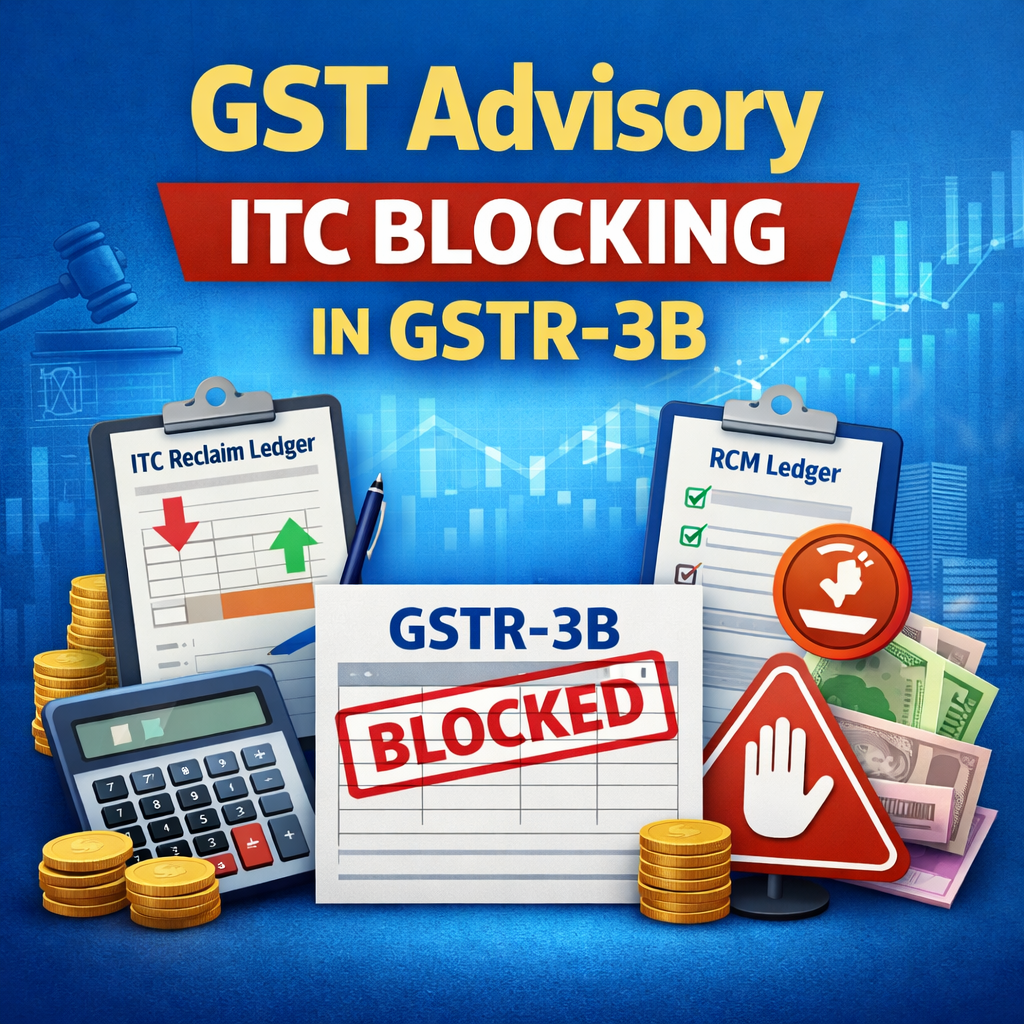
Finished phosphatic and potassic (P&K) fertilisers are taxed at 5 per cent, whereas major inputs such as ammonia and sulphuric acid were taxed at higher rates. Combined with subsidies not forming part of the GST supply value, this mismatch has resulted in large volumes of blocked ITC, straining working capital and affecting industry efficiency.

Speaking on the sidelines of the FAI Annual Seminar 2025, the FAI Chairman welcomed the recent changes introduced by the finance ministry.

“The reduction of GST on raw materials like ammonia and sulphuric acid from 18 per cent to 5 per cent has helped ease the problem of credit accumulation,” he said, while adding that the core imbalance between input and output taxation still persists.

He said the industry has consistently sought government intervention and has approached the finance ministry through the Department of Fertilisers, requesting a mechanism to refund accumulated input tax credit for phosphatic fertilisers. “We are hopeful that this issue will be addressed soon,” he said.

On subsidy reforms, Sankarasubramanian welcomed the government’s proposal to move towards direct benefit transfer (DBT) to farmers instead of routing subsidies through fertiliser manufacturers.

“Under the existing DBT framework, subsidies are paid to the industry while farmers receive fertilisers at subsidised prices,” he said.

He added that the Department of Fertilisers is planning pilot projects in select states and districts. “We have read about the recent announcement. Pilot trials are likely to be conducted in some states in South India and a few districts. This could be a game changer,” he said.

According to him, the move would give farmers greater choice and control. “It places decision-making power directly in the hands of farmers regarding the fertilisers they use. As an industry, we support this initiative and welcome the government’s approach,” Sankarasubramanian said. (ANI)

ICAI advertising reforms and global networking rules cleared to strengthen domestic firms

The Institute of Chartered Accountants of India (ICAI) has cleared a wide-ranging set of regulatory reforms designed to reinforce domestic chartered accountancy firms. The measures include a relaxation of long-standing advertising norms and the introduction of a structured framework to enable international collaborations.

Addressing the media after the 447th Council meeting, ICAI President CA Charanjot Singh Nanda said the decisions reflect evolving market dynamics and professional needs. “These changes update the regulatory architecture and offer greater certainty to firms navigating a rapidly transforming business environment,” he said. ICAI Vice President CA Prasanna Kumar D was also present during the briefing.

Advertising Norms Liberalised After Years

The Council approved amendments to the Advertisement and Website Guidelines under the revised 13th edition of the Code of Ethics, which will take effect from April 1, 2026. The revised rules allow a wider range of advertising formats, enhanced descriptive content, and the use of push notifications for non-exclusive services such as consultancy and accounting.

In a key change, ICAI-registered network firms will now be allowed to operate their own websites, a move expected to improve outreach, branding, and coordination within professional networks.

According to Nanda, these revisions align existing norms with contemporary digital practices and provide firms with greater flexibility to communicate their services.

Framework for International Networking and Partnerships

Among the most significant decisions was the approval of the ICAI (Global Networking) Guidelines, 2025. These guidelines establish a formal mechanism for Indian firms, domestic networks, and ICAI-registered consulting entities to collaborate with overseas firms.

ICAI said the framework is aimed at empowering mid-sized and growing firms by facilitating access to global expertise, technology, and cross-border opportunities, while ensuring transparency through defined disclosure and compliance requirements.

Adoption of Updated Global Ethical Standards

The Council also adopted the 2024 Code of Ethics issued by the International Ethics Standards Board for Accountants (IESBA), introducing stricter norms on auditor independence.

Notable provisions include restrictions on audit firms undertaking Public Interest Entity (PIE) audits if they have rendered conflicting non-assurance services, expanded applicability of Non-Compliance with Laws and Regulations (NOCLAR) requirements to all listed entities and their key subsidiaries, and the inclusion of ethical standards for sustainability assurance engagements.

Additionally, the list of permitted Management Consultancy and Other Services has been widened to cover emerging areas such as artificial intelligence-related work, forensic accounting, and social-impact evaluations. The Council also recommended that audit fees be received only through banking or digital modes.

UDIN Milestone Achieved

ICAI said the issuance of Unique Document Identification Numbers (UDINs) crossed the 10-crore mark during the year, calling it a significant milestone in strengthening document authentication and professional transparency.

WOFA 2.0 Scheduled for 2026

The Institute further announced that the second edition of the World Forum of Accountants (WOFA 2.0) will be held from January 30 to February 1, 2026, at the India Expo Centre in Greater Noida. The event is expected to attract over 20,000 participants from more than 40 countries.

₹2,000 crore paid back till date under ‘Your Money, Your Right’ drive

Prime Minister Narendra Modi on Wednesday said that close to ₹2,000 crore has already been returned to rightful claimants under the government’s ‘Your Money, Your Right’ initiative, which was launched in October 2025 to help citizens recover long-forgotten financial assets.

In a post on social media, the Prime Minister said the initiative aims to ensure that every individual is able to reclaim money that legally belongs to them.

“Forgotten financial assets can be transformed into new opportunities. I urge everyone to participate in the ‘Your Money, Your Right’ movement,” PM Modi said.

The Prime Minister pointed out that a substantial amount of public money continues to remain unclaimed across various financial institutions in India. According to official data, banks are currently holding nearly ₹78,000 crore in unclaimed deposits. Insurance companies account for another ₹14,000 crore in unclaimed policy proceeds.

In addition, around ₹3,000 crore remains unclaimed with mutual fund houses, while unpaid dividends worth approximately ₹9,000 crore are also lying idle.

“These figures have come as a surprise to many, especially since they represent the hard-earned savings and investments of countless families,” the Prime Minister noted.

To simplify and bring transparency to the claim process, the government, along with financial regulators, has launched dedicated online portals to help citizens trace and recover their funds. These include the RBI’s UDGAM Portal for unclaimed bank deposits, IRDAI’s Bima Bharosa Portal for insurance-related claims, SEBI’s MITRA Portal for unclaimed mutual fund amounts, and the Ministry of Corporate Affairs’ IEPFA Portal for unpaid dividends and unclaimed shares.

PM Modi also highlighted that facilitation camps have been organised in 477 districts across both rural and urban India, with special emphasis on remote areas to ensure wider outreach and accessibility.

Through coordinated efforts involving the government, regulators, banks and financial institutions, nearly ₹2,000 crore has already been returned to citizens, he said.

The Prime Minister urged people to help expand the initiative by checking whether they or their family members have any unclaimed deposits, insurance payouts, dividends or investments. He encouraged citizens to make use of the dedicated portals and facilitation camps to recover their money.

“Take action today to claim what is rightfully yours and turn a forgotten financial asset into a new opportunity. Your money belongs to you, and together we must ensure it reaches its rightful owner. Let us work towards a transparent, financially empowered and inclusive India,” PM Modi said.

How significantly will GST influence the Budget 2026 calculations?

The Goods and Services Tax (GST) was rolled out by the Union Government in July 2017 with the objective of consolidating multiple state and central indirect taxes such as VAT, excise duty, and service tax. This landmark reform replaced a fragmented tax system with a single nationwide levy, substantially easing compliance requirements and reducing paperwork for businesses. By integrating various levies into one structure, GST brought greater uniformity to indirect taxation across India.

Why GST is important for India

Prior to GST, the movement of goods across states was often disrupted by varied tax regimes and numerous check posts. The introduction of GST eliminated these inefficiencies by subsuming major indirect taxes and establishing a common national market. A key benefit of this system has been the uninterrupted availability of Input Tax Credit (ITC), which lowered cascading taxes for manufacturers and helped reduce costs for end consumers.

GST has also accelerated the shift towards technology-based compliance. Processes such as online registration, e-way bills, and digital return filing have contributed to the formalisation of the economy. This transition has widened the tax base, improved transparency, and enhanced accountability. A simplified and standardised tax structure has also helped check tax evasion, ensured steadier revenue inflows, and strengthened supply chains across sectors.

High expectations from GST despite rate rationalisation

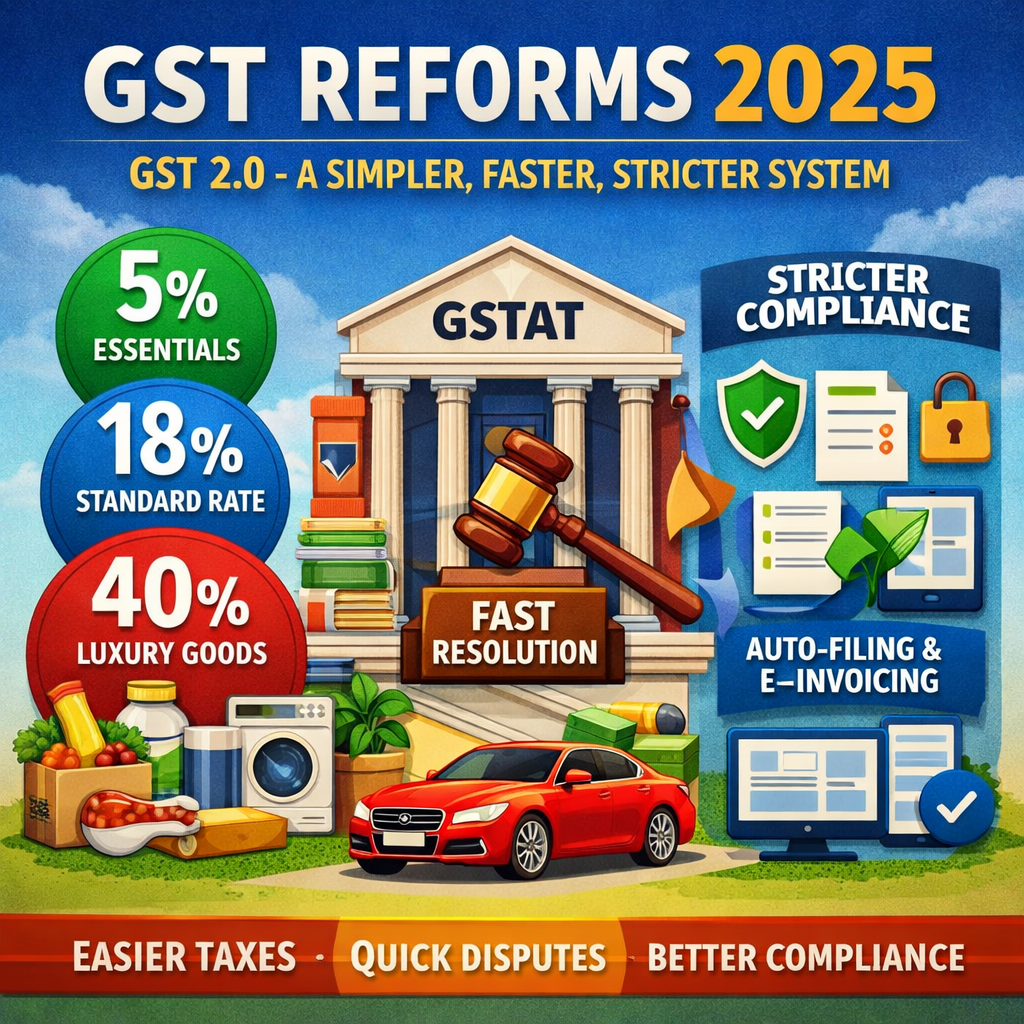
Significant reforms were announced at the 56th GST Council meeting. The earlier four-rate structure—5%, 12%, 18%, and 28%—was streamlined into two principal slabs of 5% and 18%, along with a separate 40% rate for luxury and demerit goods. In addition, GST rates on several essential and FMCG products were reduced. Many items earlier taxed at 12% or 18% were shifted to the 5% slab, while several consumer durables and electronic goods moved from 28% to 18%. Small cars and motorcycles with engine capacity below 250cc were also brought down to the 18% rate.

Even after these reductions, GST revenues have shown resilience. In November 2025, collections stood at ₹1,70,276 crore, registering a 0.7% year-on-year increase. Between April and November 2025, cumulative gross GST collections amounted to ₹14,75,488 crore, reflecting a healthy annual growth of 8.9%, even after the implementation of GST 2.0 in September 2025.

Relevance for Budget 2026

GST revenue trends serve as a reliable barometer of economic activity, capturing patterns in consumption and business performance. At the same time, lower GST rates leave more disposable income in the hands of consumers, encouraging spending—an important factor in a consumption-led economy like India.

From a fiscal perspective, GST collections have a direct bearing on government expenditure. Any shortfall in expected GST revenue could complicate efforts to meet fiscal deficit targets, unless offset by alternative revenue streams or higher borrowing.

Following the September 2025 rate cuts, demand for consumer goods and automobiles picked up sharply, supported by festive-season spending. This momentum was reflected in GDP growth, which rose to 8.2% in the second quarter after recording 7.8% growth in the first quarter, outperforming expectations.

In sum, GST rate rationalisation has acted as a stabilising force for the Indian economy at a time of global uncertainty, geopolitical risks, and trade-related challenges.

CBDT has sent in excess of 44,000 alerts to taxpayers, directing them to reveal their crypto transactions.

Minister of State for Finance Pankaj Chaudhary
Photo Credit: ANI

The Finance Ministry has issued more than 44,000 communications to taxpayers for failing to disclose their cryptocurrency transactions in their Income Tax Returns, Minister of State for Finance Pankaj Chaudhary informed the Lok Sabha on Monday. Simultaneously, the Enforcement Directorate (ED) has attached proceeds of crime exceeding ₹4,000 crore in crypto-linked investigations under the Prevention of Money Laundering Act (PMLA).

Finance Ministry data tabled in the Lok Sabha also revealed that Tax Deducted at Source (TDS) collections on crypto transactions have more than doubled over the past three years.

In a written response, Chaudhary stated: “Under the CBDT’s NUDGE (Non-Intrusive Usage of Data to Guide and Enable) campaign, 44,057 communications have been issued to taxpayers who invested in or traded VDAs but did not report these in Schedule VDA of their ITRs.” He added that advanced analytics—through Project Insight and internal databases—is being used to compare VDA transaction data with ITR disclosures. TDS statements filed by Virtual Asset Service Providers (VASPs) are also examined to spot discrepancies and initiate action.

Chaudhary further informed that the ED has taken action in several crypto-related cases under PMLA, leading to attachment, seizure, or freezing of assets worth ₹4,189.89 crore. So far, 29 individuals have been arrested and 22 prosecution complaints filed, while one accused has been declared a Fugitive Economic Offender.

TDS Collection Trend

In a separate written reply, Chaudhary highlighted that TDS collected by crypto exchanges increased from over ₹221 crore in 2022–23 to more than ₹511 crore in 2024–25. Maharashtra’s collection rose from ₹142 crore to ₹293 crore during this period, while Karnataka recorded the sharpest rise—from ₹39 crore to about ₹134 crore.

As per the Finance Act, 2022, a 1% TDS applies to all transfers of virtual digital assets, including those involving offshore platforms, where income is taxable in India. Chaudhary noted that several offshore cryptocurrency exchanges serving Indian users are not complying with these TDS requirements.

Survey operations conducted on three crypto exchanges uncovered TDS non-compliance amounting to ₹39.8 crore and undisclosed income of ₹125.79 crore. Additionally, search and seizure actions under Sections 132 and 133A of the Income Tax Act led to the detection of undisclosed income of ₹888.82 crore related to VDA transactions.

Chaudhary emphasized that due to the global nature of crypto assets, coordinated international action is essential. “A regulatory framework for crypto assets can be effective only with substantial global cooperation—particularly on assessing risks, benefits, and establishing common standards and taxonomy,” he said.

The government has announced that the new ITR forms under the revised Income Tax Act will be issued before FY 2027-28.

New Delhi: The government will notify the new Income Tax Return (ITR) forms—designed under the provisions of the Income Tax Act, 2025—before the start of the 2027-28 financial year, Minister of State for Finance Pankaj Chaudhary informed on Monday.

In a written reply in the Lok Sabha, Chaudhary said the CBDT’s committee on ITR simplification is holding wide-ranging consultations with tax professionals, institutional stakeholders, and various field units of the Income Tax Department.

The Income Tax Act, 2025—passed on August 21—will come into force from April 1, 2026, replacing the existing Income Tax Act of 1961. The new law aims to streamline tax legislation, cut down on complex wording, and enhance clarity for taxpayers.

All related forms under the Act, including TDS quarterly return forms and ITR forms, are being redesigned. The Directorate of Systems is collaborating with the Tax Policy Division to create forms that are more user-friendly.

Chaudhary noted that the ITR forms under the new Act will need to incorporate amendments introduced in Budget 2026. Therefore, the ITRs for the first tax year—2026–27—will be notified before FY 2027-28.

Regarding forms for income earned in the current fiscal year (Assessment Year 2026-27), he said the ongoing work of consolidation and simplification will continue, and these forms will be issued as per the existing Income Tax Act, 1961.

India Senior Citizen Tax Perks 2025-26 | More Than 30 Unique Benefits You Should Know

भारत में Senior Citizens को मिलने वाले लाभ — 2025–26 की सम्पूर्ण गाइड (30+ फायदे)

भारत सरकार का मानना है कि वरिष्ठ नागरिकों ने अपना पूरा जीवन परिश्रम, जिम्मेदारियों और समाज के निर्माण में लगा दिया है। इसलिए उन्हें सामान्य नागरिकों की तुलना में अधिक सुविधाएँ, कर लाभ और विशेष रियायतें प्रदान की जानी चाहिए।

इस विस्तृत लेख में हम Senior Citizens तथा Super Senior Citizens के लिए उपलब्ध सभी Tax Benefits, Banking सुविधाएँ, Compliance Relief, सरकारी योजनाएँ, छूट, रियायतें और विशेष अधिकारों को विस्तारपूर्वक समझेंगे।

यह सबसे व्यापक और पूरी तरह अपडेटेड गाइड है — जिसमें आपके अनुरोध अनुसार 30+ महत्वपूर्ण लाभ शामिल हैं।


Income Tax में Senior Citizens के प्रकार (4 श्रेणियाँ)

1️⃣ Normal Taxpayer
उम्र: 60 वर्ष से कम

2️⃣ Senior Citizen
उम्र: 60 से 79 वर्ष

3️⃣ Super Senior Citizen
उम्र: 80 वर्ष या उससे अधिक

4️⃣ Specified Senior Citizen (Section 194P)
उम्र: 75+ वर्ष
केवल पेंशन + उसी बैंक का ब्याज
ऐसे व्यक्तियों को ITR भरने से छूट (बैंक TDS काटकर कर-निपटान कर देता है)


New Tax Regime (FY 2025–26) — पूरी स्लैब संरचना

सरकार ने नई टैक्स व्यवस्था को default regime बना दिया है। स्लैब इस प्रकार हैं:

आय सीमा टैक्स दर
₹0 – ₹4 लाख 0%
₹4 – ₹8 लाख 5%
₹8 – ₹12 लाख 10%
₹12 – ₹16 लाख 15%
₹16 – ₹20 लाख 20%
₹20 – ₹24 लाख 25%
₹24 लाख से ऊपर 30%

Senior Citizens के लिए सबसे बड़ा फायदा — ₹12.75 लाख तक Zero Tax

2025–26 में Standard Deduction (Salary & Pension) = ₹75,000

उदाहरण:
कुल पेंशन = ₹12,75,000
घटाएँ: Standard Deduction = ₹75,000
Taxable Income = ₹12,00,000

→ New Regime में ₹12 लाख तक Section 87A Rebate लागू
→ टैक्स = ZERO

⭐ यानी Senior Citizen pensioners की ₹12.75 लाख तक की आय पर कोई टैक्स नहीं।


Old Tax Regime — Updated Basic Exemption Limits

श्रेणी छूट सीमा
Senior Citizen (60–79 yrs) ₹3,00,000
Super Senior Citizen (80+ yrs) ₹5,00,000
सामान्य करदाता ₹2,50,000

Section 80TTB — ब्याज आय पर ₹50,000 अतिरिक्त छूट

Senior Citizens को (Saving + FD + RD + Post Office + Co-operative Bank)–
सभी पर कुल ₹50,000 तक deduction मिलता है।

यह 80TTA के स्थान पर लागू होता है।


Section 80D — Medical Insurance पर ₹50,000

  • Senior Citizens के health insurance premium पर ₹50,000

  • यदि insurance उपलब्ध नहीं, तो medical expenses पर भी ₹50,000

  • माता-पिता के insurance पर भी benefit


Section 80DDB — गंभीर बीमारियों पर ₹1,00,000 की छूट

Cancer, Kidney Failure, Parkinson’s आदि specified diseases पर
Senior Citizens deduction = ₹1,00,000
(अन्य लोगों को केवल ₹40,000)


Advance Tax से छूट (Section 207)

यदि Senior Citizen की केवल
✔ Pension Income
✔ Interest Income
है, और कोई Business Income नहीं:
→ Advance Tax नहीं देना
→ 234B/234C Interest नहीं लगेगा


80+ वर्ष (Super Senior) — Offline ITR Filing की सुविधा

Super Seniors (80+):
ITR-1 / ITR-4 पेपर मोड में भर सकते हैं
E-filing अनिवार्य नहीं


Section 194P — 75+ साल वालों को ITR से पूरा छूट

शर्तें:
✔ उम्र 75+
✔ केवल पेंशन + उसी बैंक का ब्याज
→ Bank tax निकालकर सीधे Department को जमा करेगा
→ ITR भरने की आवश्यकता नहीं


Low Risk Profile — Scrutiny से लगभग छूट

यदि कोई व्यवसायिक आय नहीं है,
→ 143(2) scrutiny notice
→ 147/148 reassessment notice
सामान्यतः नहीं भेजे जाते


Family Pension Exemption बढ़ा — ₹25,000

अब New Regime में:
1/3 of pension OR ₹25,000 (lower) exempt
(पहले सीमा ₹15,000 थी)


LTCG (Shares) पर Extra Benefit

₹4 लाख rebate में cover

  • ₹1.5 लाख additional LTCG exempt
    → कुल मिलाकर Senior Citizens को ₹1.5 lakh extra tax-free LTCG


Reverse Mortgage — पूरा LTCG छूट

घर reverse mortgage करने पर
→ इसे “transfer” नहीं माना जाता
→ कोई capital gain tax नहीं


Senior Citizen FD Interest — अधिक ब्याज दरें

Banks:
+0.50% अतिरिक्त (Senior Citizens)
+0.75% तक (Super Seniors)


Form 15H — सीमा बढ़कर ₹12 लाख

Senior Citizen:
No TDS upto ₹12 lakh (Form 15H पर)


Bank Interest TDS Threshold — ₹1,00,000

Senior Citizens पर TDS तभी जब ब्याज > ₹1,00,000
(अन्य लोगों के लिए सीमा ₹40,000)


ITR Mandatory Filing — Higher TDS Limit

Normal: TDS > ₹25,000 → ITR आवश्यक
Senior Citizen: सीमा = ₹50,000


SCSS (Senior Citizen Savings Scheme) — प्रमुख लाभ

✔ न्यूनतम आयु: 60+
✔ जमा सीमा: ₹30 लाख
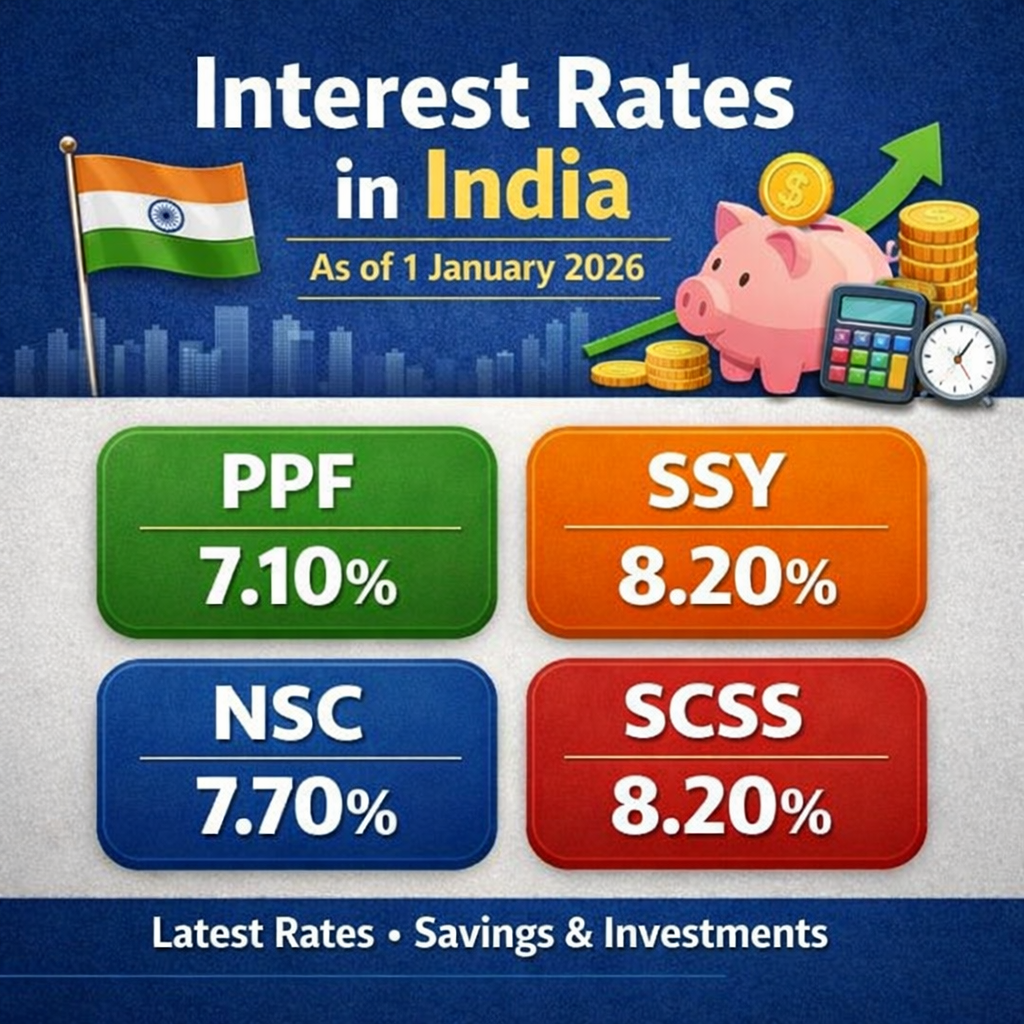
✔ ब्याज: ~8.2%
✔ 80C में deduction
✔ सरकार समर्थित सुरक्षित योजना


Super Senior Citizens (80+) — PAN–Aadhaar Linking Fee से छूट

80+ के लिए ₹1,000 linking fee नहीं लगेगी।


Airline Discounts — 5% से 50% तक

Aadhaar/ID दिखाने पर base fare में रियायत।


Senior Citizen Card — National + State Benefits

Healthcare, public services, travel concession आदि में लाभ।


Courts में Priority Hearing

Senior Citizens के मामलों की early listing एवं तेज disposal।


Health & Hospital Benefit

Govt Hospitals में लगभग free
Private Hospitals में special discounts


Roadways Bus Concession

कई राज्यों में 30%–50% तक छूट (जैसे RSRTC – 50%)


RBI Doorstep Banking (70+ years)

Cash pickup
Cash delivery
Cheque/Draft delivery
Home KYC

सब अनिवार्य सेवाएँ हैं।


Property Tax / Stamp Duty Relief

कई राज्यों में
✔ House tax rebate
✔ कम stamp duty
✔ Registration fee रियायतें


BSNL/MTNL Concessions

Priority installation
कम charges
Monthly bill relief


State Old Age Pension

राज्य सरकारें ₹1000–₹1500 या अधिक pension देती हैं (age criteria अलग-अलग)


Railway – Lower Berth Quota

Senior Men (60+) और Women (58+) को
Guaranteed lower berth + Priority allocation


भारत सरकार का उद्देश्य है कि वरिष्ठ नागरिकों को आर्थिक, स्वास्थ्य और सामाजिक जीवन के हर स्तर पर अधिक सुविधा और सम्मान मिले।

PAN to Be Declared Inoperative After 31 December 2025 — Know the Impact and Steps to Complete the Linking

If you’ve been putting off your PAN–Aadhaar linking thinking you’ll handle it “sometime soon,” that moment has officially arrived. The deadline is fast approaching, and 31 December 2025 is the final date to link your Permanent Account Number (PAN) with Aadhaar. Missing this cut-off will make your PAN inoperative, which can severely impact essential tax activities — from filing your ITR to receiving refunds.

For millions of taxpayers, PAN is far more than just a plastic card or an alphanumeric code. It serves as the primary identifier for every financial interaction with the Income Tax Department. Whether it involves monitoring advance tax, reconciling TDS/TCS, processing income tax returns, or clearing refunds — PAN is central to the entire compliance ecosystem. Linking Aadhaar with PAN enables the government to prevent duplicate PANs, reduce tax evasion, and ensure accurate matching of financial records.

Who Needs to Link PAN with Aadhaar? — CBDT Guidelines

The Central Board of Direct Taxes (CBDT) has clearly stated:

Any individual who has been allotted both PAN and Aadhaar on or before 1 October 2025 must link the two by 31 December 2025.

Failure to do so will make the PAN inoperative from 1 January 2026.


Consequences of an Inoperative PAN

An inoperative PAN is not cancelled, but in practice, it functions as if you don’t have a PAN at all. This leads to several disruptions in routine tax and financial operations:

❌ 1. Cannot file Income Tax Returns

The e-filing portal will not permit filing of ITRs using an inoperative PAN.

❌ 2. Refunds will be withheld

Any refund due will remain pending until the PAN is reactivated.

❌ 3. Pending return proceedings will be impacted

Processes such as defective returns (u/s 139(9)), updated returns (u/s 139(8A)), and assessments requiring PAN authentication will not progress.

❌ 4. Higher TDS/TCS rates

You will be considered a taxpayer “without PAN” under Sections 206AA and 206CC, resulting in deduction/collection of tax at higher rates.

❌ 5. Problems in high-value transactions

Banks, mutual funds, and other financial institutions may reject or hold transactions where PAN verification is mandatory.


In essence, allowing your PAN to become inoperative can lead to compliance setbacks, financial delays, and unnecessary complications.

Step 1: Visit the Income Tax e-Filing Website

Open the official portal: www.incometax.gov.in
On the homepage, look for the Quick Links section.


Step 2: Select ‘Link Aadhaar’

Clicking this option will open a form where you must provide:

  • Your 10-digit PAN

  • Your 12-digit Aadhaar number

  • Name exactly as it appears on Aadhaar

Tick the declaration confirming that the details are correct, then press Validate.


Step 3: Pay the Linking Fee (If Applicable)

A late fee of ₹1,000 is required if the linking is done after the previous deadline.

If your payment is not already registered, the system will show:
“Payment details not found.”

Click Continue to Pay Through e-Pay Tax, and complete the payment using the following path:

Payment Procedure

  1. Enter your PAN and mobile number, then verify via OTP.

  2. On the e-Pay Tax dashboard, choose:

    • Assessment Year: 2025–26

    • Type of Payment: Other Receipts (500)

    • Sub-type: Fee for delay in linking PAN with Aadhaar

  3. The portal will automatically fill the amount as ₹1,000.

  4. Select your payment method and finish the transaction.

A Challan will be generated — keep this for future reference.


Step 4: Complete the Aadhaar–PAN Linking Request

Return to the Link Aadhaar page and:

  • Enter PAN, Aadhaar, and Name again

  • Submit the OTP sent to your Aadhaar-linked mobile number

  • Click Validate

Your linking request will now be submitted.


How to Check Your Aadhaar–PAN Linking Status

You can verify the status in a few seconds:

  1. Visit www.incometax.gov.in

  2. Under Quick Links, click Link Aadhaar Status

  3. Enter your PAN and Aadhaar

  4. Select View Link Aadhaar Status

You will see one of the following responses:

Linked

“Your PAN is already linked with Aadhaar.”

Not Linked

You will be asked to complete the linking process.

Pending Verification

Your request has been forwarded to UIDAI for confirmation.


With 31 December 2025 being the final deadline, taxpayers are strongly advised to finish the Aadhaar–PAN linking process at the earliest.
An inoperative PAN can lead to a cascade of compliance problems — including stalled refunds, higher TDS rates, and delays in processing income-tax matters.
The entire procedure requires only a few minutes and ensures seamless tax compliance going forward.